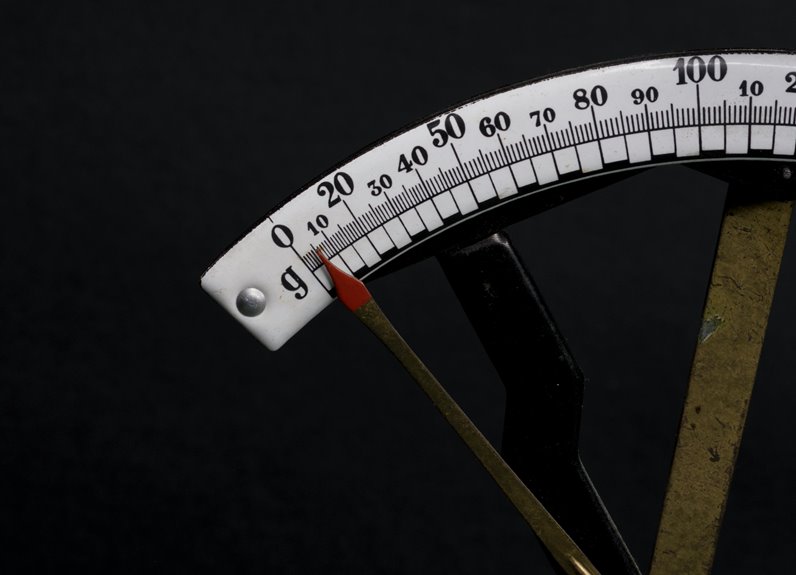
Most bathroom scales are precise—they’ll give you the same number repeatedly—but accuracy? That’s on you. Your scale might be off by five pounds due to poor calibration or a wonky surface, yet you’d never know from daily readings alone.
Here’s the thing: body weight swings four pounds between morning and night from meals and water, so single numbers mislead. Weigh yourself the same time daily on a hard floor, then track a week’s average.
Want to know if your scale’s actually trustworthy? Check the manufacturer’s specifications and compare results against a calibrated scale at your doctor’s office.
Accuracy vs. Precision: Why Your Scale Can Be Consistent but Wrong
Have you ever stepped on your bathroom scale five times in a row and gotten the same number each time, only to wonder if that number was actually right?
That’s the difference between precision and accuracy, and it’s exactly why your scale can deceive you. Precision means your scale gives the same reading repeatedly—consistent performance. But accuracy? That’s whether that reading actually matches your true weight.
Here’s the catch: a scale with calibration errors stays biased. It’ll consistently show you five pounds heavier because its internal settings are off. Environmental factors like temperature shifts can worsen this drift over time.
The solution? Test your scale with a known weight. Place it on a level, hard surface. This separates what’s repeatable from what’s actually correct, helping you identify whether your scale’s precision hides hidden bias.
Why Single Readings Lie: The Science of Daily Weight Fluctuation
Ever wonder why you weigh different amounts throughout the day—sometimes dramatically different? You’re not imagining it. Your body loses roughly 1.65 kg daily through breathing, sweating, and water loss alone. Add meals, fluids, and sleep into the mix, and you’ve got weight fluctuations of four pounds or more between morning and night.
Here’s the kicker: how you stand matters. Leaning on one foot or shifting your center of balance can throw off readings by several pounds. That’s measurement variability in action, and it’s why single daily weight readings mislead you.
For reliable tracking that actually works, skip obsessing over individual numbers. Instead, weigh yourself at the same time each day and track a 7–14 day moving average. That’s how you spot real progress beneath the noise.
Spring vs. Sensors vs. AI: How Different Scales Actually Weigh You
What’s actually happening inside your scale when you step on it?
Old-school spring scales use mechanical pointers that drift over time—they’re basically getting tired, like we all do. Digital scales? They’re the upgrade. They use load cells and strain gauges that convert your force into numbers, offering better measurement accuracy than their springy cousins.
Here’s the twist: your weight distribution matters more than the technology. How you stand on those sensors changes everything. Smart scales add bioelectrical impedance analysis to estimate body composition, but that introduces extra variability beyond just weight.
Some scales fight back with auto-calibration, adjusting for gravity and location. That’s genuinely helpful. But honestly? Your stepping technique probably throws off readings more than the scale itself does. Step consistently, and you’ll notice better results regardless of which scale you’re using.
Test Your Scale in 4 Steps (Don’t Buy a New One Yet)
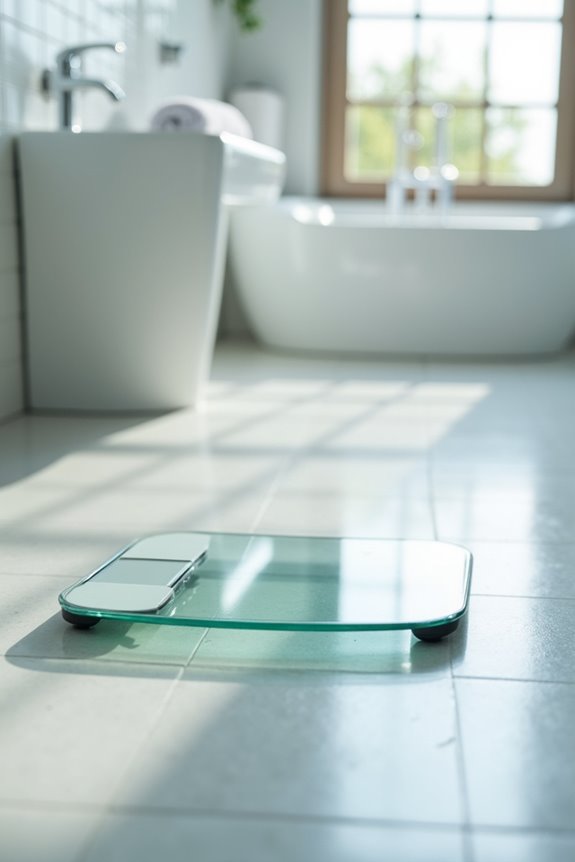
Before you toss your scale in the trash, try running a quick diagnostic on it—it might work fine. Here’s what I do: First, I tare the scale to zero out any drift that creeps in over time. Next, I test it with a known weight, like a certified five-pound dumbbell, to check if it’s accurate. Then comes precision testing—I weigh myself three times in a row. If the numbers match, my scale has consistency. Finally, I weigh two separate items individually, then together, checking if the total matches. This catches errors you might miss. I always test on a hard surface in the same spot, since environment matters more than expected. These simple steps reveal whether your scale deserves a second chance.
The Right Way to Weigh Yourself for Consistent Results
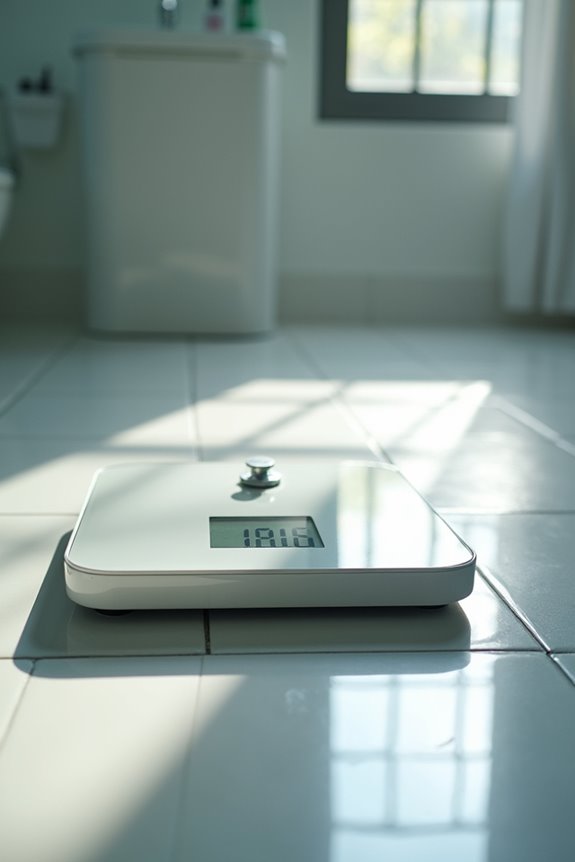
Now that you know your scale actually works, the real challenge is using it the right way—because even an accurate scale gives you garbage data if you’re not consistent.
Here’s what I’ve learned: zero or tare your scale before each weigh-in, and always use the same hard, level surface. I weigh myself at the same time daily, usually right after waking up, because readings fluctuate throughout the day depending on what you’ve eaten or done.
Stand centered on the platform with even weight distribution—no leaning or shifting around. A digital or smart scale helps with scale accuracy, but don’t obsess over daily numbers. Instead, track your moving average across 7–14 days. This reveals your actual trend while ignoring those pesky hourly fluctuations that’ll drive you crazy otherwise.
What Body Composition Scales Actually Measure (And Why They’re Not Mind Readers)
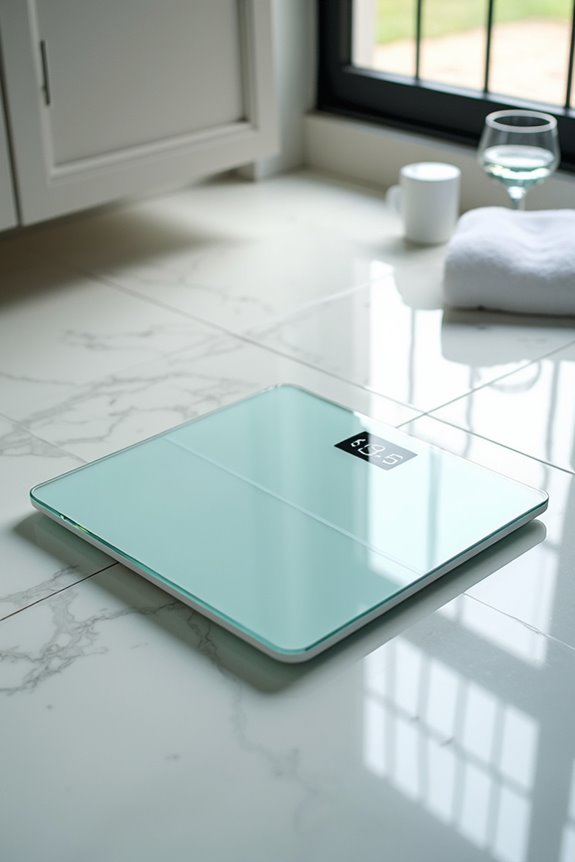
Your bathroom scale does more than just tell you your weight—or at least it claims to. Here’s what’s actually happening under the hood:
- Bioelectrical Impedance Analysis: Your scale sends a tiny electrical current through your body to estimate water and fat
- Body Fat Percentage: It calculates this metric, though accuracy varies widely between models
- Hydration matters: Drinking water before weighing skews results because the scale can’t distinguish between water weight and actual fat
- Variability is real: Skin temperature, recent workouts, and your body’s water distribution all affect readings
- It’s making educated guesses: Your scale measures multiple metrics with varying precision
The truth? These scales are useful tools, but they’re not mind readers. Think of them as helpful guides, not absolute truth.
Auto-Calibration, Gravity Compensation, and Load Cell Sensitivity: What Actually Matters
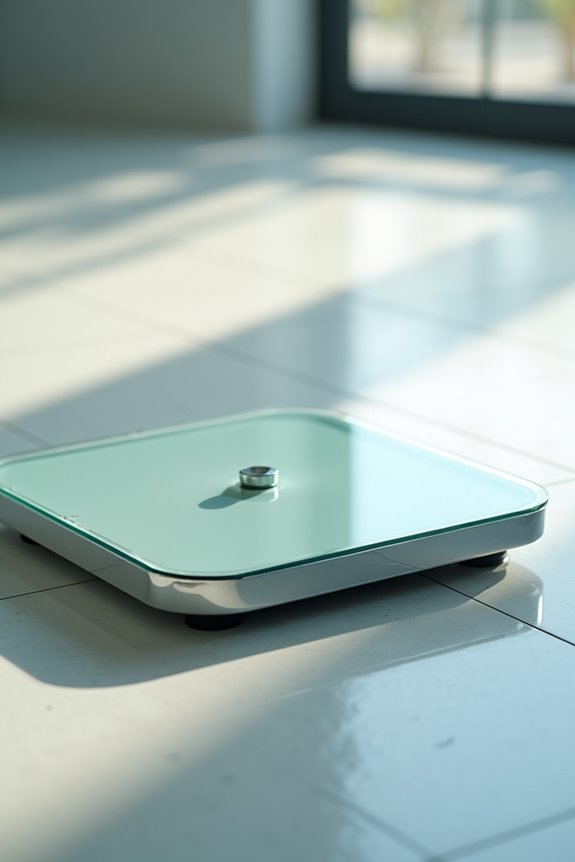
Ever wonder why the same scale gives you different readings depending on which bathroom you use? That’s where auto-calibration and gravity compensation come in. These features significantly improve accuracy.
Auto-calibration checks your scale against a standard regularly, catching calibration drift before it throws off your measurements. Gravity compensation adjusts for local gravitational differences—yes, gravity actually varies by location and floor. Connected scales use your location data to fine-tune readings accordingly.
Load cell sensitivity matters too. High-sensitivity sensors and precise auto-zeroing minimize tiny fluctuations from small weight changes. This reduces variance and improves reproducibility across temperature and humidity shifts.
You’re not imagining inconsistent readings. These technical features directly combat environmental drift, helping maintain accuracy wherever you weigh yourself. That’s real reliability.
Do Scales Lose Accuracy Over Time? When to Troubleshoot vs. Replace
You might wonder if your bathroom scale gets worse at measuring your weight as it ages, kind of like how your favorite jeans lose their stretch after years of washing. The truth is that wear and tear, calibration drift, and normal use don’t actually ruin a scale’s accuracy as much as you’d think—but knowing when to give it a tune-up versus tossing it out is important. I’ll walk you through what really happens inside your scale over time and how to tell if it’s worth fixing or ready for retirement.
Wear And Tear Effects
Time has a way of wearing down even the most reliable bathroom scales. I’ve learned that both analog and digital scales face real challenges over time.
Here’s what happens as your scale ages:
- Analog scales lose accuracy when springs weaken and mechanical parts get worn
- Digital scales experience sensor degradation from regular use and loose connections
- Calibration drift creeps in gradually, making readings less trustworthy
- Consistency suffers, meaning you’ll get different numbers on successive weighings
- Environmental factors like humidity and temperature swings accelerate wear
I used to ignore these warning signs. Now I regularly check my scale with known weights to catch problems early. When I notice increasing deviation beyond what’s acceptable, I know it’s time to troubleshoot or replace rather than trust questionable readings. Accurate measurements matter for your health and fitness goals.
Calibration Drift Over Time
How much should you worry about your scale drifting out of whack? Honestly, not as much as you’d think. Age alone doesn’t cause calibration drift—temperature swings, humidity, and an uneven surface do. I’ve learned this the hard way.
Here’s the thing: your scale’s auto-calibration features help, but they’re not foolproof. Environmental factors gradually shift accuracy over time. That’s why periodic checks with known weights matter. Think of it like maintaining your car.
If your scale starts giving wonky readings, recalibrate using a certified weight. Make sure it sits on a level, hard surface. If repeated calibrations still fail to stabilize your measurements, it’s replacement time. Reliable data requires a functioning instrument, and sometimes that means accepting when a scale has genuinely reached its limit.
Repair Versus Replacement Decision
When your scale starts acting up, the first question isn’t whether to toss it—it’s whether you can fix it. Before you replace it, try these troubleshooting steps:
- Re-zero your scale on a hard, level surface every time you weigh yourself
- Test with a known weight like a dumbbell to spot accuracy issues
- Check your footing since weight distribution affects readings
- Avoid carpeted areas that cause calibration drift and inconsistent numbers
- Replace batteries if readings seem off or fluctuate wildly
If your scale shows wild swings beyond its stated tolerance or fails calibration tests repeatedly, replacement makes sense. But most drift comes from user error, not age. You have a working scale—it just needs proper setup and consistent use. The real issue: you’re not broken; you’re just calibrated wrong.
What’s Normal: Daily Weight Swings and Why Morning Weigh-Ins Rule
Your weight can swing up to four pounds between morning and night—yeah, you read that right—thanks to meals, drinks, and even how much sleep you got, which is why I always recommend weighing yourself first thing in the morning when those variables settle down. If you’ve ever watched your scale jump around, you’re not imagining things; those wild swings are totally normal and don’t mean you’ve actually gained or lost anything real. The trick is ditching the obsession with single weigh-ins and instead tracking your average weight over 7 to 14 days, which shows you the actual trend that matters.
Daily Fluctuations and Causes
Ever step on the scale and wonder why you’ve gained three pounds overnight when you barely ate anything?
Here’s what’s really happening. Your weight swings about four pounds daily depending on meals, fluids, and sleep. That’s pure measurement variability—not fat gain. I learned this the hard way during a weekend experiment where I lost 1.65 kg largely from breathing, sweating, and water loss. Not from dieting.
Here’s how to spot real trends:
- Weigh yourself each morning before eating or drinking
- Track weight over 7–14 days using a moving average
- Ignore single daily numbers—they’re unreliable
- Account for respiration and water loss as major factors
- Use consistent conditions for accurate comparisons
Morning weigh-ins reduce noise from recent eating. Daily fluctuations are normal. Focus on weekly patterns instead, and you’ll see what’s actually happening with your body.
Optimal Timing for Weigh-Ins
Now that you understand why your weight bounces around like a rubber ball, let’s talk about when to actually step on the scale. Timing matters more than you’d think. Morning weigh-ins are your best option because they happen after you’ve fasted overnight and your body’s fluid balance has settled. That’s when you get the most honest reading. Skip the afternoon weigh-in when you’re bloated from lunch. Instead, track your morning weight consistently over 7–14 days using a moving average. This smooths out daily weight variation and reveals your real long-term trends. One week won’t cut it. You need extended data to spot genuine progress beneath the noise. Trust the pattern, not the number.
Consistency Over Single Readings
Because your weight can swing up to 4 pounds in a single hour—and fluctuate even more drastically throughout the day from meals, water intake, and sleep—a single reading on your bathroom scale tells you almost nothing about real progress.
Here’s what actually works:
- Track multiple weight readings over 7–14 days instead of obsessing over today’s number
- Use a moving average to smooth out short-term noise and reveal true trends
- Consistency matters more than precision—same time, same conditions daily
- Measurement variance comes mostly from your stance and weight distribution, not the scale itself
- Weekly weigh-ins alone mislead you; longer patterns expose reality
I’ve learned this the hard way. That frustrating 3-pound jump overnight? Probably sodium and hydration. Real change reveals itself through patient tracking, not panic.
From Daily Chaos to Meaningful Trends: The 7–14 Day Moving Average
Why does your weight jump around so much from one day to the next? Meals, water, and sleep create daily fluctuations that’ll mess with your head. I’ve watched my scale swing three pounds in hours—frustrating, right?
Here’s where the moving average helps. Instead of obsessing over each number, I track my weight across 7–14 days. This smooths out the noise and reveals what’s actually happening.
Think of it this way: one weigh-in is meaningless. But plotting seven readings together? That’s when real weight trends emerge. You’ll spot genuine progress instead of chasing phantom losses or gains.
Stop fixating on daily readings. Long-term monitoring through moving averages shows you’re part of something real—a community focused on actual results, not bathroom scale drama.
Pick Your Scale: A Decision Matrix by Use Case and Budget
So which scale actually belongs in your bathroom—the fancy smart one or the basic digital model gathering dust at Target?
The truth? Your best choice depends on what you’re actually willing to use consistently. Here’s what I’d consider:
- Budget under $30: Grab a basic digital scale like the Tanita HD-662. You’ll get solid accuracy without the app notifications.
- Budget $50–80: The Etekcity EB9380H offers precision and affordability. Perfect for serious tracking at a reasonable price.
- Budget $100+: Wyze Scale X delivers smart features and consistency. If you’ll actually use the trending data, it’s worth the investment.
- Calibration matters: Regardless of price, you’ll need a level surface and regular calibration checks.
- Consistency wins: Pick whichever scale you’ll actually step on daily at the same time.
Digital scales beat analog ones, but your weighing routine beats your scale’s specs every time.
Your First Week: A Setup and Weighting Checklist
You’ve picked your scale—now comes the part that actually matters.
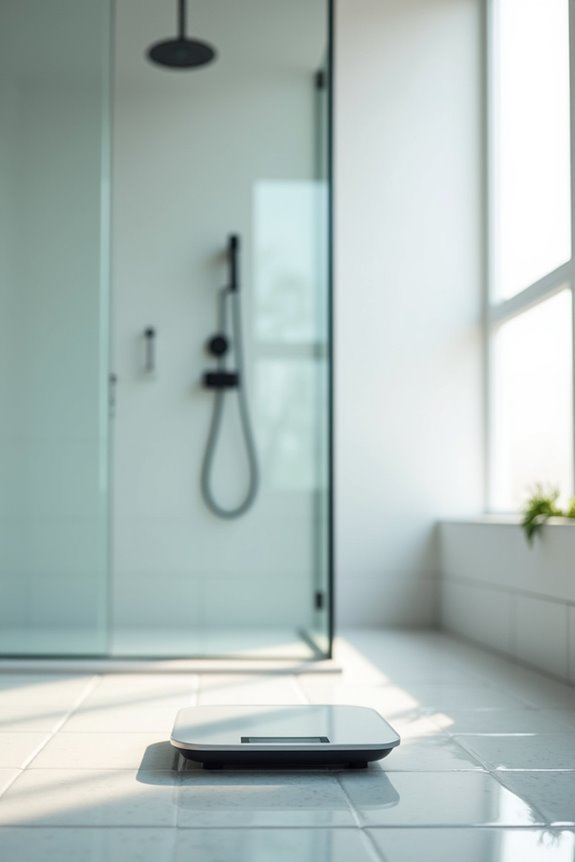
I place mine on tile, not carpet, because soft surfaces throw off weight measurement instantly. First, I level it carefully and hit zero before stepping on. Here’s the thing: I weigh myself every morning at the same time, wearing similar clothes, using identical foot placement. This consistency dramatically improves scale accuracy and calibration.
Place your scale on tile, level it carefully, and weigh yourself at the same time each morning wearing similar clothes for reliable measurements.
During week one, I’m not obsessing over daily numbers—I’m establishing my baseline. I jot down readings but focus on patterns across seven days instead. That Wednesday spike? Probably water retention, not real weight change.
If I move my scale, I recalibrate with a known weight. A can of soup works perfectly. This simple step keeps my measurements honest and reliable, turning my bathroom scale from a source of anxiety into an actual tool I can trust.