Yes, fireplaces produce carbon monoxide when incomplete combustion happens—and that’s a real problem. Poor venting, blocked chimneys, cracked heat exchangers, and dirty burners all trap this invisible, odorless gas inside your home. Airtight houses make it worse since CO has nowhere to escape. You might feel headaches, dizziness, or nausea without realizing why. The answer? Regular chimney inspections, working detectors, and proper maintenance prevent CO buildup before it endangers your family. The details on what to watch for are worth understanding.
Yes, Fireplaces Do Produce Carbon Monoxide: Here’s Why
Did you realize your cozy fireplace could be silently releasing a dangerous gas? Here’s the thing: when fuel burns incompletely in your fireplace, it produces carbon monoxide—a colorless, odorless killer. I know, not exactly comforting when you’re enjoying that warm glow.
The problem stems from combustion. Wood, gas, and coal need proper venting to safely remove CO outside. When vents get blocked or dirty, that toxic gas stays trapped indoors with you and your family. Even ventless fireplaces with oxygen-detection sensors aren’t foolproof; faulty sensors or incomplete combustion still create CO risks.
That’s why maintenance matters. Soot buildup and dirty burners amplify the danger. Getting a CSIA-certified technician to inspect your fireplace annually is necessary. Regular maintenance keeps your fireplace safe and your home healthy.
Why Incomplete COmbustion Floods Your Home With CO
When your fireplace doesn’t burn fuel completely—because the conditions aren’t right or your venting system isn’t working properly—that’s when carbon monoxide sneaks into your home instead of getting pushed outside. Think of it like this: if your chimney’s blocked, your burner’s dirty, or sensors aren’t doing their job, the combustion process gets disrupted, and CO builds up in your living space instead of escaping. You can’t see it, smell it, or taste it, which is exactly why these two failure points—improper combustion and ventilation breakdowns—are so dangerous.
Improper Combustion Conditions
How much do you really know about what happens inside your fireplace when it burns?
When fuel-burning appliances don’t burn properly, they create carbon monoxide instead of harmless gases. Most of us don’t think about combustion until something goes wrong. Here’s what actually happens:
- Incomplete combustion floods your home with invisible, odorless CO when oxygen levels drop
- Chimney blockage or heat exchanger failure traps dangerous gases inside your living space
- Poorly adjusted burners silently produce higher CO levels while you sit nearby
These conditions develop quietly. A cracked heat exchanger. A blocked venting pipe. Inadequate airflow around your fireplace. Each creates the perfect storm for CO accumulation. You can’t see it happening, which is why understanding improper combustion conditions matters for keeping your family safe.
Ventilation System Failures
Your fireplace’s ventilation system is basically your home’s escape route for dangerous gases—and when it fails, those gases have nowhere to go but back toward you. A blocked chimney, rusted vent pipes, or disconnected connections trap carbon monoxide inside your living space instead of pushing it outside. Reverse air flow happens when your exhaust pathways get clogged or damaged, forcing combustion gases straight into your home. Closed dampers and blocked flues create the same problem—CO builds up because it’s stuck with nowhere to escape. That’s why professional inspections are important. A technician spots issues you’d miss: cracked heat exchangers, debris buildup, or design flaws in your ventilation system. Regular checkups keep your family safe from carbon monoxide poisoning.
How Airtight Homes Trap Fireplace CO
Modern airtight homes seal out the cold and save energy, but they can trap carbon monoxide like a sealed jar traps smoke. When your fireplace vents become blocked or work poorly, that dangerous gas has nowhere to escape—instead, it backs up into your living room through a process called backdrafting, where negative air pressure literally pushes combustion gases backward into your home. Without proper ventilation paths, even a well-burning fire becomes a silent threat because the CO accumulates faster than your sealed home can naturally clear it out.
Reverse Airflow And Backdrafts
Why does sealing up your home against drafts sometimes backfire? When you weatherstrip and insulate tightly, you’re actually creating conditions for dangerous reverse airflow. Here’s what happens:
- Blocked chimneys trap combustion exhaust inside your walls instead of venting it safely outside
- Damaged chimney connectors develop pressure problems that push carbon monoxide back into your living spaces
- Opening or closing your damper at the wrong time traps backdraft gases that creep into your rooms
The culprit? Pressure differentials. When your home’s sealed tight, creosote buildup and obstructions create imbalances that force carbon monoxide indoors rather than up the flue. Your efforts to stay warm inadvertently sabotage your fireplace’s venting system. That’s why regular chimney maintenance isn’t optional—it’s your protection against this threat.
Ventilation Failures In Sealed Homes
When we seal our homes tight to save on heating bills, we’re often creating an invisible trap for carbon monoxide. I didn’t realize this until I learned how airtight homes work against us during winter.
Here’s the problem: sealed homes have nowhere for CO to escape. When we run our fireplaces, carbon monoxide builds up faster because fresh air can’t dilute it. Poor ventilation combined with backdraft issues makes things worse.
| Problem | Result | Risk |
|---|---|---|
| Sealed homes | CO traps inside | High buildup |
| Blocked vents | No escape route | Dangerous levels |
| No fresh air | Limited dilution | Quick concentration |
| Backdrafts | Gases push inward | Exposure increases |
That’s why CO detectors are necessary. We need them protecting our families in airtight homes where ventilation failures happen silently.
Fireplace Problems That Release CO
How many of us have actually looked up our chimney? I’ll admit—I hadn’t either until I learned what happens when things go wrong.
Several fireplace problems can release dangerous CO into your home:
- Blocked chimneys trap combustion gases, forcing them back inside where your family breathes them
- Loose vent connections leak carbon monoxide directly into living spaces instead of outside
- Dirty fireplace components and faulty oxygen sensors fail to catch dangerous CO buildup
When venting gets blocked or cracked, reverse airflow pushes CO-filled gases backward through your fireplace. Poor fireplace maintenance multiplies these risks significantly.
Regular chimney sweeps and professional inspections are necessary. Annual checkups catch problems before CO accumulation becomes hazardous. Getting your chimney professionally inspected protects everyone you care about.
Carbon Monoxide Symptoms: What to Watch For in Your Family
Now that you know fireplace problems can release CO into your home, understanding what to watch for in your family becomes your next line of defense. I’ve learned that early symptoms of exposure mimic the flu—headache, dizziness, fatigue, nausea. Your kids might complain of stomach upset without obvious cause. Watch vulnerable family members especially: infants, elderly relatives, and anyone immunocompromised experience symptoms faster and harder.
Here’s the tricky part—CO is invisible and odorless, so you can’t rely on your senses. That’s why a carbon monoxide detector with a CO alarm near sleeping areas isn’t optional; it’s necessary. If your detector sounds, get everyone outside immediately and call for help. High poisoning levels can cause unconsciousness within minutes. Your fireplace shouldn’t put your family at risk.
Early Warning Signs Your Fireplace May Be Venting CO Indoors
I’ll help you spot trouble before carbon monoxide becomes a serious problem, and learning what to look for is straightforward. You’ll want to watch for three main categories of warning signs: physical damage around your fireplace and chimney (like rust stains or loose panels), symptoms your body’s sending you (headaches and dizziness that feel like the flu), and performance issues with your chimney itself (like smoke backing into your room instead of going up and out). Think of these signs as your fireplace’s way of sending an SOS—catch them early, and you’ll have time to call a professional before CO enters your home.
Physical Signs Of Trouble
Physical Signs Of Trouble
What clues might your fireplace be quietly sending that something’s wrong with how it’s venting?
I’ve learned that spotting physical signs of trouble early can protect your family from carbon monoxide danger. Look for these red flags:
- Water streaking or rust stains on your chimney exterior—your fireplace needs attention
- Soot deposits building up around connections and near gas appliances—a telltale sign combustion isn’t happening right
- A backdraft condition where smoke puffs back into your home instead of escaping upward
Don’t overlook loose furnace panels or disconnected vent connections either. These aren’t minor issues. When venting fails, carbon monoxide seeps indoors where you breathe. I’d rather catch these problems now than wonder later if my family’s safe. Pay attention when something feels off with your fireplace.
Symptoms You May Experience
Your body often detects carbon monoxide before your eyes spot the physical damage.
When CO sneaks into your home, you might feel symptoms that seem like a regular flu—except there’s no fever. I’m talking headaches, dizziness, fatigue, and nausea that mysteriously disappear once you leave your house. That’s your body’s warning system kicking in.
| Symptom | What It Feels Like | The Red Flag |
|---|---|---|
| Headaches | Pressure in your head | Worsens near fireplace |
| Dizziness | Off-balance feeling | Improves outside |
| Shortness of breath | Difficulty breathing easily | Happens indoors only |
If you experience these carbon monoxide symptoms while your fireplace runs, don’t wait around. Evacuate outside immediately and call emergency services. Pay attention to what your body is telling you—and your body. Detector alarms matter, but your health matters more. Fireplace safety starts with recognizing these warning signs early before ventilation issues become dangerous.
Chimney Performance Red Flags
How do you know if your chimney is actually doing its job?
Most of us don’t think about our chimneys until something goes wrong. But here’s the thing: a malfunctioning chimney can silently allow CO buildup in your home. Watch for these warning signs:
- Soot or creosote buildup inside your fireplace—this means airflow’s blocked, trapping dangerous gases indoors
- A smoky smell when your fireplace runs—suggests a backdraft pushing CO back into your living space
- Visible cracks or damage around the chimney exterior—creates gaps where venting fails completely
A blocked chimney connector or disconnected vent forces combustion gases backward. That’s where danger lives. Schedule a professional chimney inspection annually. They’ll spot issues you’d miss, keeping your family safe with proper venting.
Install CO Detectors to Catch Fireplace Leaks
Since carbon monoxide is invisible and odorless, you can’t rely on your senses to catch a leak—which is where CO detectors become your fireplace’s best safety partner. I’d install carbon monoxide detectors near sleeping areas and on every level of your home. These safety detectors act as your early warning system when ventilation fails or combustion problems occur. Think of them as your fireplace’s bodyguard, catching dangerous CO before it becomes a real threat. Place detectors within 15 feet of potential fireplace leaks. They’re affordable protection against faulty sensors, dirty burners, or cracked flues that let CO seep into living spaces. You’ll sleep better knowing you’ve got backup protection. Check batteries twice yearly—it’s the simplest way to keep these lifesaving devices working when you need them most.
Annual Fireplace Inspections Stop CO Before It Spreads
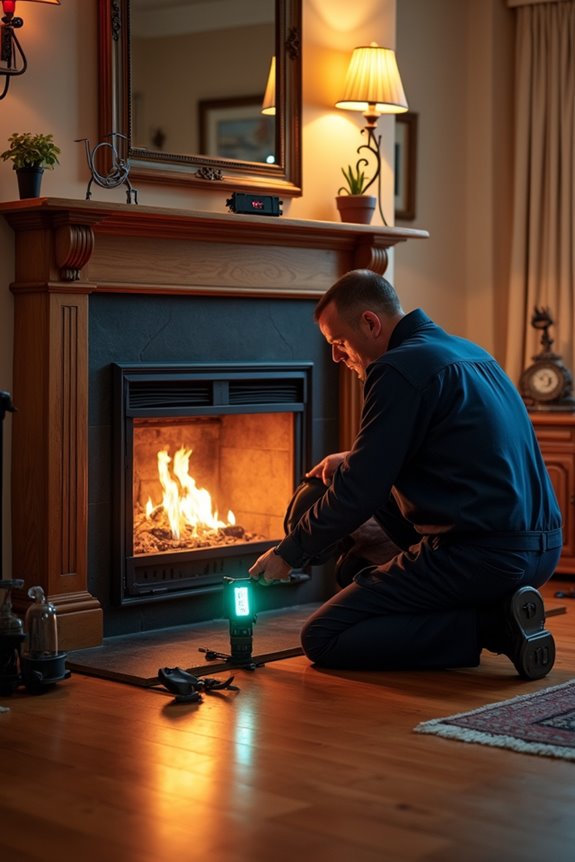
While CO detectors catch emergencies, they’re really just your safety net—the real hero work happens during annual inspections. I’ve learned that catching carbon monoxide problems early means protecting your family before danger strikes.
Here’s what happens during chimney inspections:
- CSIA-certified technicians spot soot blockages and creosote buildup that silently trap exhaust gases, forcing them back into your home
- Professionals identify cracked masonry and loose joints that leak combustion gases directly into your living spaces
- Inspectors verify your venting system matches your fireplace’s needs, preventing CO buildup when you’re cozy by the fire
Think of annual inspections as your fireplace’s health checkup. They catch damaged dampers, faulty connectors, and blocked pathways before carbon monoxide becomes a problem. You’re not just maintaining equipment—you’re keeping your loved ones safe.
Fireplace Safety: Dampers, Fuel, and Ventilation
Fireplace Safety: Dampers, Fuel, and Ventilation
To keep carbon monoxide from sneaking into your home, you need to understand three critical components of fireplace safety: your damper, the fuel you’re burning, and how air moves through your system.
| Component | What It Does | Why It Matters |
|---|---|---|
| Damper | Controls airflow in chimney | Prevents CO from backing up |
| Ventilation | Removes combustion gases | Stops dangerous buildup |
| Fuel Type | Determines emissions | Gas vs. wood burns differently |
| Blockages | Restrict air movement | Creates CO accumulation risk |
| Chimney Inspection | Identifies problems early | Catches issues before they harm you |
Think of your damper as a gatekeeper—open it before lighting anything, or you’ll trap carbon monoxide indoors. Gas fireplaces need working ventilation to push fumes outside. Blocked vents? They’re CO factories. Regular chimney inspection catches these problems before headaches and dizziness hit your family.
5 Maintenance Tasks to Lower Your Fireplace’s CO Risk
You can’t just light your fireplace and forget about it—not if you want to keep carbon monoxide out of your home. I’ve learned the hard way that a little maintenance goes a long way in protecting your family from CO poisoning.
Here’s what I do annually:
- Schedule a chimney sweep to remove soot buildup that blocks proper venting and traps dangerous gases inside
- Hire a CSIA-certified technician for inspections to verify burners and sensors work correctly, reducing incomplete combustion
- Install carbon monoxide detectors on every level and near bedrooms for early warnings
I also make sure my dampers open before burning and use dry, indoor-approved wood. These tasks aren’t glamorous, but they’re what keeps my household breathing safely year-round.
When to Hire a Chimney Sweep for CO Safety
Because your chimney is basically your fireplace’s escape route for dangerous gases, keeping it clear is non-negotiable if you want to prevent carbon monoxide from sneaking back into your home. I’d recommend hiring a CSIA-certified chimney sweep annually—this isn’t overkill, it’s insurance. During inspection, they’ll spot cracked liners, rust, or blockages that trap CO inside. Think of soot and creosote buildup as silent troublemakers; they suffocate your venting system. If you notice stubborn odors, slow drafts, or visible damage around connections, don’t wait—call immediately. A professional sweep catches what we can’t see and keeps your chimney functioning properly. Regular maintenance keeps your fireplace safe and prevents hazards.