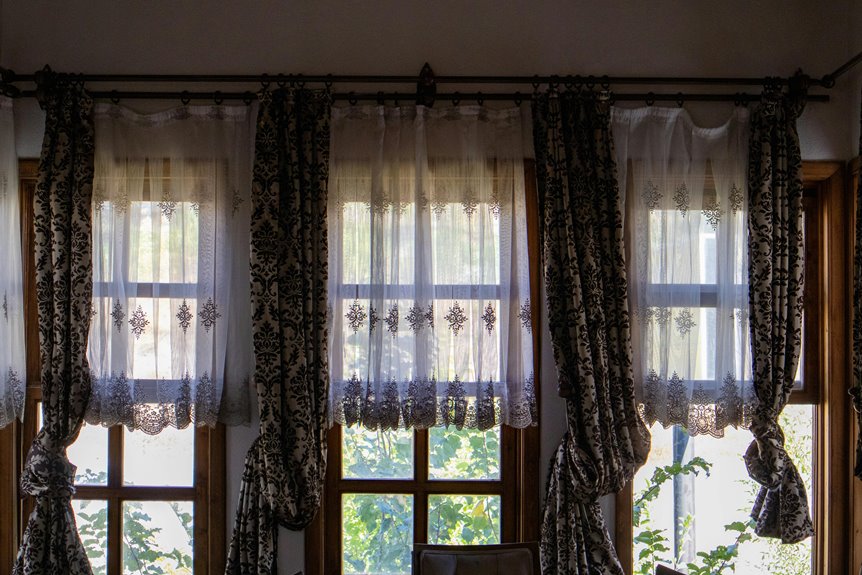
Measure your rod width first—left to right, ignoring decorative finials—then decide if you’re doing an inside or outside mount. Next, multiply that measurement by your fullness factor (2x for standard, 2.5x for deluxe, or 3x for full volume). Finally, divide your total by two if you’re hanging two panels, which works well for most windows. This gives you each panel’s finished width, and there are additional considerations for achieving the right proportions.
Step 1: Measure Your Rod Width (Inside or Outside Mount)

Ever grabbed curtains only to realize they don’t quite fit your rod? I’ve been there, and it all starts with measuring correctly.
First, I measure my curtain rod from left to right, skipping the decorative finials at the ends. This gives me my true rod span—the actual width I’m working with.
Measure your curtain rod left to right, ignoring the decorative finials, to find your true rod span.
Next, I decide: inside mount or outside mount? For inside mounts, I measure directly from my window frame’s inner edges. For outside mounts, I extend 6–12 inches beyond the frame on each side. This wider rod span helps block light better and makes your window appear larger when curtains open.
Once I have my rod width measurement, I have my installation planning foundation. This single measurement determines everything that follows with curtain fullness calculations and proper fit.
Step 2: Apply Your Fullness Multiplier to Calculate Total Width
Now that you’ve got your rod width locked down, it’s time to figure out how much fabric you actually need. This is where the fullness multiplier comes in—it’s what you need for achieving that gathered look.
Here’s how it works:
- Standard 2x fullness: Multiply your window width by 2. A 36-inch window needs 72 inches total.
- Deluxe 2.5x fullness: Go bigger for that luxury look. The same 36-inch window now needs 90 inches.
- Ultra-full 3x fullness: Maximum drama and elegance for statement-making curtains.
Once you’ve calculated your total finished width, divide by two if you’re going with a two-panel setup. This width calculation keeps your curtains hanging beautifully without looking skimpy. Timing matters here—don’t skip this step!
Step 3: Divide Across Single or Double Panels
Should you go with two panels or one?
I’d recommend two panels for most windows because it gives you flexibility and a polished look. Here’s the math: take your total curtain width measurement and divide it by two. So if your fullness calculation gave you 72 inches, each panel should be 36 inches wide.
Single panel setups work too, but they’re trickier. You’d need one massive panel measuring your entire curtain width, which means less fullness when it’s open and potential stacking issues.
Two panels work well because they stack neatly off your window when drawn back, letting maximum light flood in. Plus, they create a balanced, well-considered appearance that shows your space has been thoughtfully arranged.