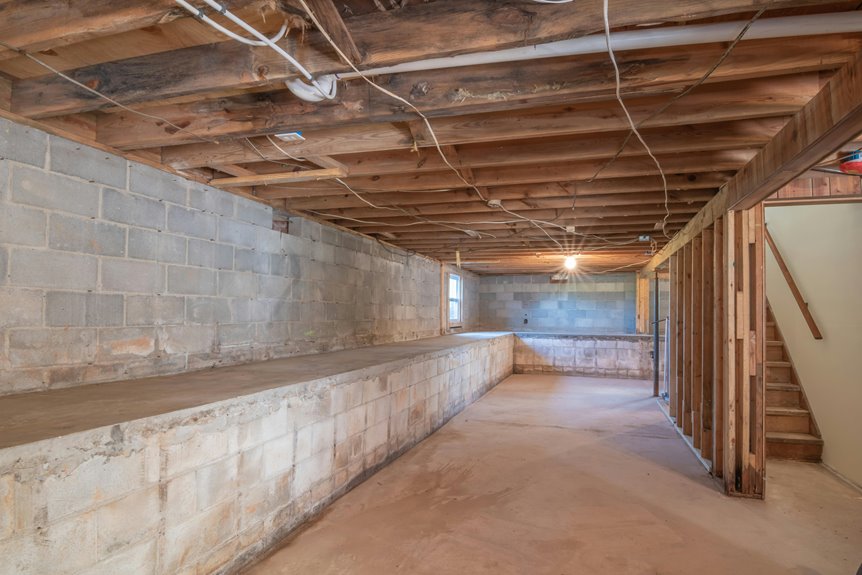
You’ll want to keep your basement humidity between 30% and 50% relative humidity year-round. Anything above 60% invites mold, musty smells, and condensation that’ll damage your belongings. Grab a cheap digital hygrometer to check monthly—it takes two minutes.
In summer, aim for 55-60% for efficiency; in winter, tighten it to 30-40% to avoid moisture problems. A dehumidifier with automatic controls handles most of the work once you’ve sealed up your leaks and fixed drainage issues.
Continue reading to learn exactly how to achieve this without running your dehumidifier constantly.
What’s the Right Humidity Level for Your Basement?
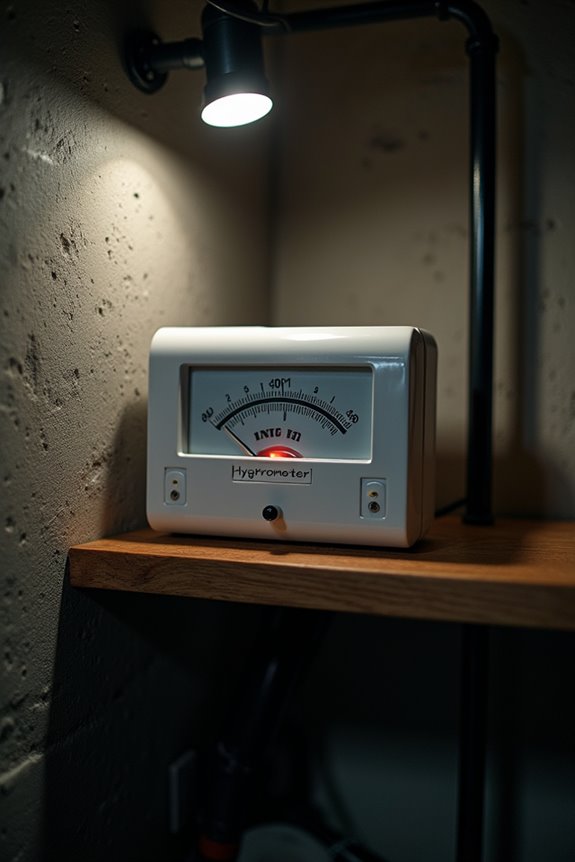
Ever wondered why your basement sometimes smells like an old gym locker? That’s moisture talking. I’ve learned that keeping your basement humidity between 30% to 50% relative humidity is your sweet spot year-round. This ideal humidity level protects your belongings and keeps mold growth at bay.
Here’s the thing: when moisture creeps above 60%, trouble follows. You’ll notice musty odors, condensation on windows, and maybe even visible mold spots. Not fun.
To maintain that target humidity range, I use a dehumidifier with automatic controls—it’s an effective solution for moisture control. Proper drainage away from your foundation helps too. These steps work together to keep your basement comfortable and safe. Think of it as giving your space the care it deserves.
Why Basements Get Humid: Five Common Moisture Sources
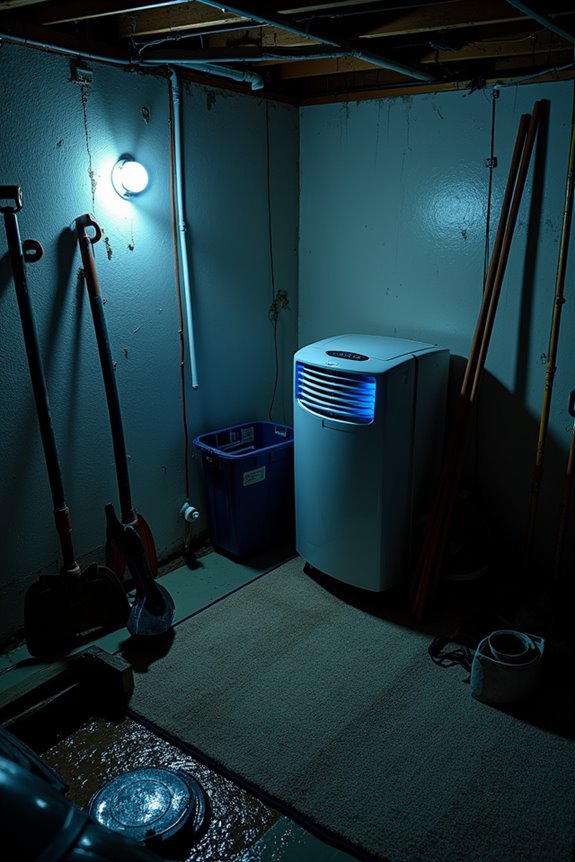
Basements tend to trap moisture like sponges because poor ventilation keeps humid air from escaping, particularly in airtight spaces where stale air accumulates and becomes progressively damper. Water enters from outside sources—whether seeping through soil cracks, leaking from old pipes, or collecting in poorly drained window wells—and once inside, it has no outlet. Additionally, activities like laundry or occupying the space as living quarters introduce more moisture into an already damp environment, similar to operating a humidifier in a sealed container.
Poor Ventilation Traps Moisture
Why does humid air linger in your basement like an unwelcome houseguest? Poor ventilation is the culprit. When your basement lacks adequate air circulation, moisture gets trapped indoors with nowhere to escape. Think of it like closing windows during a rainy day—the humidity just builds up.
I’ve noticed that airtight basements are moisture magnets. Even small sources create problems. A tiny leak or damp soil contact becomes a bigger issue without fresh air moving through. That stagnant air leads to condensation on walls and pipes, perfect conditions for mold growth.
Your humidity level climbs faster in poorly ventilated spaces. Installing a dehumidifier helps, but it’s only part of the solution. You really need proper air circulation to prevent moisture from settling in. Opening windows, adding vents, or running fans improves your basement’s health and dryness.
Outdoor Water Seepage Issues
Your basement’s greatest moisture enemy isn’t always inside your home—it’s often lurking just outside your walls. Outdoor moisture seeping through soil and cracks directly raises your humidity levels, turning your basement damp without you realizing why. Heavy rain? Melting snow? That water’s finding its way in. Poor drainage around your foundation means water pools near your basement walls, increasing pressure. Old window wells without proper sealing let moisture infiltrate directly. Leaking pipes compound the problem. Weather conditions matter too—seasons with high soil moisture create constant humidity challenges. You can’t control the weather, but you can control sealing cracks and improving drainage. Address these outdoor water seepage issues, and your basement will stay noticeably drier.
Indoor Activities Increase Humidity
How much moisture do you think you’re actually adding to your basement every single day?
I didn’t realize it until my humidity levels skyrocketed. When you’re doing laundry, showering, or even just living down there, you’re releasing tons of moisture into the air. That’s where humidity control becomes necessary.
| Activity | Moisture Released | Solution |
|---|---|---|
| Laundry | High | Vent dryer outside |
| Showering | Very High | Run exhaust fan |
| Cooking | Medium | Improve ventilation |
| Drying clothes | High | Use dehumidifier |
| Daily living | Ongoing | Monitor humidity levels |
Without proper ventilation, that moisture gets trapped. A dehumidifier helps significantly. Water intrusion and a sump pump work together—they handle external moisture while you manage internal humidity. Your basement’s humidity levels directly impact comfort and safety. It’s worth addressing.
Signs Your Basement Humidity Is Too High
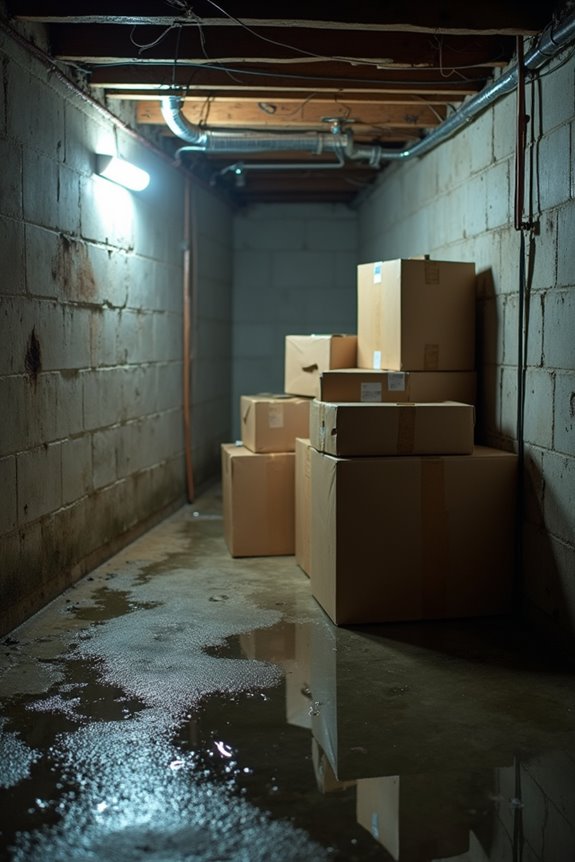
When you notice a musty smell creeping through your basement or spot dark mold patches on walls and ceilings, you’re looking at classic signs that humidity’s gotten out of hand. I’ve seen basements where condensation coats the windows so heavily you can barely see outside, and where paint starts peeling off like your walls are shedding skin—these are your red flags that moisture is doing real damage. Rust appearing on metal objects, discolored drywall, and that sticky feeling in the air all point to the same problem: your basement’s moisture level has climbed too high and needs attention now.
Visible Moisture And Odors
Ever walked downstairs and caught a whiff of something musty? That’s your basement humidity talking. When moisture levels climb too high, you’ll notice visible signs everywhere. Condensation creeps across your windows and cold pipes—basically, tiny water droplets settling on surfaces. You might spot discolored patches on walls or ceilings, or watch paint peel like it’s shedding skin. Here’s the kicker: that musty odor often signals mold growth lurking nearby. Rust appears on metal objects faster than you’d expect. Water stains and efflorescence (those chalky white deposits) become your unwanted basement decorations. These aren’t just cosmetic issues either. They’re telling you your indoor air quality and moisture problems need immediate attention. Your basement’s trying to communicate through dampness and odors.
Structural Damage Indicators
Beyond the musty smells and surface stains, excessive basement humidity wages a quiet war against your home’s structural integrity. High humidity doesn’t just sit there—it actively destroys. When moisture control fails, wood rot sneaks in like an uninvited guest, weakening structural beams and joists. Mold growth thrives above 60% indoor humidity, spreading invisibly through walls.
| Damage Type | What Happens | Timeline |
|---|---|---|
| Wood Rot | Beams weaken and crumble | 6-12 months |
| Metal Rust | Pipes and supports corrode | 3-6 months |
| Paint Peeling | Layers bubble and fail | 2-3 months |
| Drywall Deterioration | Materials soften and collapse | 4-8 months |
| Condensation Damage | Surface warping occurs | Ongoing |
Humidity alerts and dehumidifier maintenance protect your foundation. Catching structural damage early means keeping your home and your peace of mind intact.
Health and Home Damage From Excess Moisture
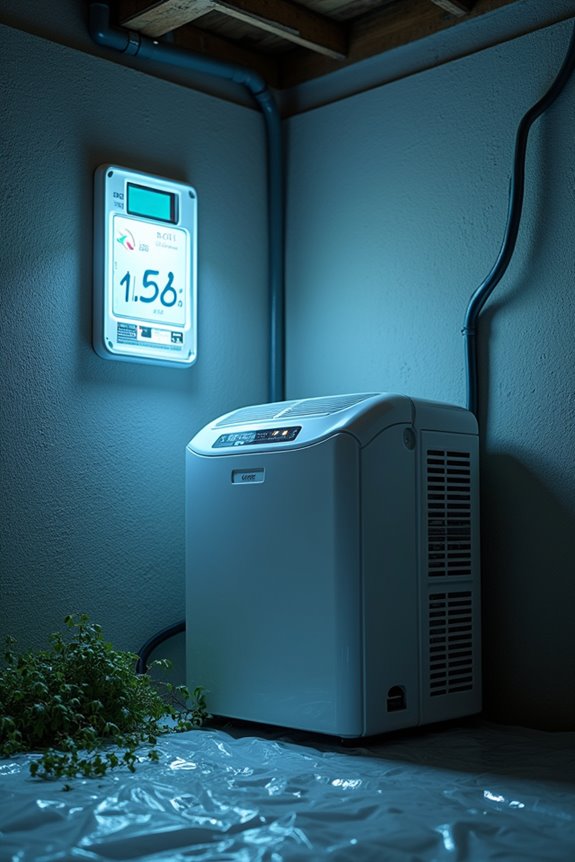
Why does your basement smell like a wet dog even though you don’t own one? That musty odor signals excess moisture creating serious problems. When basement humidity climbs above 60%, mold growth thrives on walls and ceilings. Condensation on windows and rust on metal objects aren’t just annoying—they’re warning signs.
What should concern you most: excess moisture triggers health risks. Mold spores and bacteria floating in the air can cause respiratory infections, allergies, and asthma flare-ups. Your family’s health depends on addressing this.
The good news? You can fight back. Sealing leaks, improving drainage, and using dehumidification keeps humidity levels below 60. These steps stop mold growth before it starts. Your basement won’t just smell fresher—you’ll breathe easier knowing your home is protected.
Stop Moisture at the Source: Seal and Repair
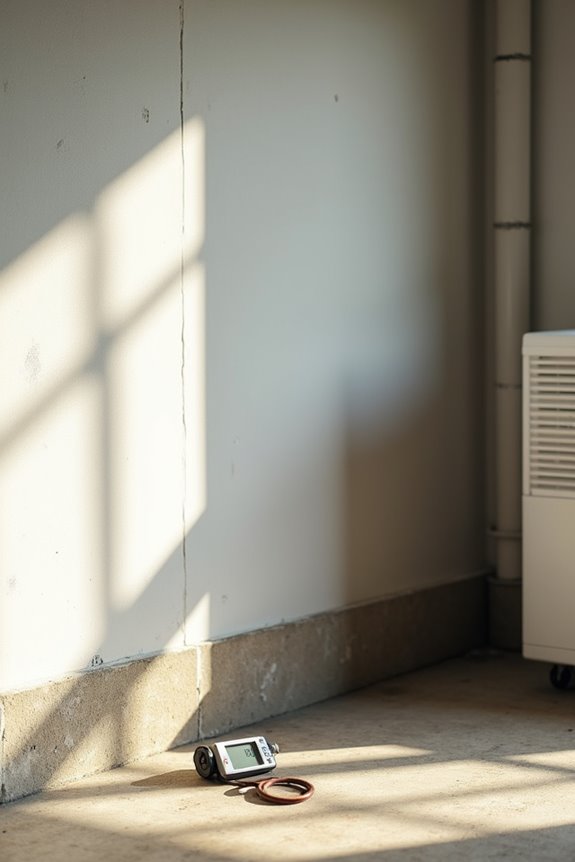
How much moisture sneaks into your basement through tiny cracks you can’t even see? I’ve learned that stopping moisture at the source beats fighting it later. Start with sealing gaps around windows and doors using weatherstripping and caulking—these practical fixes work well. I also inspect my cracked walls regularly because those hairline fractures let water slip through like uninvited guests.
Next, I address leaks immediately. Fixing pipe drips and sump pit sealing prevents moisture from accumulating. Window sealing matters too, especially around older frames that let moisture intrusion happen constantly.
Here’s what I’ve discovered: consistent moisture source control through these repairs creates a stable basement environment. It’s not glamorous work, but it’s the real solution that keeps humidity manageable without constant dehumidifier running.
Lower Humidity Fast: Dehumidifiers, Ventilation, and Insulation
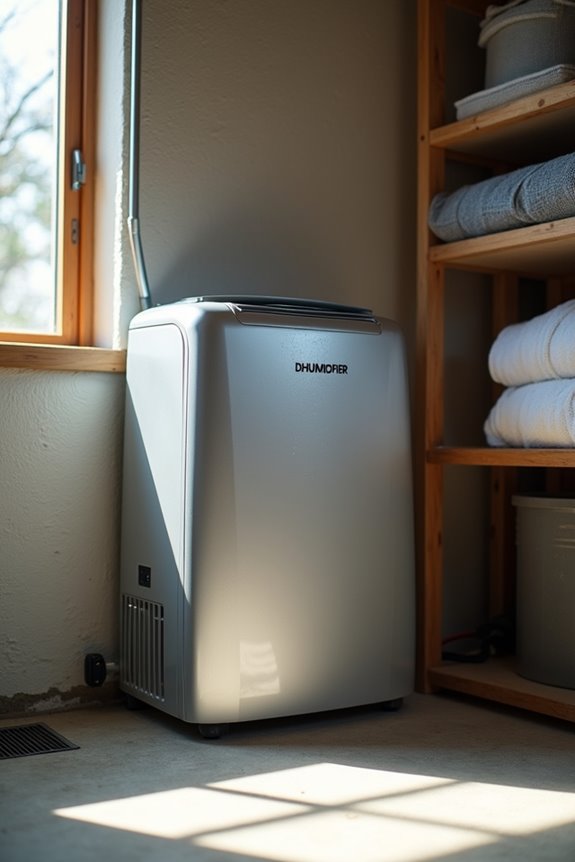
Once you’ve sealed the cracks and stopped water from sneaking in, it’s time to actually pull the moisture out of the air you’re breathing down there. I recommend installing a dehumidifier with automatic humidity controls to keep your basement humidity between 30%–50%. These machines work hard so you don’t have to obsess over readings constantly. Pair that with proper ventilation using exhaust fans—they’re like giving your basement lungs. Open windows 10–15 minutes daily when outdoor air is dry, exchanging humid air for fresher stuff. Don’t forget improving insulation on walls either; it reduces condensation and supports lower humidity levels naturally. Together, these steps create a basement environment where moisture can’t gain a foothold.
Keep Systems Running: Sump Pumps and Window Well Maintenance
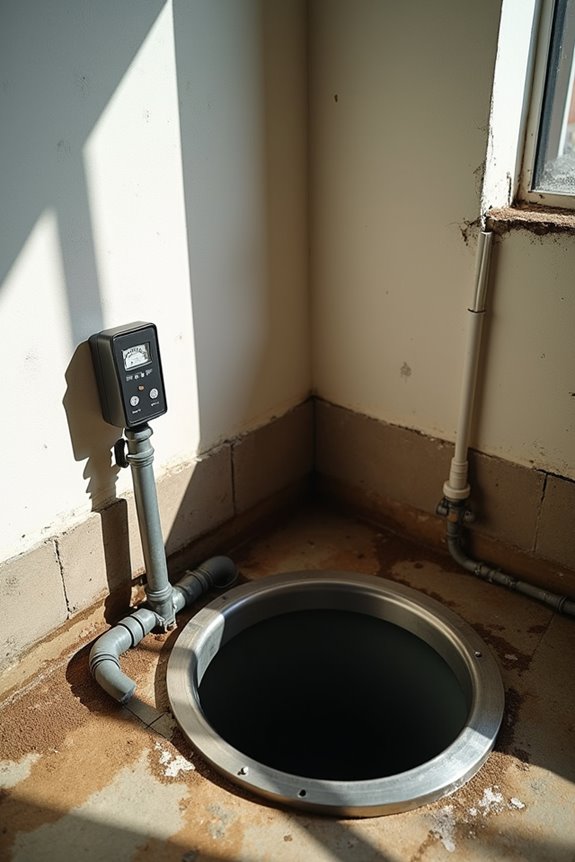
All those dehumidifiers and fans I mentioned? They’re only half the battle. I need to keep my sump pumps and drainage systems in top shape to prevent moisture from entering in the first place. I schedule professional checks every 3–4 months because a failing sump pump means water backs up into my basement—and that’s a humidity problem I want to avoid.
I also inspect my sump pit sealing regularly. Even small gaps let moisture sneak in and undo my humidity control efforts. Outside, I direct my downspouts away from my foundation, and I check my window wells for proper drainage. Adding a window well cover prevents water accumulation that would increase my basement humidity. These systems work together for effective moisture removal and mold prevention.
Monitor and Adjust Humidity Year-Round
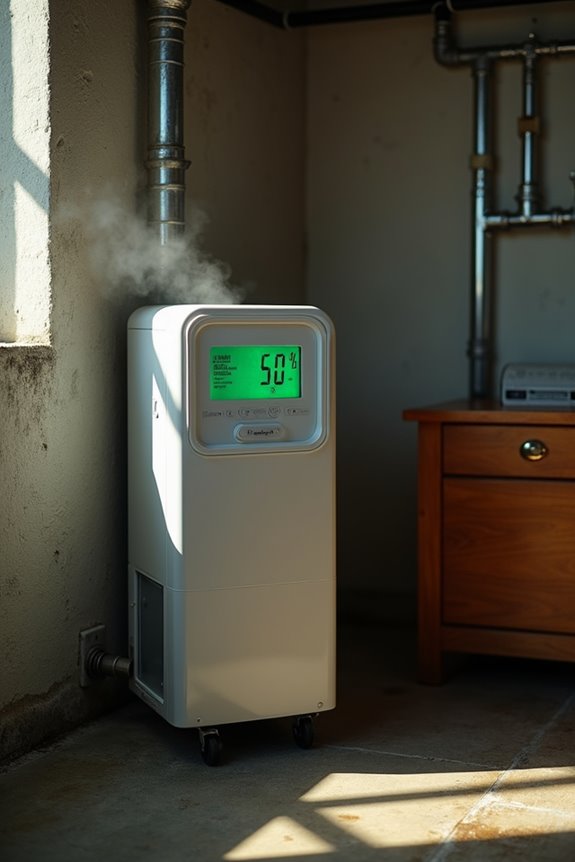
Why does my basement humidity creep up in summer but plummet in winter? The answer lies in seasonal moisture sources. I’ve found that humidity monitoring with a digital hygrometer keeps me accountable about what’s actually happening down there.
I aim for that sweet spot: a humidity range of 30%–50% RH year-round. Summer throws curveballs though. I relax my dehumidifier settings to 55%–60% to reduce running time while still preventing mold. Winter’s different. I tighten things to 30%–40% to dodge condensation on windows.
Here’s what works: I check my readings monthly and adjust accordingly. Seasonal adjustments aren’t complicated—they’re just smart moisture control. By staying vigilant, I’ve prevented mold concerns and maintained basement humidity that actually feels right.