Your bathroom fan silently collects dust that chokes airflow, causing the motor to overheat and ignite trapped lint. Worn motors without thermal protection and faulty wiring spark fires you can’t see coming. That scraping sound? Red flag. Here’s what works: cleaning your vent every six months, replacing fans older than ten years, and swapping in thermally protected models stops fires before they start. If your fan’s showing warning signs, stop using it today and call an electrician—because understanding what’s actually happening inside that housing matters.
Why Your Bathroom Fan Could Start a Fire
Envision this: you’re running your bathroom fan during a steamy shower, and it’s quietly doing its job—or so you think. Here’s the thing—your fan could actually be a fire hazard waiting to happen.
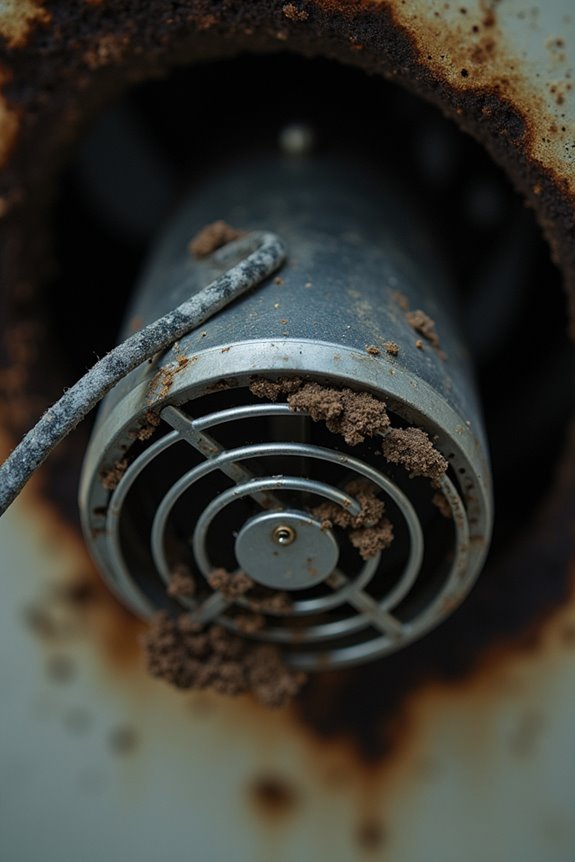
Lint buildup is the main culprit. Over time, dust and lint accumulate inside your fan, clogging the motor and surrounding parts. When your fan runs for extended periods, that trapped lint causes overheating. The motor gets hotter and hotter until—potentially—it ignites the lint itself or nearby wood structures.
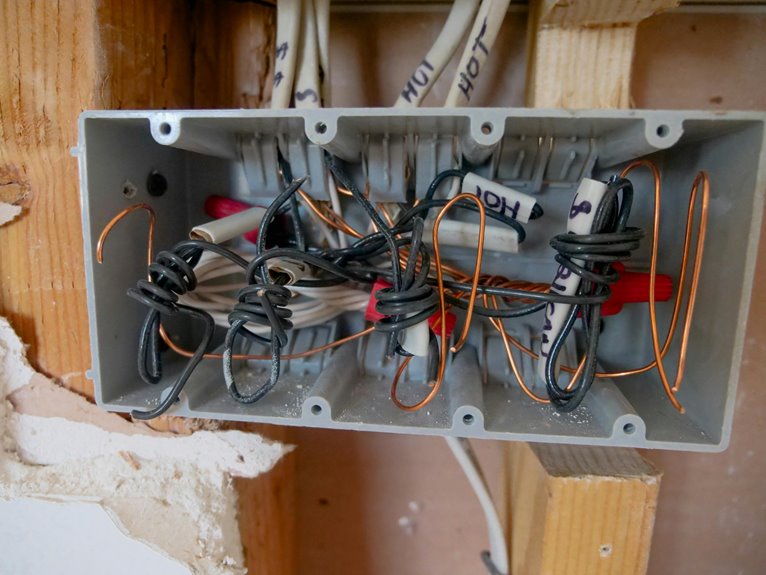
Then there’s faulty wiring. Damaged electrical connections inside older fans can spark, especially when combined with lint accumulation. Plastic fan blades can catch fire too. Without thermal protection shutting things down, you’ve got a serious problem brewing quietly behind your bathroom wall.
Dust, Worn Motors, and Faulty Wiring: The Main Fire Triggers
What’s actually happening inside your bathroom fan right now? You’ve probably never thought about it. That’s where danger lurks.
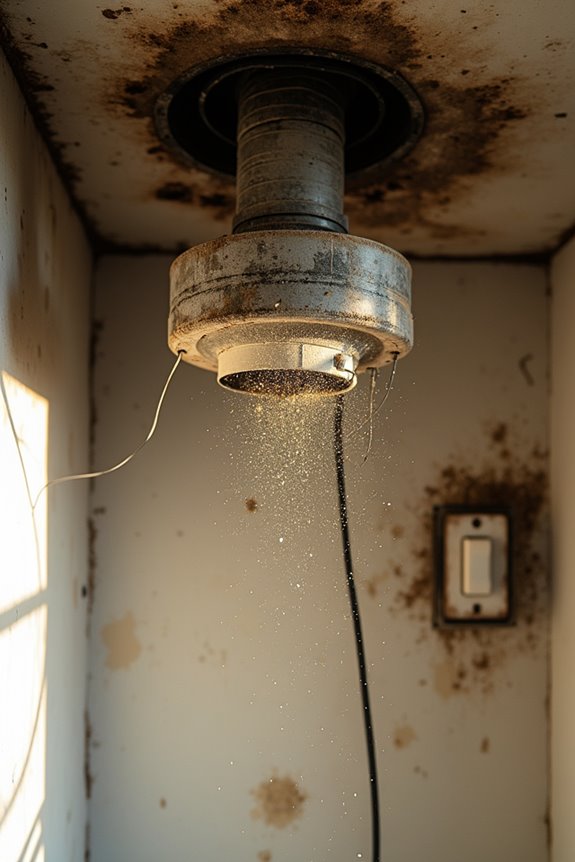
Dust and lint are sneaky troublemakers. They pile up on your motor, blocking airflow. Your motor then overheats like an engine without coolant. When temperatures spike, ignition becomes possible.
Worn motors are another culprit. As they age, thermal protection fails. Faulty wiring compounds the problem, creating electrical hazards that spark fires unexpectedly.
| Fire Trigger | How It Works | Risk Level |
|---|---|---|
| Dust buildup | Blocks cooling airflow | High |
| Worn motor | Loses thermal protection | High |
| Faulty wiring | Creates electrical sparks | Critical |
| Seized bearings | Increases friction heat | Medium |
| Dry lubrication | Causes motor strain | Medium |
We’re all guilty of neglecting maintenance. But understanding these three main triggers—dust, motor condition, and wiring—helps you prevent disasters before they happen.
Warning Signs Your Fan Is at Risk
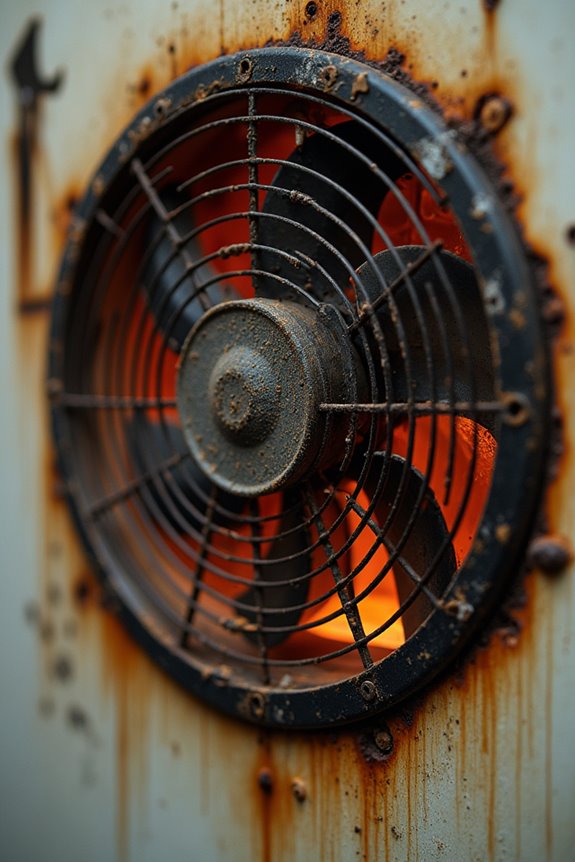
How do you know when your bathroom fan is quietly heading toward trouble? I’ll tell you—pay attention to what you see and hear.
Discoloration around your fan means it’s overheating. That’s your warning sign. Odd sounds like scraping or burning smells signal motor failure is coming. Don’t ignore them.
Discoloration around your fan means it’s overheating. Scraping sounds and burning smells signal motor failure. Don’t ignore these warning signs.
Dusty buildup on the fan and vents? That reduces airflow and increases fire risk significantly. I find it easier to clean regularly than replace a damaged unit.
Is your fan slow to start or short cycling constantly? That suggests aging or electrical issues developing inside.
Heat damage marks, installation beyond ten years, or accessibility problems mean replacement time. Install a thermally protected unit instead. These signs aren’t subtle—they’re your fan’s way of asking for help before the exhaust system fails completely.
Dust Buildup: The #1 Cause of Bathroom Fan Fires
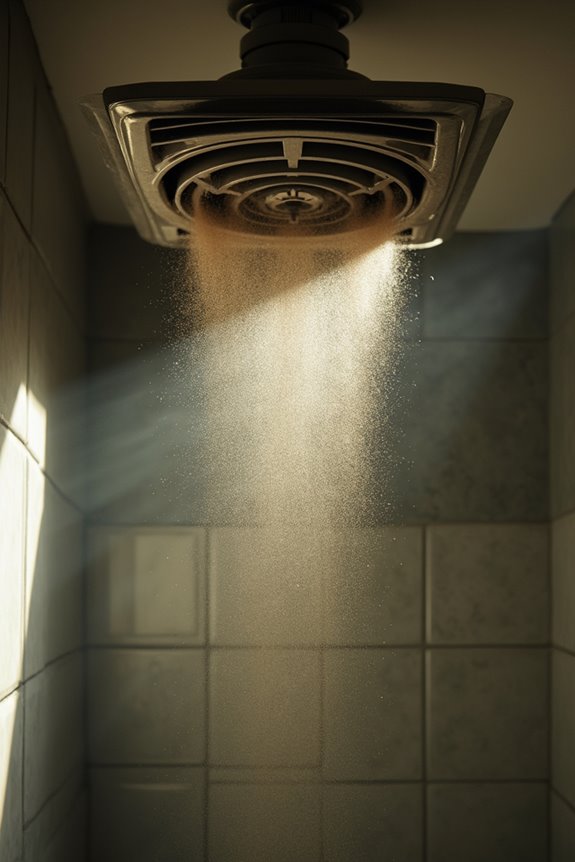
Your bathroom fan’s greatest enemy isn’t a mysterious mechanical villain—it’s something far more mundane sitting right inside it: dust.
I get it—you can’t see what’s happening in there, so it feels invisible. But here’s the problem: dust buildup blocks airflow and traps heat around your motor. That overheating creates the perfect conditions for fire.
| What Happens | Why It Matters | How to Stop It |
|---|---|---|
| Lint buildup restricts airflow | Motor can’t cool down | Clean quarterly |
| Heat accumulates inside | Insulation darkens and scorches | Check for dark spots |
| Motor works harder | Components fail faster | Don’t ignore it |
| Fire risk increases | Your home’s in danger | Act now |
When dust cakes your fan’s blades and housing, you’re suffocating it. That motor runs hotter and harder, desperately trying to push air through the debris. Dark spots on insulation? That’s your warning sign. Keeping your homes safe starts with what we can’t always see.
Fans Over 10 Years Old: Why They Need Replacement
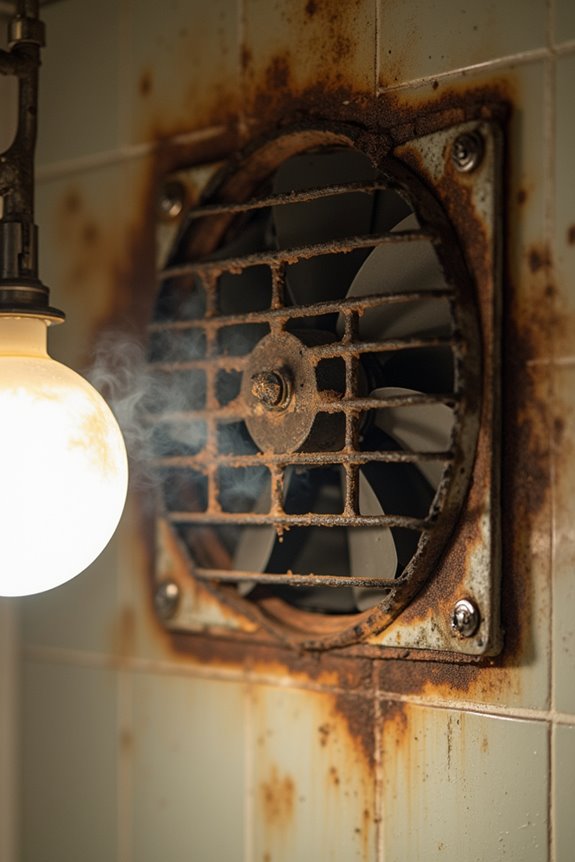
Even if you’ve kept your bathroom fan spotlessly clean, there’s another ticking clock you might not realize is running: age.
After about 10 years, your fan’s internal components start degrading—and that’s when things get risky. Older fans often lack thermal protection, meaning if the motor overheats, nothing automatically shuts it down. Without that safety feature, overheating can ignite lint trapped inside.
You might notice warning signs: discoloration around the unit, strange noises, or sluggish startup. These hint that age-related failure is approaching. Here’s the thing: semiannual cleaning helps, but it can’t stop internal wear.
That’s why we recommend replacing aging fans with thermally protected models. Modern units cut power instantly if overheating occurs, protecting your home. Don’t wait until your fan fails catastrophically. A new fan is cheaper than the damage a fire causes.
Safe Cleaning Prevents Exhaust Fan Fires
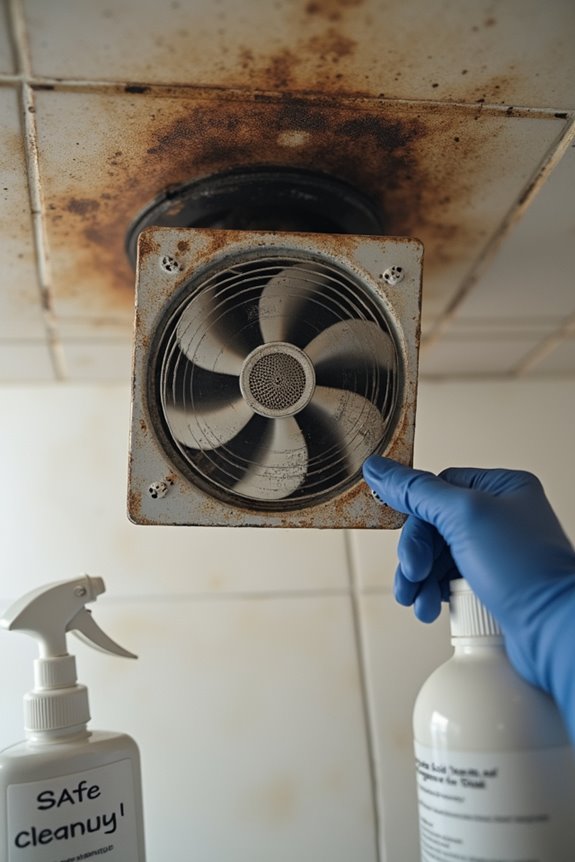
Why do bathroom fans catch fire when they look fine on the surface? The culprit hides inside. Dust and lint accumulate on blades, in ducts, and around the motor—places you can’t see. This buildup traps heat, causing your bathroom exhaust fan to overheat dangerously.
Here’s what I do to stay safe: I clean my vent cover every six months with warm soapy water, letting it dry completely before reinstalling. I also wipe down the interior housing and ducts using a duct cleaning extension kit. These steps maintain proper airflow so heat doesn’t build up.
I’ve switched to LED bulbs too. They run cooler and reduce electrical load on the circuit. You don’t need fancy equipment—just consistency. Regular cleaning and safety checks mean your fan works properly and your home stays protected.
Timer Switches Stop Bathroom Fan Fire Risk
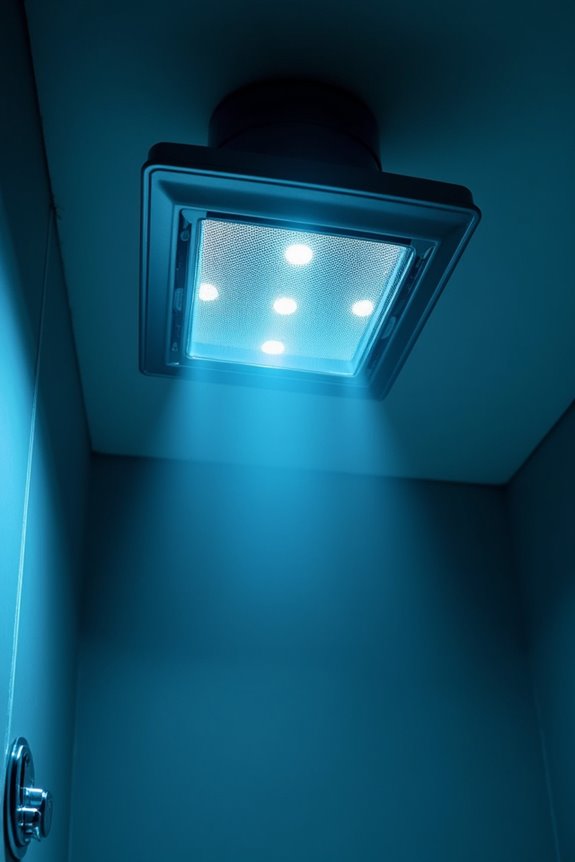
Since bathroom fans are so easy to forget about once you hop out of the shower, a timer switch does the forgetting for you. I’ve learned that leaving bathroom exhaust fans running unattended is a genuine fire hazard. A timer switch automatically shuts off your fan after a set time—typically 10 to 20 minutes—matching how long you actually need ventilation. This simple device addresses the real problem: people leaving fans running overnight or when nobody’s home, which creates dangerous heat buildup. You can install timer switches as standalone devices or combined with your light fixture. The best part? Testing your timer occasionally and teaching everyone in your household about proper usage keeps fire risk low. It’s one of the most straightforward prevention steps available.
Swap Aging Fans for Thermally Protected Units
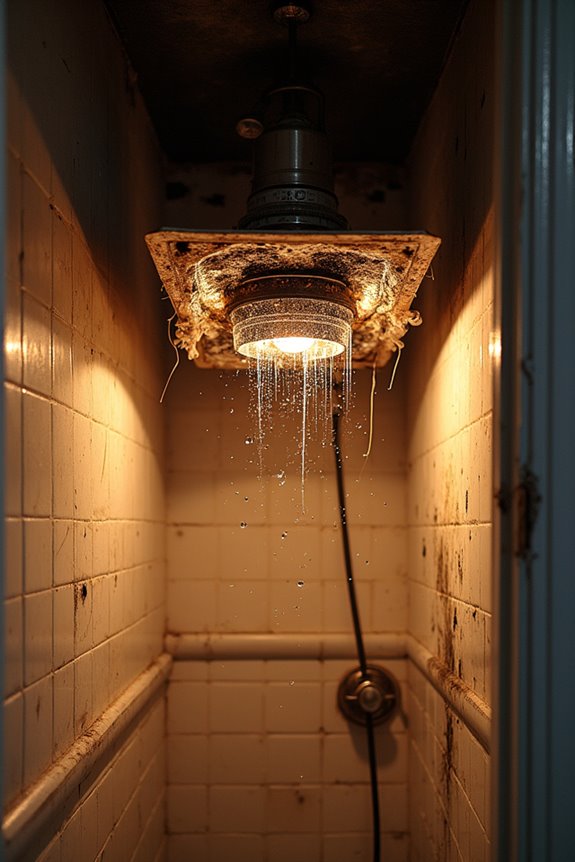
How much do you know about what’s actually happening inside your bathroom fan right now?
If you’ve got an older unit, it’s probably working harder than it should. Here’s why replacing aging fans with thermally protected models matters:
- Automatic shutoff protection: These units cut power instantly if your fan seizes or starts overheating, stopping fires before they start
- Lint prevention: Dust buildup won’t ignite your fan’s motor or nearby wood framing
- Peace of mind: You’re not gambling with safety every time someone showers
I’d recommend hiring a licensed electrician to install your new thermally protected fan properly. They’ll ensure everything’s wired correctly and that thermal protection actually works. Upgrading every 10 years keeps your bathroom safe and your fan running smoothly. It’s one of those upgrades that protects what matters most.
Stop Using Your Fan If It Scrapes: Call an Electrician
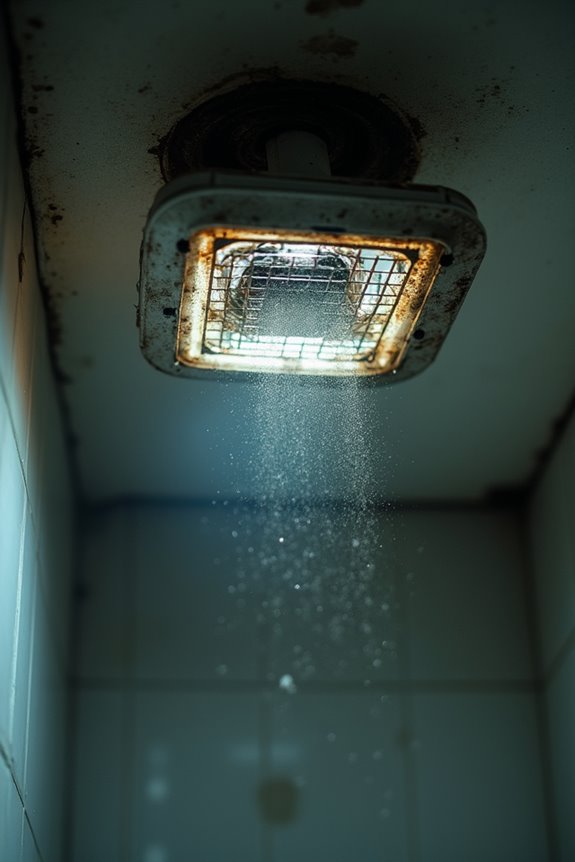
That scraping sound your bathroom fan makes when it kicks on? Don’t ignore it. I know we’re tempted to brush off odd noises, but this one’s serious. Scraping noise signals motor trouble—bearings are wearing out or something’s rubbing where it shouldn’t.
Scraping sounds from your bathroom fan signal serious motor trouble. Don’t ignore it—bearings are wearing out and need immediate professional attention.
Here’s why you need an electrician immediately: continued use worsens the friction, causing motor overheating. An overheated motor risks electrical ignition, potentially spreading fire to insulation and drywall around your fan. That’s not exaggeration—it’s real danger.
Stop using the fan today. Prevent others from flipping that switch. Consider turning off power to the unit entirely until a licensed electrician inspects it. They’ll assess whether lubrication, wiring, or sealed bearing failures caused the problem.
Your safety matters more than convenience.
What an Electrician Checks on Your Bathroom Fan Circuit
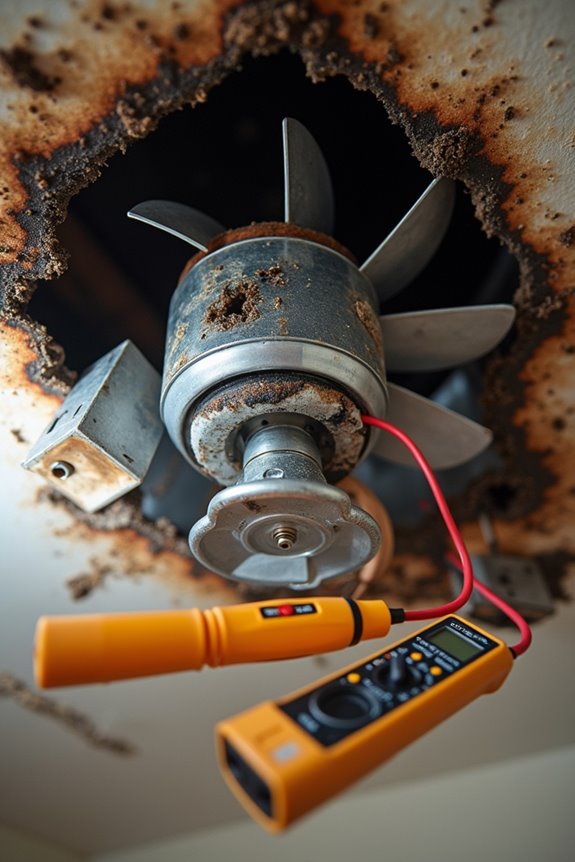
Once you’ve called an electrician to fix that scraping sound, they won’t just tinker with the motor and leave. They’ll check everything connected to keeping your bathroom fan safe and running smoothly.
Here’s what they’re actually doing:
- Inspecting electrical wiring for damaged insulation or loose connections that could spark and start fires
- Testing circuit safety to confirm your fan has proper protection and isn’t overloading other bathroom outlets
- Verifying thermal protection features work correctly to shut down the fan if it overheats
Your electrician examines the switch, timer, and control components too. They’re looking for worn-out parts and age-related damage that compromise safety. Think of it like a health checkup—they’re catching problems before they become dangerous. That thorough inspection? It’s what keeps your bathroom fan from becoming a fire hazard.
Your Bathroom Fan Safety Checklist: What to Check and When
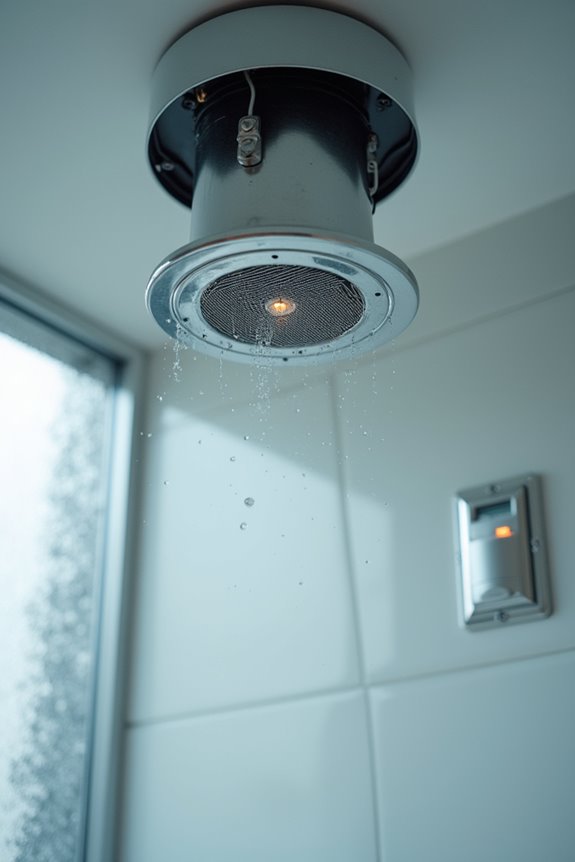
When’s the last time you actually looked at your bathroom fan? It’s probably been a while. Your bathroom exhaust fan needs regular attention to stay safe, so here’s your maintenance checklist.
Inspect annually for dust buildup and discoloration around the motor and wiring—these signal overheating risks. Listen for squeaking or scraping sounds; they indicate something’s wrong inside.
Beyond just wiping the blades, remove the cover and clean the interior housing and vents thoroughly. Wash the cover with warm soapy water and dry it completely.
Replace fans every 10 years or when you spot wear and heat damage. Set phone reminders for your annual checks. Install a timer switch to prevent extended operation, which reduces fire danger significantly. These simple steps keep your bathroom safer.