
The most dangerous bathroom molds—Stachybotrys (black mold), Aspergillus, and Chaetomium—produce invisible toxins that trigger serious health problems like respiratory damage, severe asthma attacks, and autoimmune reactions.
Black mold poses the greatest risk when it thrives in constantly wet spots near leaky pipes and water damage.
Aspergillus can cause infections, particularly if your immune system is already compromised.
These three are deadlier than common molds like Cladosporium because they release mycotoxins through airborne spores.
Want to know how to identify them and stop them before they spread?
What Makes Certain Bathroom Molds Dangerous?
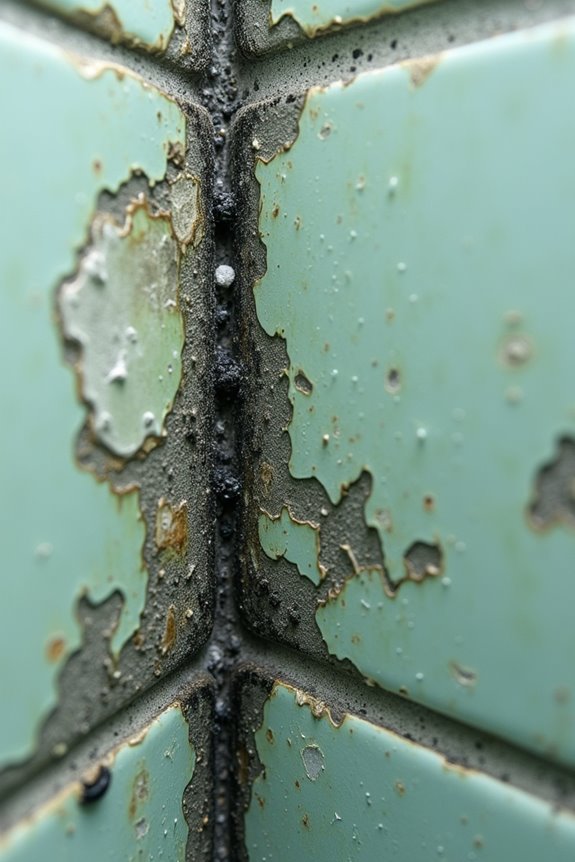
Why do some molds in your bathroom pose greater health risks than others? The answer lies not just in the mold species itself, but in its biological effects. Stachybotrys chartarum, commonly known as black mold, produces mycotoxins—microscopic harmful compounds that become airborne and irritate your lungs, particularly with extended exposure.
Location matters significantly. Molds thrive in damp walls, areas around leaky pipes, and concealed spaces behind wallpaper. Trichoderma and Chaetomium species flourish in these conditions and can trigger allergic reactions and infections in susceptible individuals.
The actual danger level depends on your personal health status. People with compromised immune systems or asthma experience more severe reactions to bathroom molds. When your body’s natural defenses are already weakened, mold spores transition from minor irritants to legitimate health concerns.
Stachybotrys: Why Toxic Black Mold Is the Biggest Threat
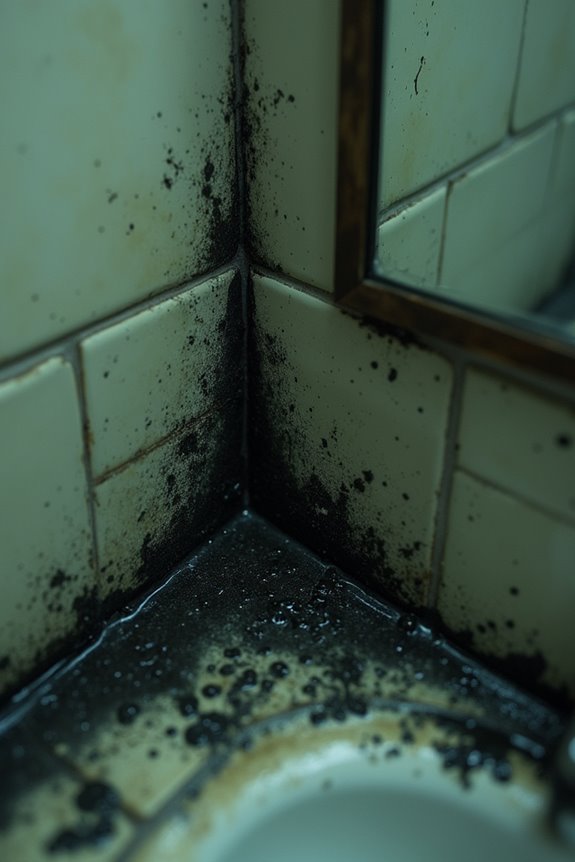
Stachybotrys chartarum—better known as toxic black mold—deserves special attention because it’s the worst offender among bathroom molds.
Stachybotrys chartarum, or toxic black mold, stands out as the most dangerous bathroom mold threat to your home.
This dark green or black mold thrives in consistently humid bathrooms, particularly around leaky pipes and water-damaged areas. It releases mycotoxins through airborne spores that compromise your indoor air quality and health.
Here’s what makes it particularly troublesome:
- Produces dangerous mycotoxins that spread through air vents throughout your home
- Causes respiratory issues, chronic headaches, fatigue, and depression with prolonged exposure
- Grows on cellulose materials like drywall and wood framing where moisture persists
- Requires professional mold remediation due to contamination risks
If you spot black mold, you’re facing a serious situation. Don’t attempt DIY cleanup. Professional inspection and safe removal protect both your home and your family’s wellbeing.
Aspergillus: The Mold That Triggers Severe Asthma and Infections
I’ve got to tell you—if you think black mold is the only culprit lurking in your bathroom, Aspergillus might catch you off guard, since this gray-green growth doesn’t just look unpleasant but can actually trigger serious asthma attacks and infections, especially if you’ve got a weakened immune system. The tricky part is that Aspergillus releases invisible toxins called mycotoxins that sneak into your lungs when you breathe in mold spores, so spotting it early on shower walls or near water leaks becomes your best defense. Want to protect yourself and your pets from respiratory trouble—the kind that lingers for months?
Aspergillus Health Risks
When you spot fuzzy black, gray, white, or yellow patches creeping across your shower walls or lurking near that slow leak under the sink, you’re likely looking at Aspergillus—one of the bathroom’s most common and sneaky molds.
Here’s why this indoor mold matters to your health:
- Severe asthma attacks can strike sensitive people exposed to Aspergillus spores
- Aspergillosis infections develop in immunocompromised individuals, affecting lungs and eyes
- Pet dangers include allergic reactions and serious infections in dogs
- Respiratory complications pose real risks when mold exposure goes unchecked
Ignoring that fuzzy spot creates health hazards. Moisture control and antifungal cleanup require immediate attention. Repairing leaks promptly and reducing bathroom humidity actively protect your household. Taking these steps means breathing easier and staying healthier.
Gray-Green Growth Identification
How’d that fuzzy patch end up on your shower wall? That’s likely aspergillus, a common indoor mold that thrives in bathroom moisture. I’ve noticed it appears gray-green or black, spreading across tiles and grout like an unwelcome roommate.
Here’s what you’re dealing with:
| Appearance | Location | Risk Level |
|---|---|---|
| Fuzzy, gray-green patches | Shower walls | High |
| Black spots on grout | Near water leaks | High |
| Powdery coating | Bathroom corners | Moderate |
| Thick growth clusters | Under sink areas | High |
| Discolored patches | Ventilation areas | Moderate |
This bathroom mold produces mycotoxins that trigger serious health risks—particularly respiratory infections and severe asthma. You’re not alone if you’re spotting it; bathrooms are perfect breeding grounds. The humidity and moisture create ideal conditions. Pay attention to those gray-green growths. They’re warning signs your bathroom needs attention.
Mycotoxin Exposure Prevention
Why does that fuzzy mold matter so much? Because Aspergillus releases mycotoxins that can seriously harm your health. I’ve learned that tackling bathroom mold early saves you from breathing in dangerous spores.
Here’s what I do to keep my family safe:
- Fix leaks immediately—standing water feeds mold growth within days
- Run your exhaust fan—moisture control stops Aspergillus before it starts
- Clean with bleach solutions—this kills mycotoxins and prevents regrowth
- Improve ventilation—open windows and reduce humidity below 50%
Prevention works better than dealing with mold after it appears. When I spot bathroom mold, I act fast. Quick action means less mycotoxin exposure for everyone in your home. Your lungs—and your pets’—will thank you.
Chaetomium: Identifying the Second Most Common Toxic Bathroom Mold
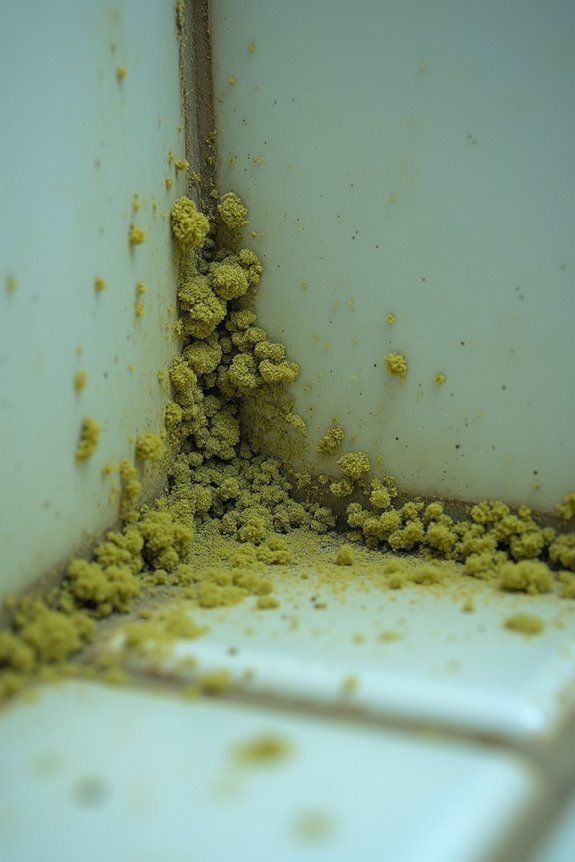
After learning about Aspergillus, you’re probably wondering what other molds lurk in your bathroom—and honestly, Chaetomium is the second player you need to know about. I’ll show you how to spot this allergenic mold before it hides deeper into your drywall or under your baseboards, plus what health risks it poses to you and your family. Then we’ll tackle the practical steps to remove it from your space for good.
Chaetomium Identification And Characteristics
When you’re staring at a dark, fuzzy patch in your bathroom corner, your first instinct is probably to think “black mold.” Thing is, you might actually be looking at something called Chaetomium, a sneaky mold that’s just as troublesome and way more common than people realize.
Here’s what makes Chaetomium tick:
- Dark, fuzzy appearance that mimics black mold, creating confusion during identification
- Thrives in damp environments like under carpets, behind wallpaper, and within water-damaged drywall
- Produces allergic reactions and autoimmune issues in sensitive people exposed to spores
- Spreads rapidly through wet spaces, requiring professional remediation to prevent airborne contamination
Unlike other bathroom molds, Chaetomium demands consistent moisture to survive. It’s not just unsightly—mold exposure from this species can trigger serious health problems. That musty odor you’re noticing? That’s your signal something’s seriously wrong beneath the surface.
Health Risks And Remediation Steps
How concerned should you actually be if Chaetomium’s taken over your bathroom?
Pretty concerned. This toxic bathroom mold triggers allergic reactions and respiratory issues, especially for sensitive folks. I’ve seen people develop persistent coughs and skin irritation after prolonged exposure. Your immune system might overreact, causing inflammation and discomfort.
| Health Risk | Symptom | Timeline |
|---|---|---|
| Allergic Response | Sneezing, itching | Days to weeks |
| Respiratory Issues | Coughing, wheezing | Weeks to months |
| Immune Concerns | Fatigue, inflammation | Ongoing |
| Skin Reactions | Rashes, irritation | Variable |
Here’s what you’ll do: First, get a professional assessment—don’t DIY this. They’ll confirm it’s actually Chaetomium. Next, address moisture remediation by fixing leaks and improving ventilation. Finally, hire professionals for removal. Moisture remediation stops future growth. Your health matters more than the cost.
Cladosporium and Penicillium: Common Allergens in Damp Bathrooms
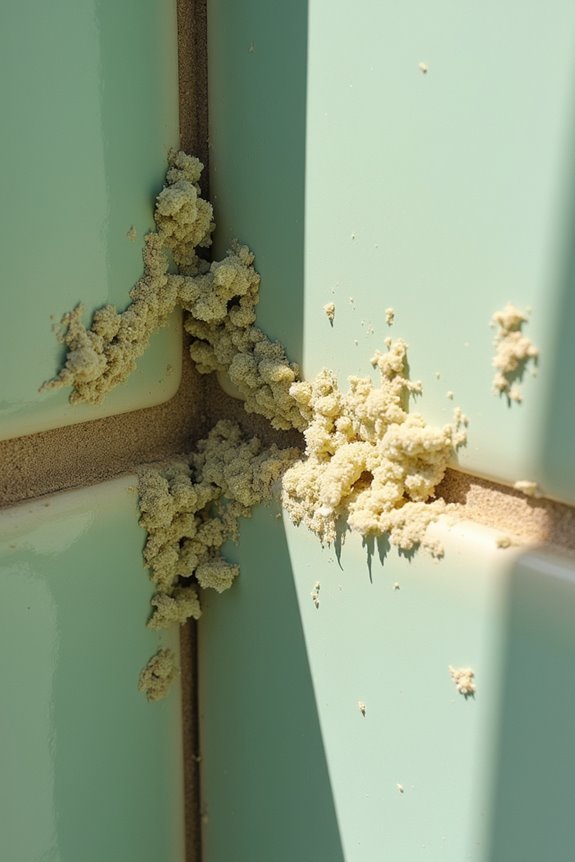
Ever noticed those fuzzy patches creeping across your bathroom walls or window frames? You’re probably looking at Cladosporium or Penicillium—two molds that belong nowhere near your shower.
Here’s what makes these two troublemakers worth understanding:
- Cladosporium appears olive green, brown, or black in circular patches on walls and fabrics
- Penicillium shows up bluish-green and fuzzy on window frames and bathroom drains
- Both thrive in damp bathrooms and trigger allergies and asthma symptoms
- Penicillium can even make your pets sick if they’re exposed
These molds aren’t just unsightly. Prolonged mold exposure in your bathroom creates chronic respiratory problems and worsens allergies. Understanding these common allergens helps you address the problem and reclaim your bathrooms.
Trichoderma, Fusarium, and Ulocladium: Lesser-Known But Risky Types
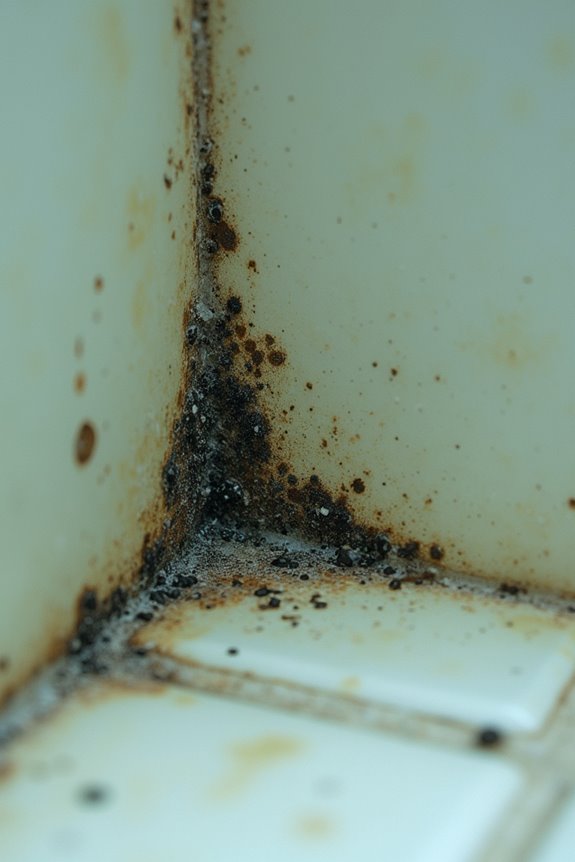
While Cladosporium and Penicillium grab most of the attention, I’d argue that Trichoderma, Fusarium, and Ulocladium deserve your focus too—they’re sneakier and potentially just as problematic. Trichoderma thrives in dark, wet spots beneath leaks, shifting from transparent to yellow-white to gray-green as it matures. Fusarium prefers cooler temperatures on water-damaged materials like carpets and fabrics, potentially triggering allergies and nerve or skin infections. Ulocladium appears greenish-black near showers and is particularly allergenic, causing eye itching and congestion. While less visible than black mold, mold exposure from these types irritates asthmatics and immunocompromised folks alike. If you’re noticing persistent moisture problems, you’ll likely need professional help preventing their spread throughout your home.
How to Identify Dangerous Mold in Your Bathroom
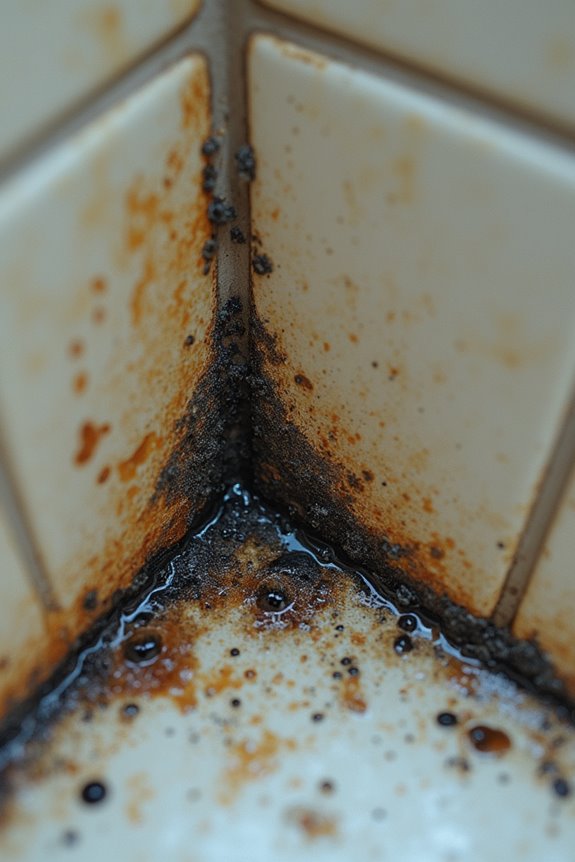
What makes one bathroom mold genuinely hazardous while another’s just unsightly? I’ll tell you—it’s not always about color. Here’s what I look for:
- Musty odors paired with dark growth signal serious mold issues
- Moisture problems like persistent dampness create ideal breeding grounds
- Hidden growth behind walls or under tiles means mycotoxins spreading
- Health effects including respiratory issues or fatigue after exposure
Black mold thrives in consistently wet bathroom areas, releasing dangerous mycotoxins into your air. I’ve learned that distinguishing truly dangerous bathroom mold depends on moisture patterns and your symptoms, not just appearance. Aspergillus, Chaetomium, and Alternaria can all pose serious risks in humid environments. If you’re experiencing unexplained fatigue or breathing problems alongside visible mold growth, that’s your warning sign. When something feels off, it probably is.
Health Effects: Who’s Most Vulnerable to Bathroom Mold?
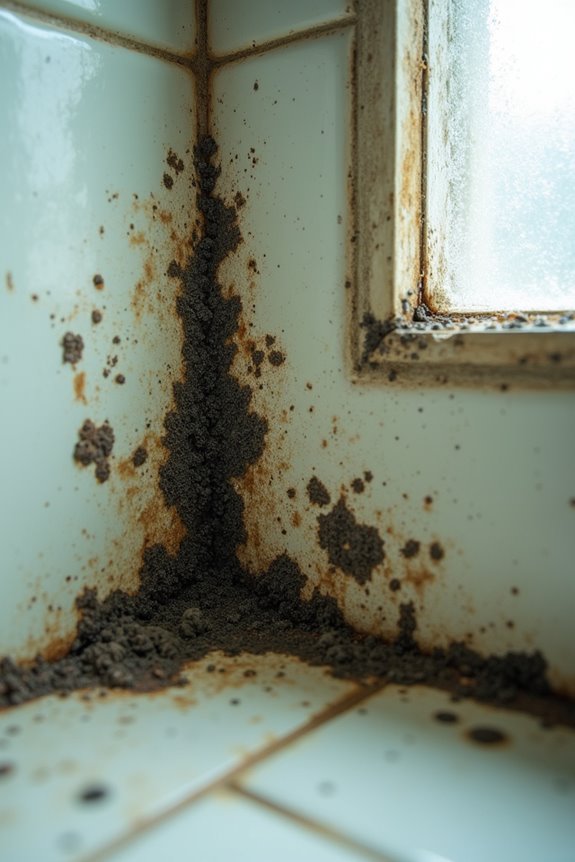
While bathroom mold poses risks to anyone exposed long enough, certain groups face much steeper dangers than others—and knowing who’s most vulnerable might help you avoid serious health trouble. If you have a weakened immune system from HIV, chemotherapy, or organ transplants, molds like Aspergillus can actually infect your lungs and airways, not just trigger allergies like they do in healthier people. People with asthma or allergies already know this: the same molds that cause mild sniffles in your neighbor can send you into a coughing fit or asthma attack because your body’s defenses overreact to mold spores.
Immune System Compromised Individuals
Just how serious can bathroom mold become for people with weakened immune systems? I’ll be honest—it’s pretty concerning. When you’re immunocompromised, even common bathroom molds hit differently.
What makes it risky:
- Stachybotrys and its mycotoxins can trigger chronic fatigue and memory problems
- Opportunistic infections develop more easily from Aspergillus and Fusarium exposure
- Moisture damage creates perfect breeding grounds for dangerous fungal growth
- Symptoms like coughing and wheezing last way longer than expected
Your body simply can’t fight back the way others’ can. That persistent bathroom mold isn’t just annoying—it’s a genuine threat. Professional remediation is important. You’re not overreacting by calling experts. Getting help quickly protects your health when your immune system’s already struggling.
Allergic And Asthmatic Populations
Do you wheeze or sneeze more often in your bathroom than anywhere else? You’re not alone. If you have allergies or asthma, bathroom moisture creates the perfect environment for mold growth that affects you directly.
Common molds like Aspergillus trigger allergic reactions and asthma exacerbations when you’re exposed. But black mold—scientifically called Stachybotrys—poses greater risks. It releases toxins that intensify respiratory irritation beyond typical allergy symptoms.
Here’s why this matters: bathroom moisture feeds mold growth. When you shower, steam lingers. That dampness attracts spores that settle on surfaces. For your lungs, it’s like inviting trouble inside.
The solution? You can fight back. Better ventilation, moisture control, and professional remediation protect you. Your breathing shouldn’t suffer in your own home.
Susceptibility Among General Population
Vulnerability to bathroom mold isn’t universal—it depends on who you are. I’m talking about real differences in how our bodies handle mold exposure. About one in four people belong to a susceptible population that reacts strongly to mold. If you’re in this group, you’re not overreacting—your body’s actually working overtime.
Here’s what matters:
- 20–30% of people experience allergic reactions from bathroom mold exposure
- Asthma sufferers face serious exacerbations when exposed to mold spores
- Immune compromise increases health risks dramatically, including fungal infections
- Young children and elderly folks are especially vulnerable populations
The catch? You might not know you’re susceptible until symptoms appear. Stuffy nose, coughs, itchy eyes—these signal your body’s struggling. Understanding where you fit helps you protect yourself better.
Why Moisture Control Prevents the Worst Mold Problems
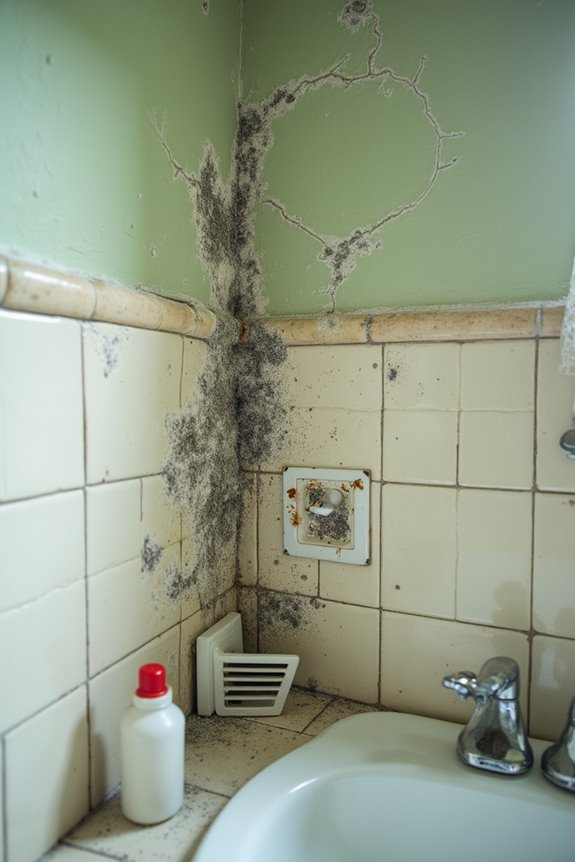
Why do bathrooms become mold magnets so quickly? It’s simple: moisture. I’ve learned that controlling humidity is your best defense against dangerous mold growth. When you run your bathroom ventilation fan during and after showers, you’re directly fighting the warm, damp conditions mold loves. Fixing leaks promptly and wiping down surfaces prevents water from sitting on walls and grout—places where harmful molds like Stachybotrys thrive and produce mycotoxins.
Here’s what I do: I leave my exhaust fan running for twenty minutes post-shower. I wipe my shower walls. I crack a window. These moisture-management habits stop biofilm from forming on porous materials where dangerous molds hide.
You’re not just cleaning anymore. You’re eliminating the conditions that create allergic reactions and asthmatic responses. That’s effective.
Professional Testing vs. DIY Detection: When to Call a Specialist
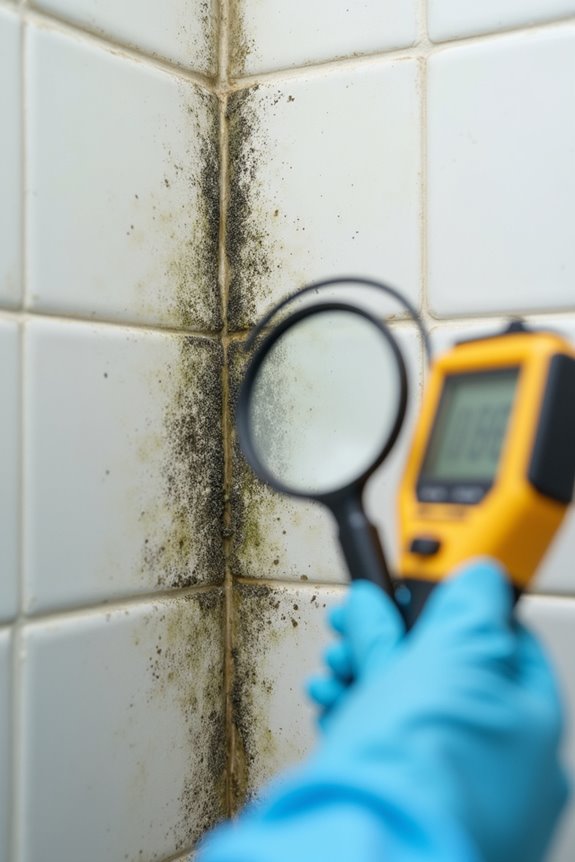
How confident are you that the fuzzy growth in your bathroom corner is harmless?
Can you really tell if that fuzzy growth is harmless? Toxic and benign molds look nearly identical without professional testing.
I’ll be honest—I can’t tell just by looking. That’s why professional testing matters. You see, toxic mold and harmless varieties look nearly identical. Chaetomium, Aspergillus, and Penicillium could fool anyone. Without proper identification, you’re basically guessing about health risks.
Here’s when you need a specialist:
- Your mold covers an area larger than 3×3 feet
- You’ve got moisture damage from leaks or flooding
- Anyone in your home has respiratory issues or weak immunity
- The growth keeps returning despite cleaning
DIY detection won’t work for serious situations. Professional testing identifies exactly what you’re dealing with, whether it’s truly toxic mold requiring mold remediation or something manageable. A specialist handles proper containment and cleanup, protecting your family from unnecessary exposure.
Safely Removing Dangerous Bathroom Mold Without Spreading Spores
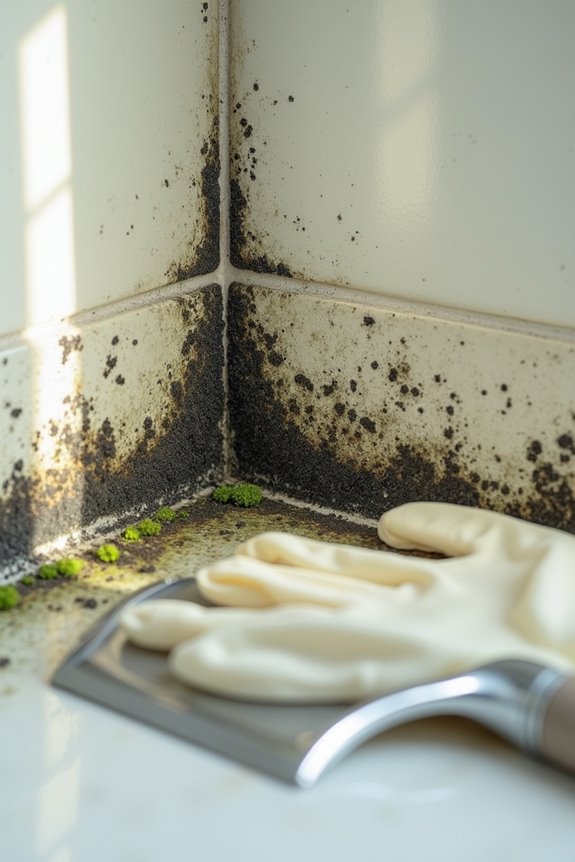
Once you’ve confirmed you’re dealing with dangerous mold like Stachybotrys, the real work begins—and I won’t sugarcoat it, this isn’t a job for just grabbing some bleach and a sponge. Here’s why: aggressive cleaning can actually launch spores into the air, making things worse. Instead, seal off your bathroom completely. Wear full PPE—gloves, respirator, goggles—the whole protective outfit. For toxic mold or larger areas, honestly, professional remediation is your best move. These specialists use proper containment strategies and equipment designed specifically to prevent spore spread through your air ducts. They’ll handle the job safely while you avoid health risks by having it done right. Bleach alone won’t work for Stachybotrys chartarum. Don’t risk your family’s health trying to DIY this one.
Preventing Dangerous Mold Growth in High-Moisture Bathroom Areas
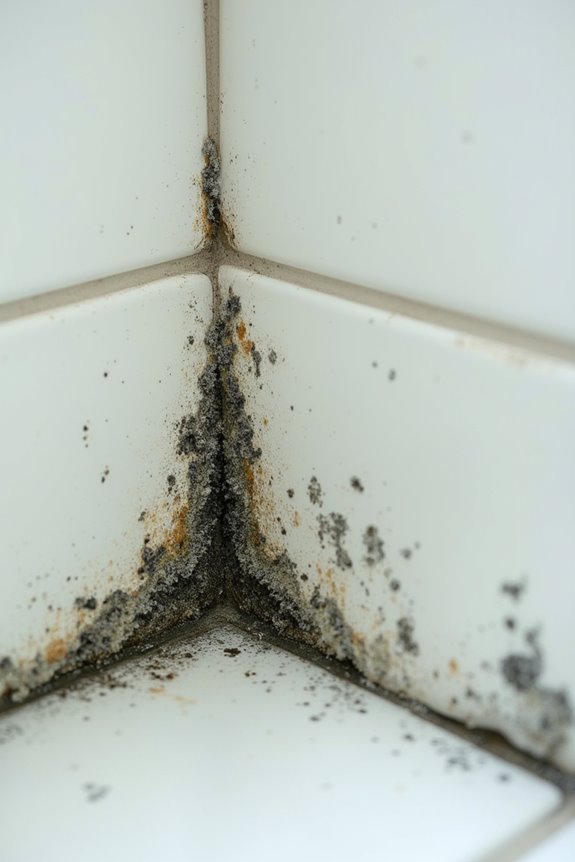
The best time to stop dangerous mold from taking over your bathroom? Right now, before it settles in.
I’ve learned that controlling bathroom moisture is your strongest defense against Stachybotrys and Chaetomium. Here’s what actually works:
- Keep indoor humidity at 50% or below year-round using a dehumidifier if needed
- Run exhaust fans during and 20 minutes after showers to remove moisture
- Wipe down shower walls and floors immediately after bathing
- Fix leaks promptly and inspect pipes regularly for hidden water damage
These steps aren’t complicated, but they’re effective. High humidity feeds mold growth, so staying ahead of bathroom moisture prevents dangerous colonies from forming. If you spot persistent condensation, water stains, or musty odors despite your efforts, that’s when professional remediation becomes necessary. You’re not alone in facing this challenge—most of us deal with it.