Yes, bathroom doors can swing outward, though you’d rarely find one in a typical home. Most bathrooms have inward-swinging doors because they keep hallways clear, protect privacy, and follow standard design practice. Building codes don’t actually mandate swing direction—they focus on door width and clearances instead. Outward doors risk blocking hallways and disrupting traffic flow, which is why alternatives like pocket doors or barn doors often work better in cramped spaces. But the right choice really depends on your specific layout and needs.
Why Do Most Bathrooms Have Inward-Swinging Doors?
Ever noticed how your bathroom door swings into the room instead of out into the hallway? There’s actually a practical reason behind this common design choice. Inward-swinging doors keep hallway traffic flowing smoothly, particularly in homes where family members constantly move between rooms. When your bathroom door opens inward, it doesn’t block the hallway or collide with people walking by—a real problem with outward-swinging doors in compact layouts.
This inward swing also supports privacy. You get that necessary barrier between your personal space and the rest of your home. Plus, inward doors align with residential design standards that we’re all familiar with. It’s simply what we expect from interior doors throughout our houses. Building codes and accessibility considerations typically favor inward placement in homes because it maximizes usable space while maintaining safety and comfort for everyone.
What Do Building Codes Actually Require About Swing Direction?
Now that you understand why inward-swinging doors became the norm, you might wonder: does the law actually require them?
Here’s the truth: most building codes don’t mandate a specific door swing direction for residential bathrooms. The IRC—that’s the International Residential Code—leaves this choice to you and your designer. What codes *do* focus on? Door width and clearances. They want enough space to enter safely.
That said, ADA considerations shift things. If you’re building an accessible bathroom or aging-in-place space, outward-swinging doors become preferred. Why? They keep interior maneuvering space clear for wheelchairs and allow faster egress in emergencies.
Commercial buildings and multifamily housing face stricter accessibility rules too. So while your residential bathroom door can technically swing either direction, local regulations and accessibility needs might push you toward outward-swinging solutions.
When an Outward-Swinging Door Makes Sense (And Why It Usually Doesn’t)
So when would you actually want your bathroom door swinging out into the hallway? Honestly, it’s rare. Maybe you’ve got a truly massive bathroom in a sprawling home where door clearance isn’t an issue. Even then, you’re inviting hallway disruption and privacy concerns. The real scenario where outward-swinging doors make sense? Accessibility considerations in commercial spaces or specialized facilities designed specifically for them. For regular homeowners, the downsides outweigh benefits. Wall damage happens. People get struck. Your privacy vanishes when someone casually opens it from outside. That’s why space-saving doors—sliding doors or folding options—became popular alternatives. They solve restricted spaces without the safety headaches. If you’re cramped for room, explore those instead of fighting against bathroom safety logic. Your hallway will benefit from the change.
Better Door Options When Space Is Tight
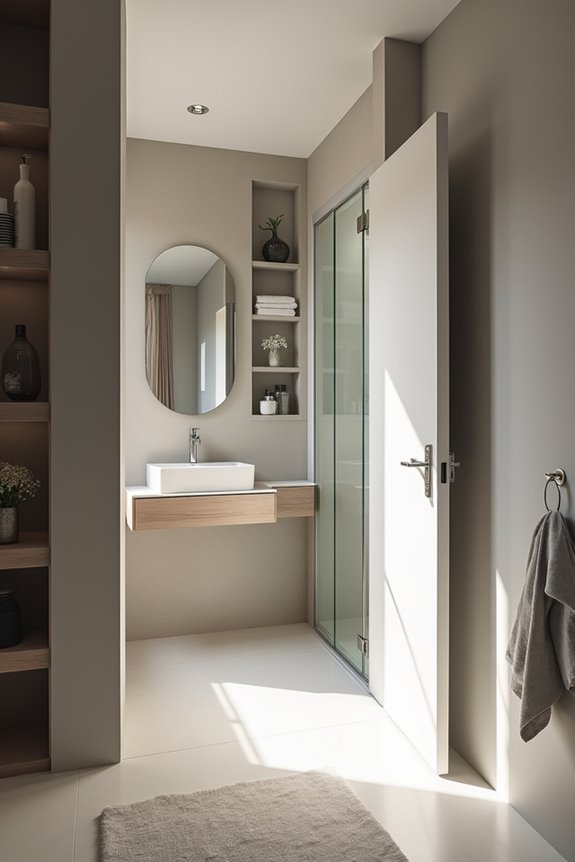
What if your bathroom is barely bigger than a closet? I get it—you’re tired of that outward-swinging door eating up precious space. Let me share some practical alternatives that’ll work better for your bathroom layout:
- Pocket doors slide completely into walls, vanishing entirely and maximizing usable floor space
- Barn doors run on exposed tracks without requiring wall reframing, adding rustic charm while saving space
- Bi-fold doors fold in half, dramatically reducing required door swing clearance in tight spaces
- Sliding doors (including frosted glass options) glide smoothly without intruding into your bathroom
- Folding options offer cost-effective retrofitting when pocket doors aren’t feasible
These space-saving solutions work better than the traditional outward-swinging door. They’re practical, stylish, and won’t force you to rearrange furniture constantly. Your tight bathroom deserves a better option.
Choosing the Right Swing Direction for Your Bathroom
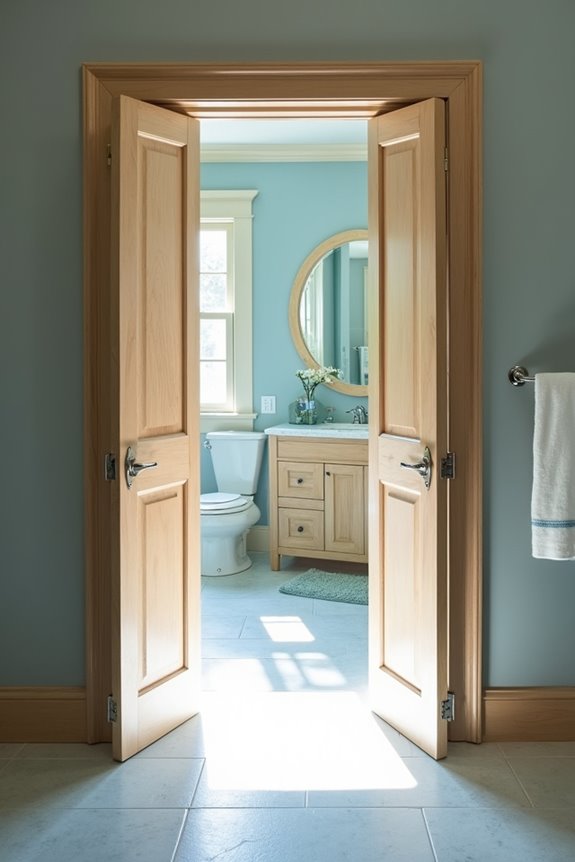
When you’re planning your bathroom layout, the direction your door swings might seem like a minor detail—but it actually shapes how your space functions every single day. I’ve found that outward-swing doors maximize interior clearance, which matters in tight bathrooms. They keep your space feeling bigger while improving emergency egress if something goes wrong. Plus, they’re better for ADA compliance and bathroom accessibility.
However, outward-swing doors can obstruct your hallway or corridor, especially in crowded homes. You’ll want to check your ventilation and fixtures clearance too—make sure nothing blocks when the door opens. Consider your crawl space plumbing clearance beneath the floor. The right door swing direction balances space efficiency with practicality, so measure twice and decide what works best for your family’s actual needs.