In Australia, your bathroom tap’s safety depends on what’s behind it. Direct mains supply? Generally fine. But bathroom taps often draw from storage tanks where water stagnates, bacteria grow, and old pipes leak lead. If your home’s pre-1970s, that risk jumps. Notice odd taste, color, or smell? Skip it.
Kitchen taps are typically fresher since they connect straight to mains. Want to know exactly what’s flowing through your pipes and how to fix it?
Is Bathroom Tap Water Safe to Drink in Australia?
Ever wondered whether you can safely grab a glass of water from your bathroom sink? In Australia, the straightforward answer is: yes, generally it’s safe. Your bathroom tap water should meet the Australian Drinking Water Guidelines when connected to a municipal supply, just like your kitchen tap does.
However, there are some important considerations. If your home was built before the 1970s, exercise caution. Older plumbing might have lead leaching or galvanized steel contaminating your water. Also, if that bathroom water has been sitting unused, stagnation can become a problem.
Before drinking, check for unusual taste, color, or odor. When in doubt, grab water from the kitchen instead. Always check local water quality reports to stay informed about what’s flowing through your pipes.
Kitchen vs. Bathroom Tap Water: Why the Difference Matters
I’ve noticed that my kitchen tap water and bathroom tap water actually take different journeys to reach me, which explains why they’re not equally safe to drink. Kitchen water typically flows straight from the mains supply, staying fresh and consistently treated, while bathroom water often sits in storage tanks or travels through longer pipe runs where limescale, metals, and debris can accumulate. This difference matters because that stagnant bathroom water might pick up unwanted contaminants on its way to my tap, whereas my kitchen tap gives me water that’s fresher off the main line.
Direct Mains Supply Advantage
Why does your kitchen tap taste fresher than your bathroom one? The answer lies in how water reaches each faucet. Your kitchen tap draws directly from the mains supply—the main water line feeding your home. This direct connection means water reaches you quickly, with minimal time for contamination. Your bathroom taps, however, often sit on storage tanks. Water sits there longer, allowing sediment and limescale to accumulate. Old pipes can even introduce lead into bathroom water. I’ve noticed this difference myself: kitchen tap water feels cleaner and tastes better. That’s because the mains supply bypasses storage entirely, reducing debris buildup and bacterial growth. For water safety and quality, that direct mains advantage makes your kitchen tap the better choice for drinking. It’s worth understanding why.
Storage Tank Contamination Risks
While your kitchen tap’s direct mains connection gives it a real advantage, the bathroom picture gets murkier once water enters storage tanks. Here’s why this matters: stagnation happens. When water sits in storage tanks—especially in bathrooms with infrequent use—bacteria and limescale build up. It’s something worth considering.
Over time, these tanks become collection points for contamination. Older metal pipes inside tanks actually leach lead and other metals into your water. Your bathroom tap water safety depends heavily on tank condition and age. If nobody’s regularly using that bathroom, the water sits longer, creating ideal conditions for harmful organisms to develop.
Kitchen taps skip this problem entirely. They go straight from mains to your glass. That’s a real difference to consider when evaluating your home’s water safety.
Lead, Bacteria, and Limescale: Three Main Threats in Bathroom Plumbing
I’ve learned that my bathroom tap water isn’t automatically safe just because it comes from the same pipes as my kitchen water—in fact, it faces three serious threats that you should know about. Lead can creep into your water from pipes installed before the 1970s, bacteria can grow in tanks and fixtures you don’t use often, and limescale buildup signals that corrosion might be happening inside your plumbing. Understanding these three dangers is the first step toward figuring out whether your bathroom water is actually safe to drink.
Lead Leaching From Old Pipes
How much do you actually know about the pipes hidden behind your bathroom walls? I didn’t know much until I learned about lead leaching. If your home was built before the 1970s, your lead pipes might be quietly contaminating your drinking water. Here’s the problem: when water sits stagnant in bathroom taps overnight, it dissolves lead from aging plumbing. Soft water makes this worse by increasing corrosion. The result? Lead seeping into your drinking water supply without any warning signs. Adults who drink this water face serious health risks like high blood pressure, nausea, and kidney damage. If you’re unsure about your pipes’ age, getting a trusted third party to test them is the responsible choice.
Bacterial Growth In Storage Tanks
Beyond the lead lurking in old pipes, there’s another invisible threat hiding in your bathroom: bacteria thriving in stagnant water. I get it—you probably don’t think much about what’s sitting in your storage tanks. But here’s the thing: when water sits unused for days, bacterial growth accelerates. These aren’t just any germs; they’re opportunistic pathogens that love dormant environments. Limescale buildup makes it worse, creating ideal conditions for contamination. Your bathroom taps might deliver cloudy water or an odd taste—warning signs you should monitor. The solution? Regular maintenance matters. Flush your tanks periodically, keep them sealed, and stay alert. Water safety isn’t complicated, but it requires attention. Small steps protect your family’s health.
Limescale Buildup and Corrosion Effects
When water flows through your pipes day after day, it leaves behind invisible deposits—and that’s where trouble starts. I’ve learned that limescale buildup creates the perfect home for bacteria to grow, basically turning your tap into a microscopic apartment complex. What’s worse? Corrosion from aging pipes releases harmful metals like lead and copper into your water. These minerals alter your water’s taste and pose real health risks, especially in older homes. Stagnation makes everything worse—when water sits unused in bathroom storage or forgotten taps, mineral concentration skyrockets. You can fight back though. Regular cleaning of showerheads and faucet aerators removes mineral deposits and those bacterial hiding spots. Simple maintenance keeps your water safety priorities on track.
Why Old Pipes and Storage Tanks Degrade Water
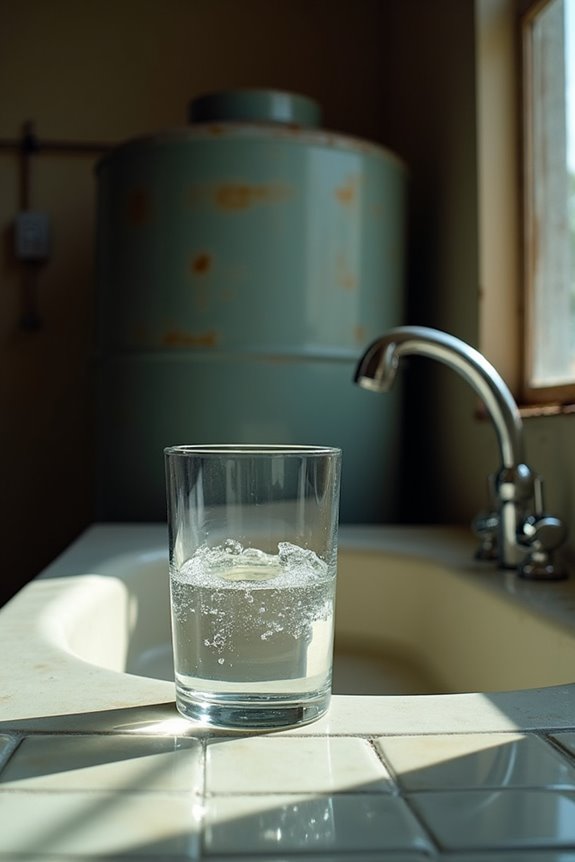
Ever wonder why your bathroom tap sometimes tastes a bit off compared to your kitchen sink? I’ve noticed it too, and there’s actually a solid reason. Old pipes lurking behind your walls can leach lead and other metals into your water, especially in soft water areas where corrosion happens faster. Storage tanks in bathroom systems make things worse—water sits there longer, creating stagnation that increases metal leaching and water contamination risks. Limescale and debris accumulate inside these tanks and pipes, affecting both taste and safety. Since bathrooms get used less frequently than kitchens, that water just lingers. The longer it stagnates, the more problematic it becomes. It’s not your imagination—your bathroom water really does have different challenges than your kitchen’s.
Red Flags in Your Bathroom Tap Water: Taste, Odor, and Color
If you’ve ever noticed your bathroom tap water tastes a bit off, smells funky, or looks cloudy, you’re picking up on something real—and you shouldn’t ignore it. These warning signs might seem minor, but they’re your water’s way of telling you something’s wrong, whether that’s old pipes leaching metals like lead, bacteria growing in storage tanks, or leftover chemicals from products sitting nearby. Let’s explore what these red flags actually mean and when you should take action.
Unusual Taste Changes
Why does your bathroom tap water sometimes taste, well, off? I’ve noticed it too. When water sits unused in aging plumbing, metals like lead and copper can leach into your supply, creating that unmistakable metallic taste. Stagnant water in older pipes is basically a slow accumulation problem—minerals build up, and suddenly your tap tastes bitter or weirdly sweet.
Here’s what I do: I flush the system. Run cold water for thirty seconds to several minutes before drinking. It clears out that stagnant stuff lingering in the pipes. If your home has lead pipes or galvanized plumbing from decades ago, you’re more likely experiencing these taste shifts.
Water safety matters. Those unusual flavors aren’t just annoying—they’re your warning signs. Pay attention to what your taste buds are telling you.
Suspicious Odors Present
How many times have you walked into your bathroom, turned on the tap, and immediately noticed something off in the air?
A persistent chlorine smell or pungent chemical odor raises questions about your water quality. These scents signal residual disinfectants or treatment by-products lingering in your supply or plumbing. Here’s the thing: if that odor lingers after running cold water for thirty seconds, you’re likely dealing with stagnation or biofilm buildup in your bathroom pipes.
I’d recommend testing your water or checking local quality reports when suspicious odors emerge. A metallic or sour smell combined with visible discoloration suggests potential contamination from old pipes leaching into your water.
Don’t ignore these warning signs. Your nose knows when something’s wrong with your tap water’s safety.
Visible Discoloration Indicators
You’ve probably noticed it—that moment when water flows from your bathroom tap in shades it really shouldn’t be. Brown, yellow, or pinkish water? That’s your cue to pause. Discoloration often signals mineral deposits, rust, or pipe corrosion in your plumbing system. When taste changes accompany the color shift, sediment and oxidized metals are likely entering your supply. Cloudiness or murkiness hints at microbial activity or high particulate matter—neither desirable. Here’s the thing: even if your water sometimes looks fine, persistent discoloration demands action. Don’t assume it’s safe. Flush the tap until clearer water appears, then contact local water authorities or arrange testing. Your bathroom tap deserves attention. We’re talking about what enters your body, after all.
Should You Test Your Bathroom Water? Here’s How
Testing your bathroom water might sound like overkill, but it’s actually one of the smartest moves you can make for your health. I’ve learned that bathroom water testing reveals what you can’t see or taste. You can use affordable home kits or send samples to certified laboratories for thorough drinking water safety analysis.
Here’s the thing: aging plumbing and private supply testing deserve extra attention. If your pipes are older or you’ve got storage tanks, water quality testing becomes more important. Metal leaching and stagnation happen silently.
Want to know if testing matters for you? Check your water’s taste, odor, or appearance first. Anything off suggests you should test. Most modern mains-fed systems need less frequent checks, but private systems benefit from periodic testing to catch water contaminants early.
Stagnation and Water Sitting Time
Ever notice how your bathroom tap tastes a bit off first thing in the morning? That’s water sitting time at work. When I don’t use my bathroom tap regularly, water just sits in the pipes overnight. This stagnation lets metals like lead and copper leach from aging plumbing into my water. Bacteria can also grow in that stagnant water, which isn’t great for anyone.
Here’s what I do: I flush the system by running cold water for about 30 seconds before drinking. This pushes out the stagnant water that’s been hanging around. It’s a simple habit that removes most contaminants built up during sitting time. Think of it like clearing your throat—you’re basically waking up those pipes and getting fresh water flowing. Takes barely any time, but it helps.
Lead Leaching From Aging Fixtures
The metallic taste in your water might not be caused by stagnation alone—it’s what’s lurking in your pipes themselves. If your home was built before the 1970s, you likely have lead pipes or fixtures that can leach lead into your drinking water. Soft water areas worsen this problem because softer water corrodes pipes faster. Older plumbing materials don’t just release lead; copper and cadmium can also enter your water.
Testing through a third-party laboratory reveals whether your aging fixtures pose real health risks. If you’re uncertain about your plumbing’s age or suspect contamination, testing is necessary. Your health depends on knowing what’s flowing from your tap.
Bacterial Growth in Showerheads and Aerators
Your showerhead’s warm, moist environment is a breeding ground for bacteria and biofilms. Stagnant water sitting in aerators creates ideal conditions for microbial growth. Bacterial counts increase when water remains unused for extended periods.
You can reduce this buildup through regular cleaning with a scrub brush or descaling solution. Running cold water for a minute before showering flushes out localized bacteria. These simple habits protect your water safety without much effort.
Regular maintenance prevents potentially harmful pathogens from accumulating in your plumbing.
Quick Fixes to Improve Your Bathroom Tap Water Today
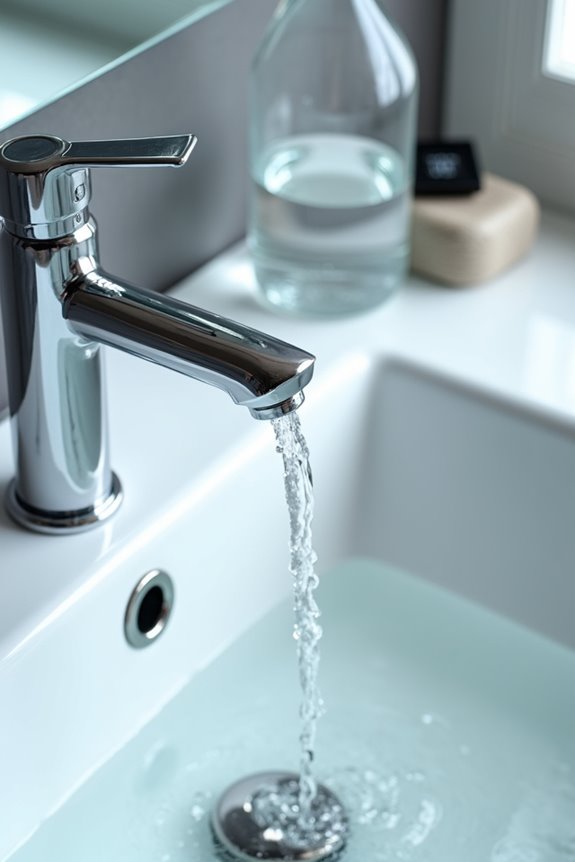
While cleaning your showerhead helps prevent bacterial buildup, you can tackle water quality issues right now with some straightforward steps. I’d start by running cold water for over 30 seconds before drinking anything from your bathroom tap. This flushes out stagnant water that’s accumulated overnight, reducing metal and chlorine concentrations that affect taste and odor.
Next, I’d install a point-of-use filter like an under-sink model. It’s one of the easiest upgrades for improving your drinking water quality without major renovations.
Finally, wipe down your faucet aerators regularly to remove mineral buildup that impacts water safety and taste. These steps won’t take long, but they’ll noticeably improve your bathroom tap water’s quality. Start today.
Filtration Options: From Pitchers to Whole-House
How serious do you want to get about your bathroom tap water? If you’re just looking for better taste, a filtration pitcher does the job—cutting chlorine and odors without much fuss. But here’s where it gets real: pitchers won’t protect your whole house.
Filtration pitchers tackle taste and odors, but they won’t protect your whole house—that’s where serious filtration systems come in.
That’s where under-sink filtration comes in. Systems like these target your drinking water at the point of use, removing bacteria, lead traces, and chemicals. They’re solid if you’re focused on kitchen safety.
Ready to go all-in? Whole-house filtration paired with a water softener treats everything from your bathroom sink to your shower. You’re protecting every tap at once.
Just remember: cartridge replacement every six to twelve months keeps your water quality at its best. Maintenance matters.
When to Test or Replace: Professional Help for Bathroom Water
Sometimes the best filter in the world can’t catch what you can’t see. That’s where professional testing comes in. If your home was built before 1970, you’re dealing with potential lead and copper pipes that corrode over time. I’d get a certified water professional to test for lead, copper, bacteria, and dissolved solids—the invisible troublemakers lurking in your bathroom lines.
Notice weird tastes, smells, or discoloration? That’s your sign to act. After long periods without use, stagnant water breeds bacteria. Flush your taps for a minute, then test again. Sometimes replacement is worth it. Aging plumbing and storage tanks contribute more problems than fixes.
Use accredited labs or home test kits to verify what’s actually in your water. Compare results against local safety standards. Know what you’re drinking.