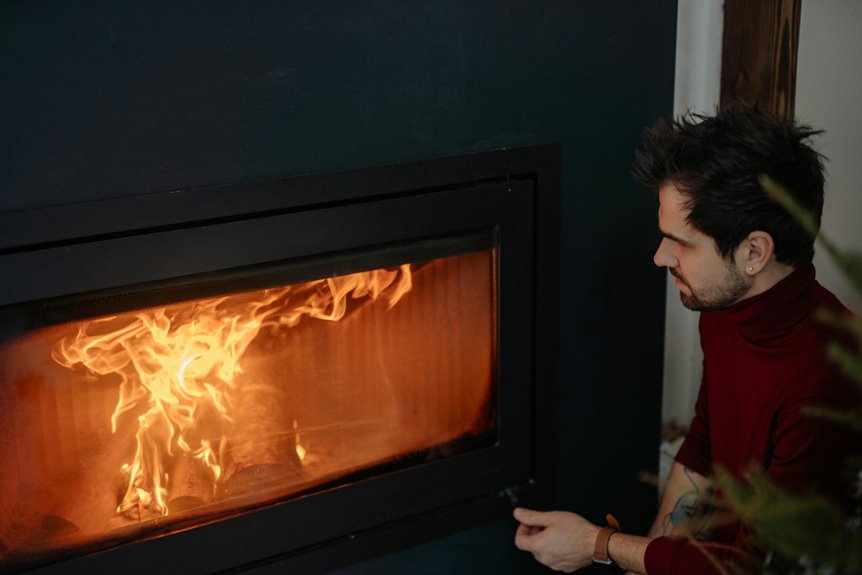
Fireplace insert costs range from roughly $700 to $6,500 before installation. Electric models start around $1,019—your most budget-friendly option—while gas inserts typically run $3,700–$6,500 and wood-burning options land somewhere in between. What you’ll actually spend depends on fuel type, heat output, and features like remote controls or premium glass. Don’t forget installation expenses, permits, and inspections can easily match or exceed the insert price itself. Stick around to discover what impacts your total investment.
What Drives Fireplace Insert Costs
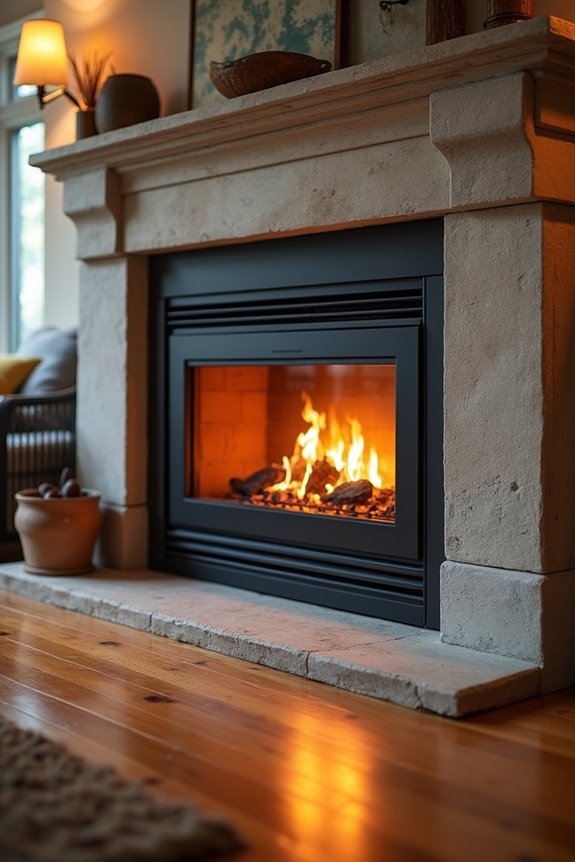
When you’re shopping for a fireplace insert, you’ll quickly discover that prices swing wildly—anywhere from around $700 to $6,500—and that’s before installation even enters the picture. What causes such dramatic differences? Several factors work together. The fuel type matters hugely: electric inserts cost far less than premium gas or wood-burning models. Your insert’s size and brand reputation also influence pricing. Then comes installation costs, which vary depending on your region and whether you’re replacing an existing unit or starting fresh. Additional expenses to account for include venting work, chimney inspections, and cleaning. Premium features like realistic LED flames or remote controls push prices higher still. Understanding these drivers helps you budget more effectively.
Electric Insert Costs: Most Affordable Option
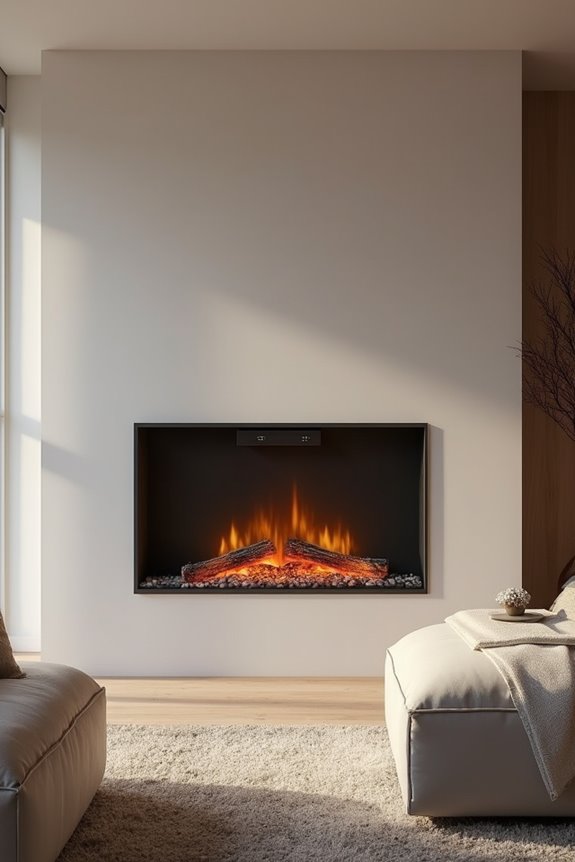
If you’re watching your budget, electric fireplace inserts won’t drain your wallet upfront or drain your sanity during installation. You’re looking at starting prices around $1,019, and here’s the benefit: you can often handle the setup yourself without hiring a contractor, which saves you hundreds in labor costs compared to gas or wood-burning options. Plus, you’ll spend way less on upkeep since these run on electricity rather than needing chimney cleaning, fuel refills, or constant repairs.
Budget-Friendly Initial Investment
Looking to add fireplace charm while keeping costs down? Electric inserts are a practical option. Entry-level models start around $1,000 or less, making them accessible for most budgets.
What makes electric inserts cost-effective? Installation expenses are minimal since you won’t need a chimney or venting system. You can skip the expensive structural work that gas or wood-burning options require. You’re essentially plugging in warmth and ambiance.
Beyond affordability, these inserts deliver immediate heat with instant ignition. You control flame colors to suit your preference. Maintenance is straightforward. I dust occasionally and wipe the glass clean.
If you’re hesitant about pricey home upgrades, electric inserts show that you don’t need to compromise between comfort and savings. You get both.
Low Installation And Setup
Beyond the budget-friendly price tag, electric inserts shine when it comes to actually getting them installed. You won’t need specialized contractors or expensive equipment. Most electric insert installation costs remain minimal because they’re straightforward to set up. They fit standard fireplace openings or work with simple surround kits, meaning you’re not tearing into walls or dealing with complex venting systems. Vent-free electric inserts eliminate the need for chimney work entirely. You’re looking at minimal labor requirements, which keeps your overall expenses down. Some folks tackle installation themselves, though professional help remains affordable. You’ll avoid those unexpected costs that pop up with gas or wood inserts. Your wallet stays happier, and you get an easier, more accessible fireplace experience.
Minimal Maintenance Requirements
After installation, electric inserts reward you with their low-maintenance nature. Unlike wood or gas options, you’re not dealing with messy ash, chimney inspections, or professional cleanings.
Your maintenance routine is straightforward. Dust the glass occasionally and wipe down the interior components when needed. That’s all. No venting systems to worry about. No chimney work required. Electric inserts don’t demand those expensive annual inspections that fuel-based fireplaces do.
This approach saves you real money over time. While electricity costs vary by region, your maintenance expenses stay remarkably low. You’re joining countless homeowners who appreciate not spending cash on constant upkeep. Electric inserts deliver warmth without the headaches or surprise repair bills that accompany traditional fireplaces.
Basic Steel Inserts: Budget Entry Point
If you’re like me and want to heat your fireplace on a limited budget, basic steel inserts might be exactly what you need—they start around $1,500 to $2,000 for simpler models, making them affordable compared to fancier options. Sure, steel won’t last quite as long as cast iron or other premium materials, but these inserts still deliver solid performance for years if you keep up with basic maintenance, which honestly just means checking the seals and cleaning out ash occasionally. The real advantage here is that you get actual heating efficiency improvements and core functionality without the premium price tag, so you’re not sacrificing function for a tighter budget.
Affordable Entry-Level Options
What’s the bare minimum you need to spend if you want to add a fireplace insert to your home? You’re looking at entry-level steel inserts starting around $700 to $1,500. I’ll be honest—you’re not getting fancy features here. These basic models skip remote controls, dual fuel options, and built-in fans. What you do get is straightforward steel construction and modest heat output.
| Feature | Budget Insert | What You’re Missing |
|---|---|---|
| Price Range | $700–$1,500 | N/A |
| BTU Output | Lower capacity | Mid-range efficiency |
| Built-in Fan | No | Better air circulation |
| Remote Control | No | Convenient operation |
Installation pushes costs higher—anywhere from several hundred to thousands of dollars depending on venting. Smaller burn chambers mean less impressive performance, but you’re getting a functional fireplace insert at an affordable price point.
Durability And Long-Term Value
Longevity with a basic steel insert hinges on one thing: how well you treat it. I’ve seen steel units last decades when owners stay on top of maintenance, and I’ve watched others deteriorate faster than expected when they don’t.
Here’s the honest truth: your durability and long-term value depend heavily on regular care. You’ll need to remove ash buildup, clean the glass monthly, and inspect components seasonally. Steel can warp or corrode without proper ventilation, so installation quality matters enormously.
The good news? Basic steel inserts still deliver solid mid-range heat output and perform well for years with routine attention. Think of it like owning a reliable car—consistent maintenance pays dividends. You’re investing in something that rewards diligence with lasting warmth and value.
Mid-Range Cast Iron & Stainless Steel Pricing
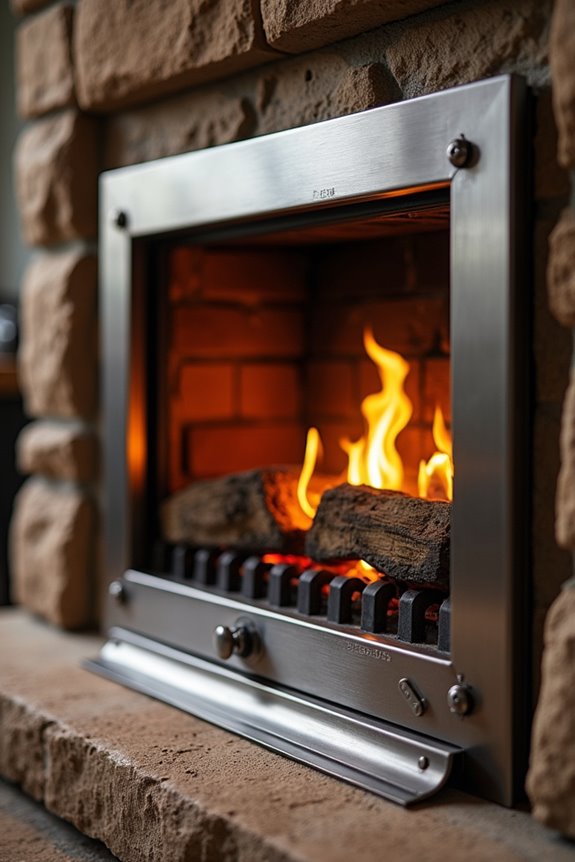
When you’re hunting for a fireplace insert that won’t drain your wallet but actually heats your space, you’re probably landing somewhere in the $1,500 to $4,000 range—and that’s where the sweet spot lives. Cast iron models typically run $2,000 to $3,500 for standard 28–34 inch widths. They’re built tough, deliver reliable heat, and last decades with basic maintenance. Stainless steel options hover around $2,000 to $4,000, offering lighter weight and sleeker finishes if you prefer modern aesthetics. Both materials perform similarly, so your choice really comes down to style preference and your existing décor. Either way, you’re investing in something that’ll actually work for your home without excessive expense.
Premium Insert Costs: Advanced Features & Materials
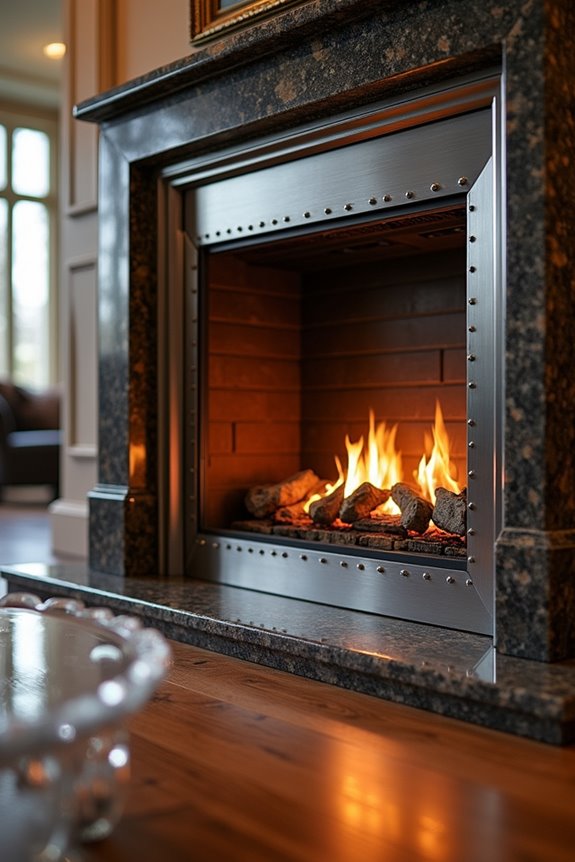
If you’ve got the budget to go beyond that mid-range sweet spot, premium fireplace inserts offer a more sophisticated option. I’m talking handcrafted logs, LED ember beds, and glass-clear viewing areas that provide a realistic appearance. These advanced features come at a higher price point, but they’re worth considering.
| Feature | What You Get |
|---|---|
| Handcrafted Logs | Realistic, detailed flame effects |
| Heat-Spreading Blowers | Better warmth distribution |
| Remote Controls | Easy adjustments from your couch |
| Premium Glass | Crystal-clear, unobstructed views |
| Cast Iron Surrounds | Durability plus style |
Luxury gas and wood-burning models frequently exceed $4,000 to $6,000 before installation. Electric premium inserts add remote controls and multiple flame colors. You’re investing in materials like tempered glass and corrosion-resistant venting systems. These options represent a significant step up in quality and performance compared to standard fireplace inserts.
Gas Insert Pricing & Fuel Considerations
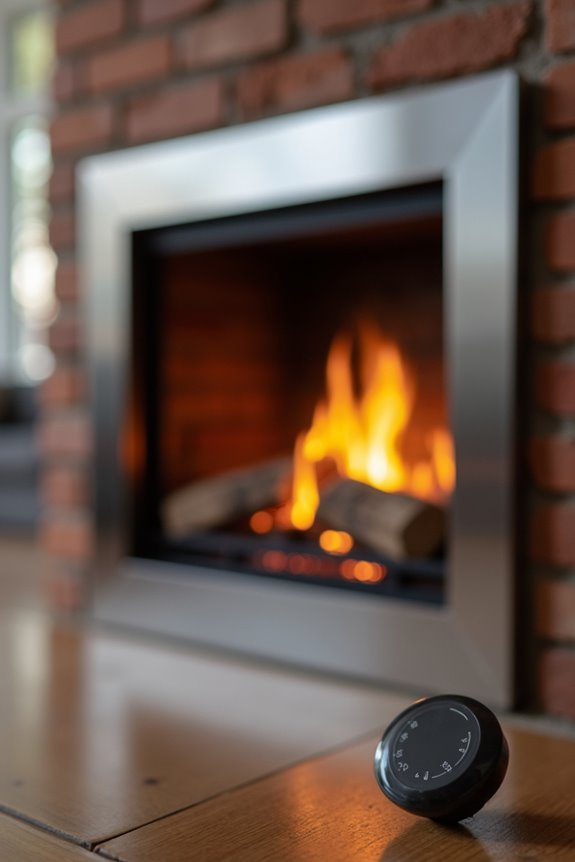
Gas inserts typically start around a few thousand dollars, which might sound steep until you compare them to wood inserts—you’re paying for convenience and lower maintenance. The real money question, though, is fuel: natural gas usually costs less to run than propane, so if you’ve got a gas line already in your home, you’ll likely save more over time. I’d recommend checking both your local gas prices and propane rates before deciding, since that difference adds up year after year.
Gas Insert Price Range
How much should you expect to spend if you’re eyeing a gas fireplace insert? You’re looking at a price range between $3,700 and $6,500. The exact cost depends on a few things—mainly the width you choose, like 30 or 35 inches, plus what features matter to you.
Gas inserts offer solid value. You get instant ignition with just a button push, minimal maintenance, and lower operating costs compared to wood-burning options. Natural gas variants typically cost less to run long-term, though that depends on your local fuel prices.
Want flexibility? Propane-specific models exist too. Whether you’re venting through your existing chimney or exploring vent-free options, you’ve got choices that fit different budgets and setups.
Fuel Cost Comparison
When you’re weighing whether a gas insert makes financial sense, the fuel costs matter just as much as that $3,700 to $6,500 price tag. Here’s what I’ve learned: gas inserts typically cost less per BTU than wood, but the real expense depends on your setup. If you’re on a natural gas line, you’ll enjoy stable, predictable monthly bills. However, if you’re relying on propane, those frequent tank refills can add up quickly. You’re looking at 20,000–60,000 BTUs of heat output, which covers most rooms efficiently. The sweet spot? Factor in regional fuel prices and your energy efficiency rating before committing. Skip the wood storage headaches and ash cleanup costs—that alone makes gas inserts appealing for busy homeowners like us.
Wood-Burning Inserts: Pricing & Efficiency Trade-Offs
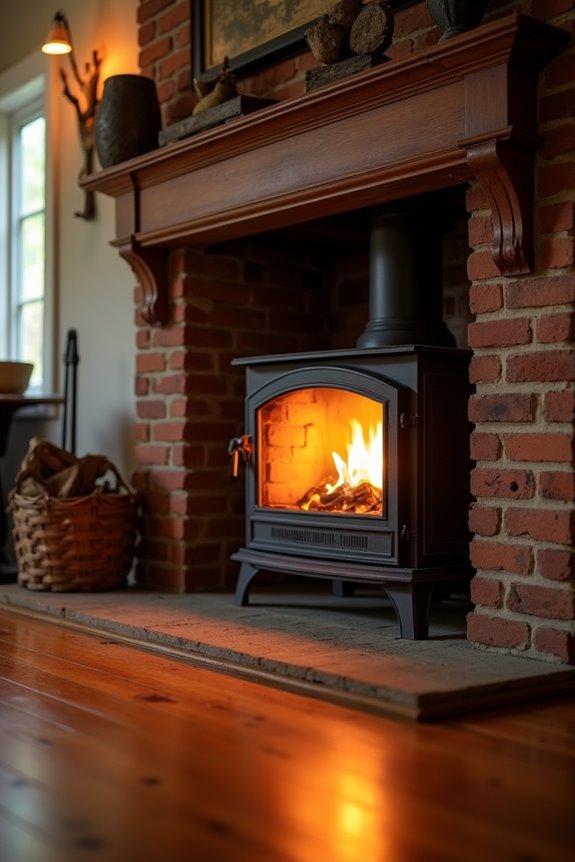
Why do wood-burning inserts command higher price tags than their gas or electric cousins? They deliver superior heat output—we’re talking 40,000 to 110,000 BTU depending on size. That power comes with a cost. Popular models like the Drolet Escape 1500-I run around $1,729, heating up to 1,800 square feet. Premium options like the Osburn Matrix 2700 push toward $2,000-plus because they offer more BTU capacity and larger viewing areas.
But here’s the catch: installation expenses stack up quickly. You’ll need chimney liners, thimble work, and possibly inspections—adding hundreds more to your bill. Then there’s the ongoing reality: cordwood storage, annual chimney sweeps, and ash removal become part of your routine. Higher efficiency means more upfront investment, but if you’re committed to the wood-burning lifestyle, that heat output justifies the trade-off.
Pellet Inserts: Costs & Long-Term Value
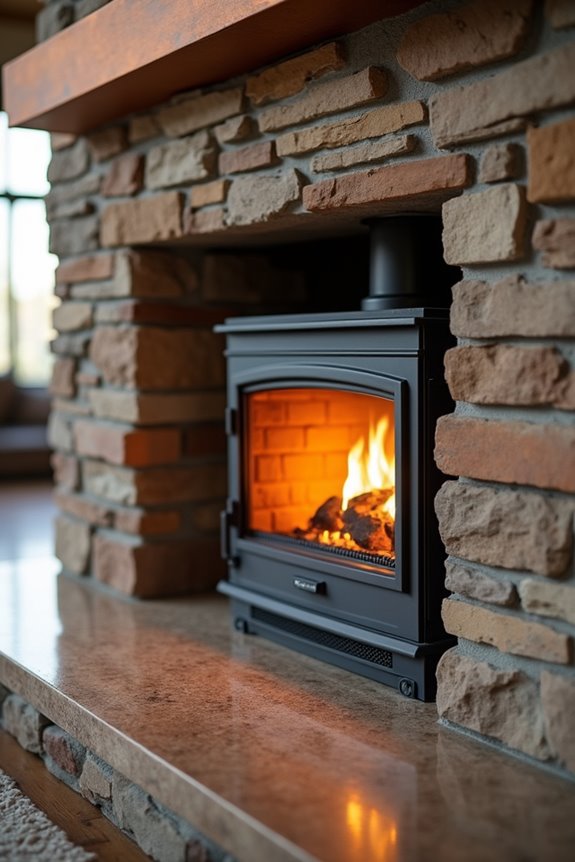
Ever wonder what happens when you combine the convenience of a gas insert with the heat output of a wood-burner? That’s pellet inserts in a nutshell. I’ll be honest—they’re pricier upfront than wood options because they’ve got automated feeding systems and advanced combustion technology. But here’s where it gets interesting: their heat efficiency works well over long runtimes. Electric-powered augers do the heavy lifting, so you’re not constantly feeding the fire. You’ll heat up to 2,100 square feet depending on your model. Sure, fuel costs run higher than some gas options, but the efficient burn times and zero wood-stacking hassle make them a practical choice. Daily ash removal and weekly pan emptying keep things running smooth. That’s the real value proposition.
Installation & Professional Labor: The Hidden Budget
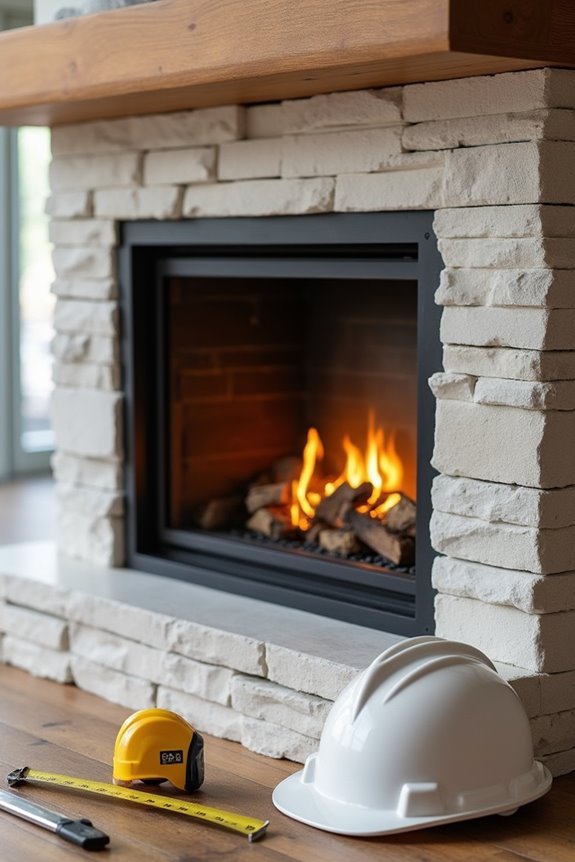
When you’re budgeting for a fireplace insert, the device itself is just the beginning—I’ve learned that professional installation costs can actually rival or exceed the insert price itself, depending on your region and which trades you need. You’ll face a real choice: do it yourself and save money upfront (though you risk costly mistakes down the road), or hire experts who’ll handle everything from venting adjustments to chimney inspections, complete with guarantees. The tricky part is those hidden expenses—unused thimbles, misaligned tiles, or liner sizing problems—that pop up during installation and quietly drain your wallet before you’ve even lit the first fire.
Professional Installation Expenses
Most fireplace insert projects involve a significant labor component that impacts your budget. Installation costs range from several hundred to thousands of dollars, depending on your region and the insert type you choose.
Electric inserts offer the most affordable option—simpler to install with lower labor fees. Gas inserts require more work. You’ll likely need a licensed gas technician, plus expenses for gas line upgrades and venting systems that add up quickly.
Chimney work also factors into your total cost. A Level II CSIA inspection, relining, or venting adjustments can increase your installation expenses beyond your initial estimate.
Skipping professional installation might save money upfront, but you’ll risk warranty issues and code violations later.
DIY Versus Expert Labor
You’ve got two paths forward: do the work yourself or hire someone with a license and insurance.
DIY installation cuts upfront costs considerably. You’ll save on labor expenses, which vary dramatically by region. However, you’re responsible for everything—venting, chimney work, even Level II CSIA inspections. Hidden costs lurk everywhere. Oversized gas lines or liner sizing issues discovered mid-project? That’s on you.
Professional installation costs more initially but offers guarantees and ongoing service support. You’re paying for expertise, accountability, and peace of mind.
| Factor | DIY | Professional |
|---|---|---|
| Upfront Cost | Lower | Higher |
| Long-term Risks | Increased | Minimized |
| Future Repairs | Your expense | Often covered |
Consider your comfort level honestly. Cutting corners now might mean expensive fixes later.
Hidden Chimney And Venting
Why does your chimney suddenly become expensive the moment you mention fireplace inserts? Hidden venting challenges are the culprit. I’ve learned that stainless steel liners, thimble work, and masonry adjustments quietly drain your budget. Before installation, I recommend getting a Level II CSIA chimney inspection—discovering problems beforehand beats surprise repair costs later. Your fuel choice matters too. Wood inserts need complex vent systems costing more than gas options, though gas might require expensive line upgrades instead. Unused thimbles or misaligned tiles can demand partial demolition and extra labor hours. These hidden costs aren’t sneaky; they’re just invisible until you dig deeper. Planning ahead for venting expenses keeps your project on track and your wallet happier.
Venting & Chimney Modifications: Structural Costs
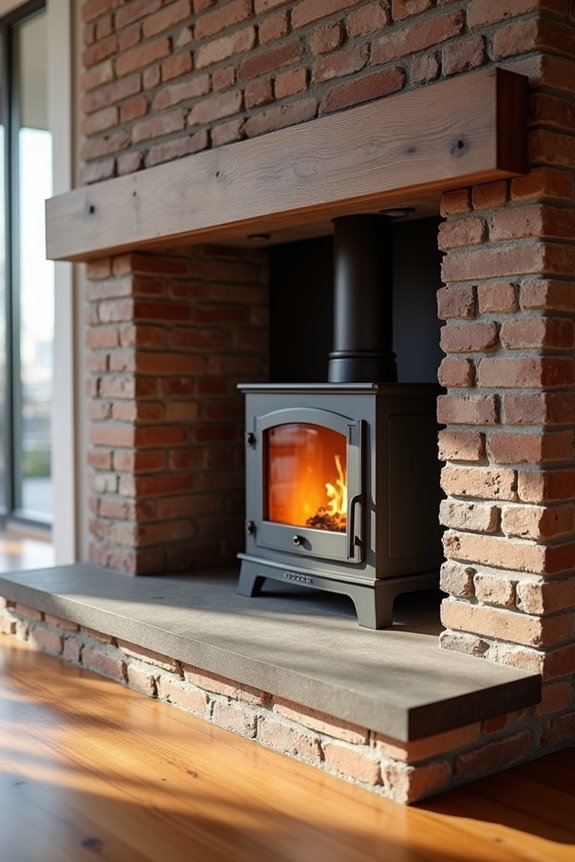
When you’re installing a fireplace insert, the venting system often becomes the surprise budget item—the one that makes you squint at your calculator. Here’s why: your chimney liner might need replacing entirely, especially if you’re switching from wood to gas or pellets. That stainless steel chimney liner? It’s expensive, but it’s necessary for safety and efficiency.
Then there’s the actual structural work. Misaligned tiles, unused thimbles, or undersized passages demand professional fixes before installation begins. I learned this the hard way—skipping a Level II inspection cost me thousands in rework.
Venting requirements differ dramatically by fuel type. Gas inserts need different venting than wood or pellets. Getting your vent system designed correctly upfront prevents expensive mistakes later. Paying for proper planning now beats paying for repairs tomorrow.
Permits, Inspections & Hidden Expenses
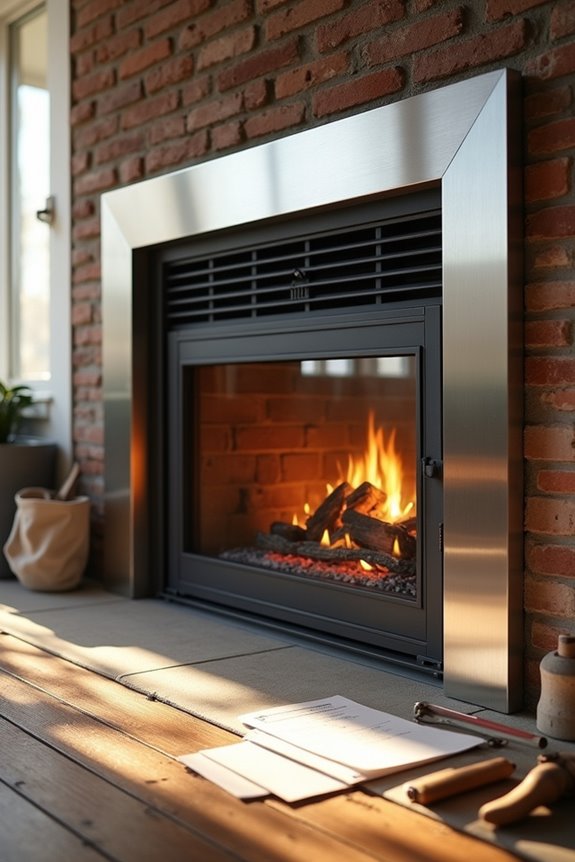
Getting your venting system squared away is just half the battle—now comes the paperwork and official checkups that’ll determine whether your insert installation actually gets approved. Most areas require permits and inspections before you fire things up. You’ll likely need a building permit and possibly a Level II CSIA chimney inspection. These hidden costs add up fast—we’re talking inspection fees, permit applications, and potential chimney cleaning.
Then there’s the stuff nobody warns you about. Brick repairs, masonry adjustments, and discharge clearance work can surprise you mid-project. Propane setups demand tank installation and higher BTU tweaks, which raises expenses further.
Smart homeowners budget an extra thousand or two for these surprises. Skip the permits? You’re risking fines and insurance headaches. Getting it right from the start keeps your project on track.
Upgrade Costs: Blowers, Remotes, Trim Plates & Lighting
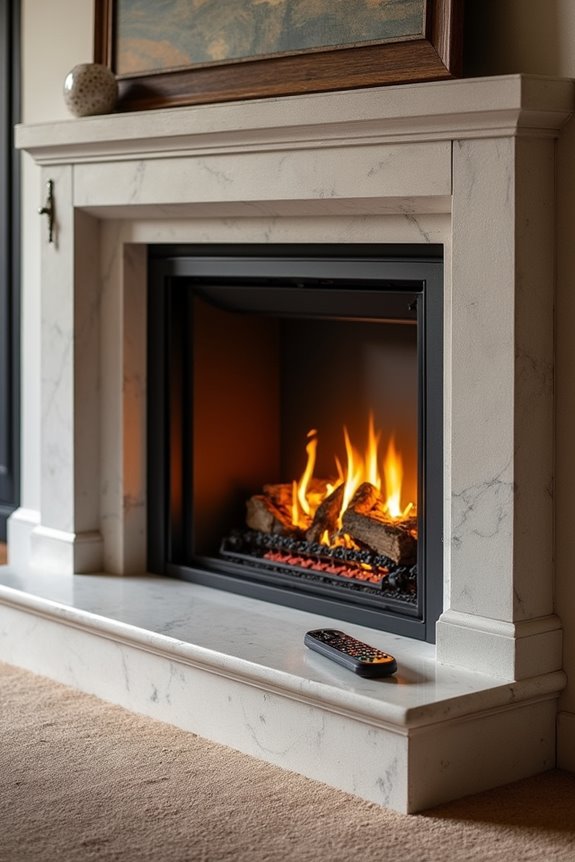
Once you’ve locked in your base insert and navigated the permit gauntlet, here’s where things get interesting—you get to decide what extras actually matter for your setup.
Think of these add-ons like choosing toppings for pizza. Some feel necessary, others optional:
- Blowers ($150–$300) push warm air throughout your room instead of letting it rise straight up
- Remote controls ($100–$250) let you adjust flame and temperature from your couch—no getting up
- Trim plates ($50–$150) hide those awkward gaps and make everything look finished
- Interior lighting ($75–$200) makes gas and electric inserts look more realistic and inviting
I’d prioritize blowers if heating matters to you. Remotes feel like a luxury until you have one. Trim plates? They’re the difference between “nice insert” and “looks built-in.” Budget accordingly—these upgrades stack up quickly.
Annual Maintenance & Operating Expenses by Fuel Type
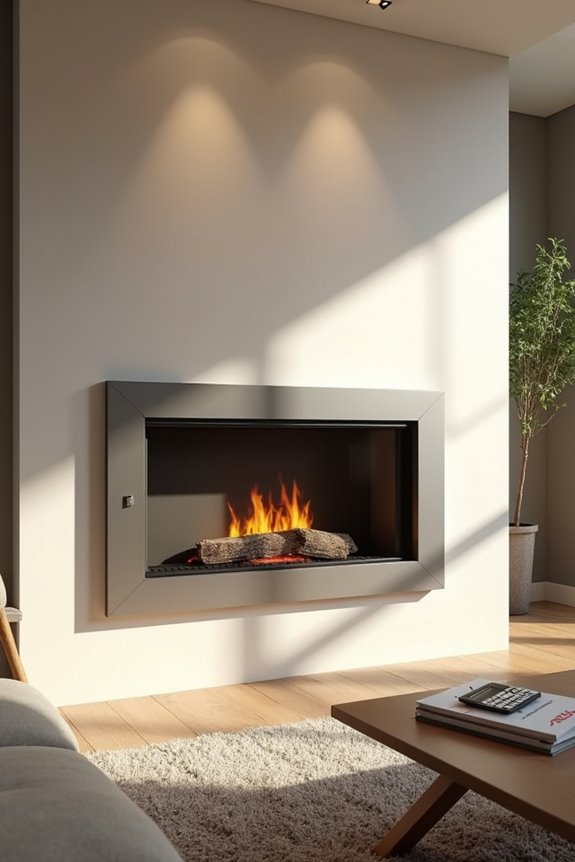
How much does your fireplace insert actually cost to run each year? That’s the question I’d ask before committing to any fuel type. Here’s what you’re looking at:
| Fuel Type | Annual Maintenance | Operating Cost |
|---|---|---|
| Electric fireplace inserts | Minimal | Lowest |
| Wood/Pellet | High (ash, cleaning, service) | Moderate to High |
| Gas/Propane | Low to Moderate | Predictable |
Electric fireplace inserts offer the lowest operating expenses and require virtually no maintenance. Wood and pellet models demand serious upkeep—think ash removal and professional cleaning. Gas and propane fall somewhere between, offering convenience without the minimal expenses of electric options. Fuel type costs fluctuate based on usage and your region, but electric consistently offers the best value for typical homes.
Calculating Your ROI: When Do Fireplace Inserts Pay for Themselves?
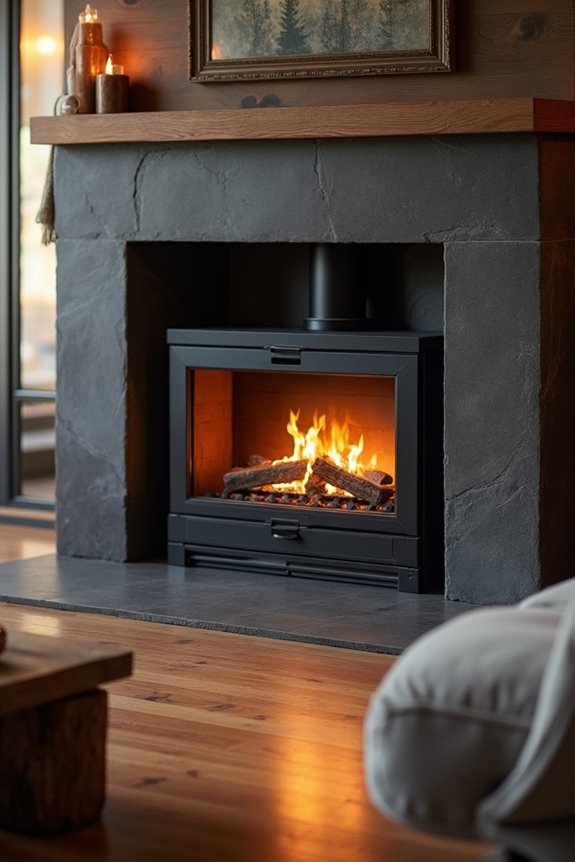
The real question isn’t just what you’ll spend on a fireplace insert—it’s when that investment actually pays you back.
The real question isn’t what you’ll spend on a fireplace insert—it’s when that investment actually pays you back.
Here’s the honest truth: your payback timeline depends on several factors working together:
- Gas inserts typically recover costs faster since installation’s simpler and energy savings kick in immediately
- Your heating bills determine everything—bigger savings mean quicker payback
- Upfront costs matter; mid-range inserts ($2,000–$4,000) often hit that sweet spot between price and performance
- Chimney work can delay payback; unexpected venting upgrades add thousands to your total
A high-efficiency gas insert might pay for itself in 3–5 years through lower heating bills. Electric inserts offer quick warmth with minimal upfront expense, though they won’t cut your energy costs dramatically.
The bottom line? You’re not just buying warmth—you’re investing in comfort that actually saves you money.