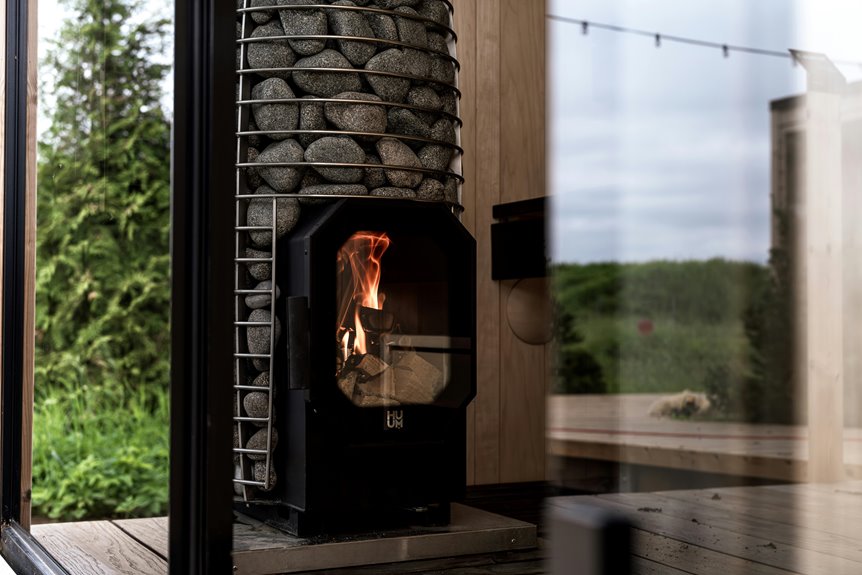
Electric fireplaces work by plugging into a standard outlet and using an electrical heating element—think of it like a space heater—that warms up, then a fan circulates that heat into your room.
Meanwhile, LED lights bounce off mirrors and rotate through patterns to create fake flames that look real.
You can run just the flames for ambiance without any heat, making them perfect year-round.
The heating and flame effects operate independently, giving you total control.
Want to know what makes them tick under the hood?
What Is an Electric Fireplace?
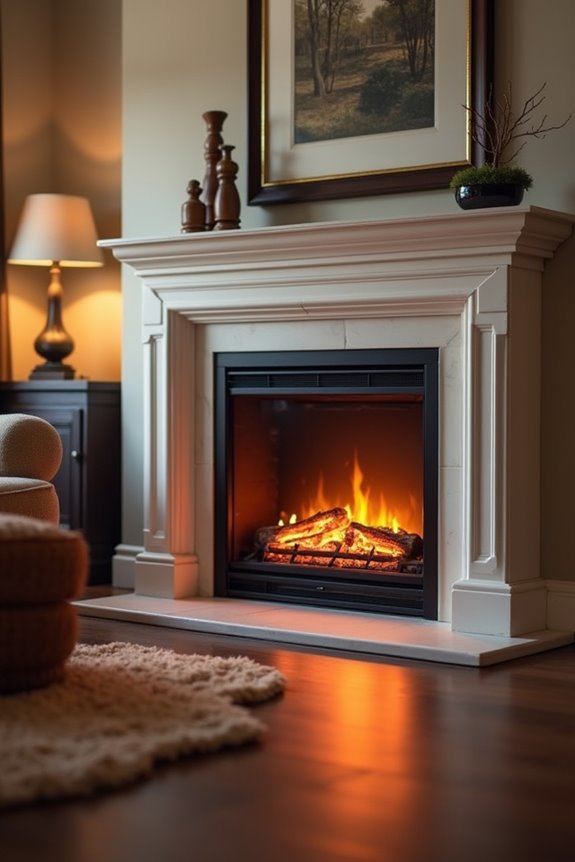
Ever wondered how people enjoy cozy fireplace vibes without actually setting up a real fire? An electric fireplace is basically your answer. It’s a portable unit that plugs into a standard outlet—no chimney needed, no fuel burning. Here’s how it works: it creates fake flames using LED lights, mirrors, and sometimes rotating parts that make everything flicker like real fire. The heating comes from electrical elements like coils or ceramic plates that warm up your room through a fan. Many models let you run just the flames without heat, perfect for ambiance on warmer days. You get all the comfort of a traditional fireplace, minus the mess and hassle. It’s modern heating made simple.
Electric vs. Gas vs. Wood-Burning Fireplaces: Which Is Right for You?
So you’ve got three main fireplace options, and they’re pretty different from each other.
Let me break down what makes each one unique:
- Electric fireplaces plug into standard outlets, need no venting, and heat rooms up to 1,000 square feet with coils or infrared elements
- Gas fireplaces burn natural gas or propane, produce real flames and heat, but require professional installation and venting
- Wood-burning fireplaces deliver authentic ambiance with genuine fire scent and crackle, though they demand chimney maintenance and ash cleanup
- Safety matters: Electric models stay cool to touch with automatic shutoffs, while gas and wood introduce real flames and carbon monoxide risks
If you’re renting or want convenience, electric works well. Craving that authentic fire experience? Gas or wood might appeal to you. Consider your space, budget, and how much maintenance you’re willing to handle.
Do Electric Fireplaces Actually Heat a Room?
The electricity powers a heating coil or infrared element that warms air, then a fan pushes that warmth into your room. Their effectiveness really depends on your room’s insulation and climate. Cold, drafty spaces? They’ll struggle. Well-insulated rooms? You’ll notice the difference. The cool part? You can run the flames without any heat, so you’re not stuck choosing between ambiance and comfort year-round.
How Electric Fireplace Heating Works
What’s actually happening inside that sleek electric fireplace when you crank up the heat? It’s simpler than you’d think. Your unit contains a heating element—maybe a coil, ceramic plate, or infrared technology—that converts electricity into warmth. A fan then pushes that heat into your room, creating comfort without any actual flames burning.
Here’s what makes it work:
- The heating element converts electrical energy directly into heat energy
- A built-in fan circulates warm air throughout your space
- You control the temperature with adjustable heat settings
- Flame effects run independently, so you get ambiance without electric heating
The benefit? Nearly all the electricity becomes usable heat in your room. No combustion means no venting needed. You’re getting efficient, straightforward warmth that makes your space feel welcoming and comfortable.
How LED and Mirrors Create Realistic Flames
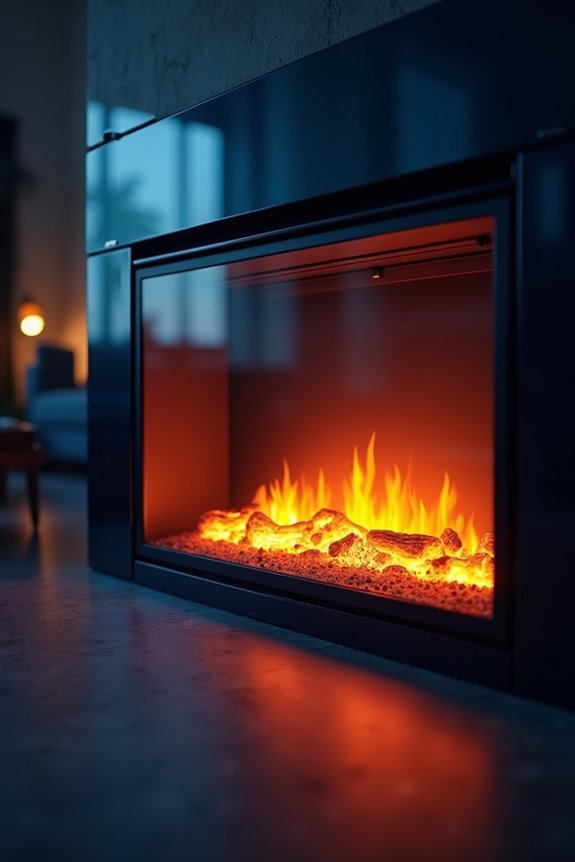
You might think realistic flames require actual fire, but they don’t. Electric fireplaces use LED lights combined with mirrors to trick your eyes into seeing flickering flames that look genuinely alive, and the technique lies in how those two components work together. LEDs provide the light source, while rotating or stationary mirrors bounce that light around to create depth and randomized flicker patterns, much like how a real flame dances and shifts. When you add layered lighting positioned at different angles, you get embers and glowing shadows that make the whole effect convincing without any actual combustion happening.
LED Light Technology Basics
How do electric fireplaces pull off one of their coolest tricks—making you genuinely believe there’s real fire dancing behind the glass when there absolutely isn’t?
It’s all about LED lights and mirrors working together. Here’s what’s happening behind that glass:
- LED bulbs emit bright light in orange and red tones
- Mirrors or reflectors bounce that light around to create depth
- Rotating patterns make the light flicker and dance
- Varying brightness mimics how real flames move and shift
The LED lights themselves are the source of everything you’re seeing. They’re efficient, so they won’t spike your electricity bill. Those mirrors are strategically angled to reflect and scatter the light in unpredictable ways. When combined with rotation, you get that flickering effect that tricks your brain into seeing actual flames.
Mirror Reflection and Flicker
Ever wonder why the flames in an electric fireplace look so convincingly real? Here’s how it works: LED lights bounce off a rotating silver refractor—basically a curved mirror. As this mirror spins, it reflects light at different angles, creating depth and movement that tricks your eyes into seeing actual flames.
The refractor’s design matters tremendously. Its patterns are specifically shaped to produce randomized flicker, mimicking how real fire dances unpredictably. Some units take it further by modulating the mirror’s spin speed, which subtly changes how light reflects. This variation prevents that repetitive, obviously-fake look you might notice in cheaper models.
The result? Layers of flickering light that feel genuinely alive. Combined with the LED lights’ warm glow, you get something convincing without needing actual fire.
Run the Flames Without the Heat
Want all the cozy ambiance without turning your living room into a sauna?
Many electric fireplaces let you do exactly that. You can turn off the heating element while keeping the flame effect running. Here’s what you’re actually seeing:
- LED lights create the base glow and color
- A rotating mirror bounces light to simulate flickering flames
- The flame effect dances and moves realistically without any heat
- Optional crackling sounds or water-vapor systems add extra realism
This setup means you’ll enjoy the visual warmth year-round. Summer gatherings become instantly cozier. Winter evenings get that ambiance without cranking up the temperature. Since there’s no combustion happening, it’s purely decorative. You’re getting the aesthetic appeal we all crave from a fireplace—that gathering-spot feeling—without the actual warmth. It’s a practical option for anyone who loves the look but hates sweating through it.
Core Safety Features You Should Know
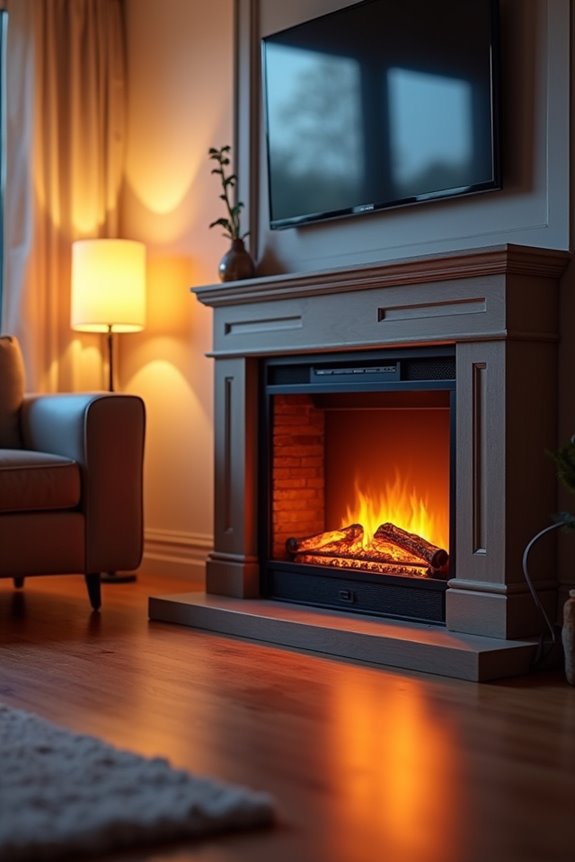
When you’re considering an electric fireplace for your home, I want you to feel confident about the safety features built right in. Most modern units include an automatic shutdown system that kicks in if the fireplace gets too hot—think of it as a smart guardian that turns things off before trouble starts. You’ll also find that the exterior stays cool to the touch, which means you can walk past it or let your kids play nearby without worrying about accidental burns.
Built-In Automatic Shutdown
How does an electric fireplace know when it’s getting too hot? I’ll tell you—it’s actually pretty clever. Your fireplace has built-in thermal sensors that constantly monitor temperature. When things heat up too much, the automatic shutoff kicks in and cuts the power. Think of it as your fireplace’s personal bodyguard.
Here’s what makes this system work:
- Temperature monitoring keeps tabs on internal heat levels around the clock
- Automatic shutoff activates instantly when danger zones are reached
- Safety circuits require stable power, preventing operation during risky electrical moments
- Airflow detection shuts everything down if vents get blocked
These features let you enjoy your fireplace without constantly worrying. You’re protected even if you accidentally block a vent or leave it running too long. That’s peace of mind built right in.
Cool-Touch Surface Protection
Why would manufacturers design a heater that doesn’t actually feel hot to the touch? Simple—they’re thinking about your family’s safety. I appreciate how electric fireplaces use cool-to-touch surfaces as a key safety feature. Even while the heating elements warm your room, the exterior stays remarkably cool. This means your curious toddler or playful pet can brush against the unit without risk of burns. The ceramic plates or coils inside do the heavy lifting, while the outer casing remains safe to touch. You’ll find this technology works because heat dissipates carefully through the design. It’s one of those thoughtful features that lets you enjoy cozy warmth without constant worry. That’s the kind of peace of mind any family would want when gathering around their fireplaces.
Installing Your Electric Fireplace: Plug and Play
Ready to enjoy cozy flames without the mess of ash or the hassle of a chimney?
I’ll walk you through it—installing your electric fireplace is simple. You don’t need a contractor or special tools. Just plug it in, and electricity flows through the unit, powering both the heating element and LED flames. Here’s what makes setup so straightforward:
- Find a standard outlet near where you want your fireplace
- Position the unit on a flat, stable surface or mount it on your wall
- Plug in the cord—that’s it for basic operation
- Adjust flame brightness and heat settings using your remote or controls
No venting. No permits. No professionals required. Within minutes, you’re creating ambiance and warmth. Your space is ready to use.
No Chimney or Venting Required
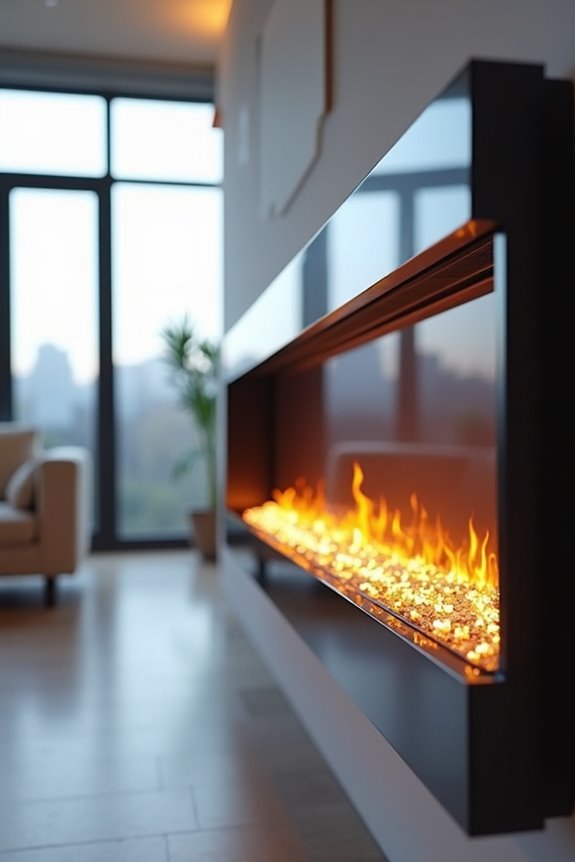
Unlike traditional fireplaces that demand costly chimney installation or venting systems, I can set up an electric fireplace by simply plugging it into any standard outlet—no construction crews, no structural modifications needed. You’re getting genuine safety perks too: there’s no real combustion happening, so you won’t deal with carbon monoxide risks or the mess of soot buildup that comes with wood-burning setups. This ventless design means you get warm heat and flickering flames without the complications that come with traditional fireplaces.
Installation Without Structural Changes
How convenient would it be to add a fireplace to your bedroom without calling in contractors or tearing holes in your walls? That’s the benefit of an electric fireplace. I don’t need to worry about structural changes or permanent installations. Instead, here’s what makes plug-in installation so simple:
- Plug into any standard outlet – No special wiring required
- Move it whenever you want – Rearrange your room without commitment
- Zero professional help needed – I handle setup myself in minutes
- Keep walls intact – Rent or own, your space stays unchanged
An electric fireplace slides into your room like any other furniture piece. You’re not drilling, venting, or hiring specialists. Just position it, plug it in, and enjoy warmth and ambiance. This flexibility means I can test the fireplace in different rooms before deciding where it truly belongs.
Safety Benefits Of Ventless Design
Because electric fireplaces don’t produce actual flames, I don’t need to worry about the safety hazards that come with traditional fireplaces. Instead, I get peace of mind with built-in protections. The exterior stays cool-to-touch, so I’m not risking burns if I accidentally brush against it. There’s an overheat automatic shutoff that kicks in if things get too warm, protecting my home and family. Plus, there’s tip-over protection that prevents accidents if the unit gets knocked over.
What I appreciate most: no combustion means no dangerous gases seeping into my living space. No carbon monoxide concerns. No toxic fumes. My air stays clean and breathable. I can place these fireplaces in bedrooms, apartments, or anywhere without special venting. It’s the safest heating option I’ve found.
How to Control Heat and Flame Intensity
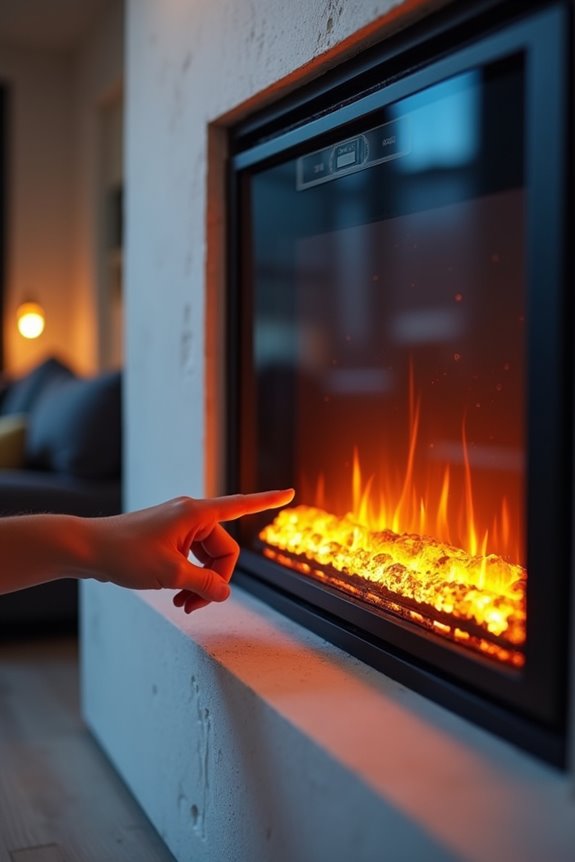
Want to enjoy a cozy fire without actually heating your room? You’re in control. Electric fireplaces let you adjust both heat and flame separately, so you can customize your experience.
Here’s what you can tweak:
- Heat output using heating coils or ceramic plates for different warmth levels
- Flame intensity through LED lighting and rotating refractors that simulate flickering
- Flame-only mode for ambiance without warming your space
- Remote controls and apps to adjust thermostat, brightness, and fan speed instantly
Some smart models even respond to voice commands through your phone. This flexibility gives you options—you’re not stuck with one setting. Want just the visual warmth on a summer evening? Done. Need serious heat in winter? Adjust it. You’re creating the exact atmosphere you want, whenever you want it.
Energy Efficiency and Real Operating Costs
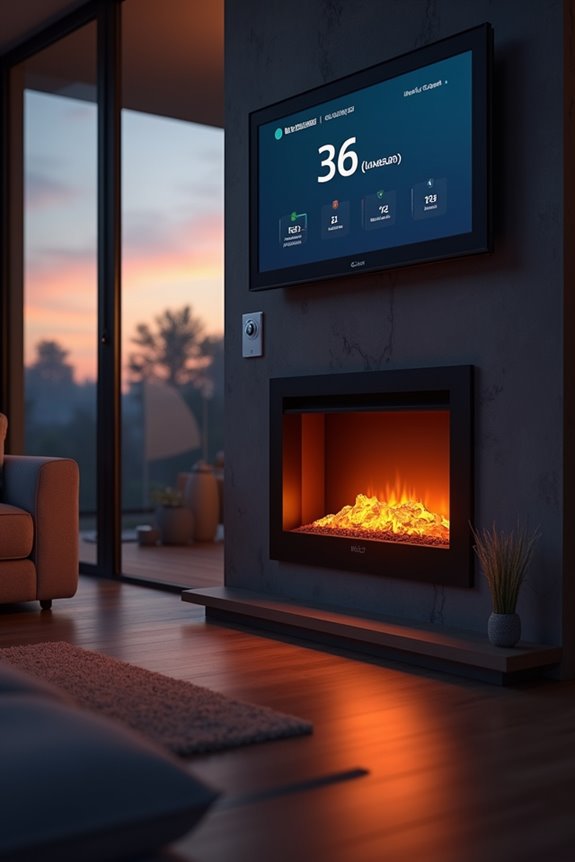
Now that you’ve got your flames and heat dialed in just right, let’s talk about what this setup actually costs to run. Here’s the good news: electric fireplaces are electricity efficiency champions. They convert nearly all the power they use into actual heat—no wasted energy going up a chimney like traditional fireplaces.
Your heating costs depend on a few things. Room insulation matters. Fan speed matters. How often you run it matters. Running your fireplace on low for ambiance? That’s basically pocket change. Cranking it to full heat? You’ll notice the difference on your electric bill, but it’s still reasonable for supplemental warming in medium-sized rooms.
The bottom line? You’re getting genuine warmth without the waste.
Common Electric Fireplace Problems and Solutions
Like any appliance you rely on, electric fireplaces occasionally throw a curveball. I’ve found that most issues fall into predictable categories you can actually fix yourself.
Here’s what typically goes wrong:
- Heat won’t turn on – Check your power outlet, verify it’s plugged in, and inspect your circuit breaker for trips
- Flickering or dim flames – Dirty mirrors, low LED brightness, or blocked air vents cause this frustration
- Remote control fails – Dead batteries or a faulty receiver usually explains it
- Overheating shutdowns – Your unit’s protecting itself; clear vents and move it away from walls
Most problems stem from simple oversights rather than serious defects. I’ve learned that maintaining clear vents and checking connections first saves you time and hassle.
Best Brands and What Sets Them Apart
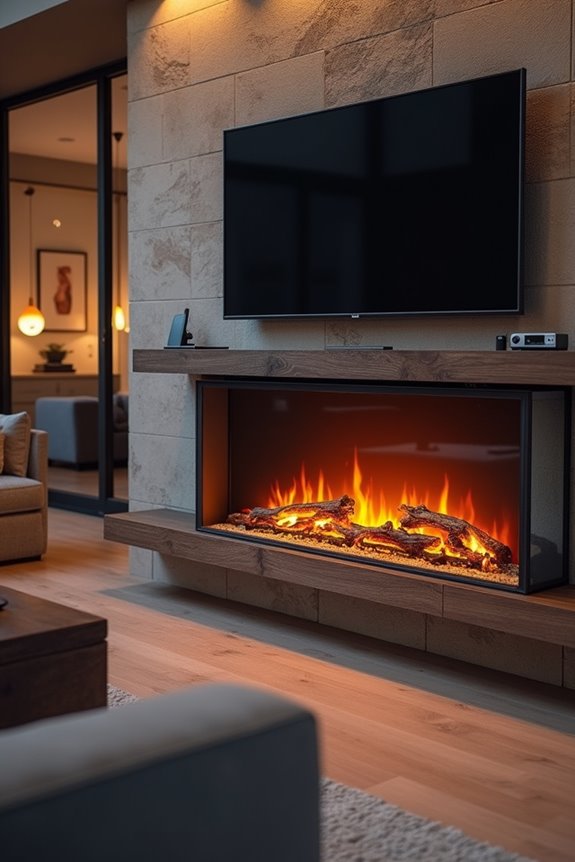
Once you’ve got your fireplace running smoothly, the real question becomes: which brand should you trust in the first place? I’d point you toward Dimplex, Amantii, and Napoleon—they’re the heavy hitters for good reason. Dimplex literally invented realistic flame effects with Optiflame back in 1988, then kept innovating with water vapor and 3D technology. What sets these brands apart? Longer warranties, frankly. They stand behind their stuff because it’s built to last. Sure, everything’s manufactured in China nowadays, but premium brands source better parts and offer actual support when things go wrong. You’re paying for reliability and that peace of mind—knowing you’ve picked a fireplace that won’t leave you in the cold.
Electric Fireplaces vs. The Real Thing: Honest Expectations
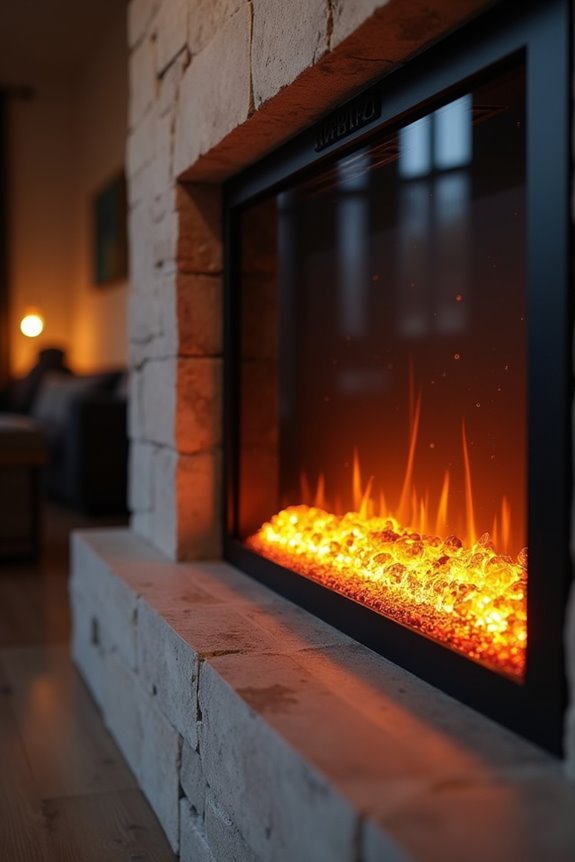
What’s the catch with electric fireplaces, really? They’re good for ambiance, but let’s be honest about what you’re getting.
Here’s the real deal:
- No actual flames – LED lights and mirrors create the visual effect, but there’s zero combustion happening
- Limited heating power – They work great for one room, not your entire house
- Missing the experience – You won’t get that authentic wood crackle or smoky scent
- They’re ventless – Perfect for apartments, but you lose that traditional fireplace charm
I like electric fireplaces for their safety and convenience. They’re cool-to-touch around kids, need just a standard outlet, and require minimal maintenance. But if you’re craving authentic flames and that woodburning experience? You’ll notice the difference. They’re ideal supplements, not replacements.