Chimney cleaning logs work, but here’s the catch—they’re only effective on Stage 1 creosote (that flaky stuff). They soften buildup so it crumbles into your firebox, which sounds helpful until you realize the debris just sits there. Once creosote hardens into tar or glaze, these logs become basically useless. Think of them as maintenance aids between professional sweeps, not replacements. You’ll still need a CSIA-certified technician annually to actually remove what these logs can’t handle, inspect your liner, and confirm everything operates safely. Keep scrolling to discover exactly how to use them strategically alongside professional care.
Do Chimney Cleaning Logs Actually Work?
Have you ever tossed one of those chimney cleaning logs into your fireplace and hoped it’d solve all your creosote problems? I get it—they sound perfect. Here’s the honest truth: chimney cleaning logs do work, but only partially. When you burn them, flames activate special additives that vaporize and loosen creosote buildup, causing flakes to drop into your firebox. The catch? They relocate creosote rather than fully remove it. They can’t handle hardened, glazed, or stubborn obstructions.
Think of them as your between-visits aid, not your solution. If you’re burning wood frequently, they’re helpful supplements. But here’s what matters most: you still need annual inspections and professional sweeping from a CSIA-certified technician. Skip that, and you’re risking fireplace safety. These logs complement professional care—they don’t replace it.
Which Creosote Stages Can Logs Handle?
When does a cleaning log actually do its job? I’ll be honest—they’re not miracle workers. These logs work only at Stage 1 creosote, that flaky stuff that’s easier to tackle. Here’s what I’ve learned about the creosote stages:
| Creosote Stage | Log Effectiveness | What Happens |
|---|---|---|
| Stage 1 (Flaky) | Works well | Softening creosote causes flakes fall into firebox |
| Stage 2 (Tar-like) | Doesn’t work | Logs can’t penetrate hardened buildup |
| Stage 3 (Glazed) | Doesn’t work | Professional removal needed |
The additives in fireplace cleaning logs soften loose creosote so it crumbles. Beyond Stage 1? They’re basically useless. That’s why I recommend using logs as supplementary safety measures between annual chimney cleaning visits. A CSIA-certified sweep catches what logs miss, keeping your chimney inspection results solid.
What Professional Sweeps Remove That Logs Cannot?
So the thing is—fireplace cleaning logs soften creosote, but they can’t actually remove it. When I hire a CSIA-certified professional chimney sweep, they’re doing something entirely different. They use brushes, rods, and HEPA vacuums to physically pull creosote deposits and soot buildup from every corner of my flues. I’m talking about places logs simply can’t reach: the bends, the smoke shelf, even glazed creosote stuck to liner walls.
A professional doesn’t just clean, though. They inspect my entire venting system for structural damage, leaks, and obstructions like bird nests. They check dampers and verify everything’s functioning safely. That’s creosote removal done right—not just softened, but actually gone. Logs can’t match that level of accessibility of flues or the thorough chimney inspection I need annually.
How Should You Combine Logs With Professional Chimney Care?
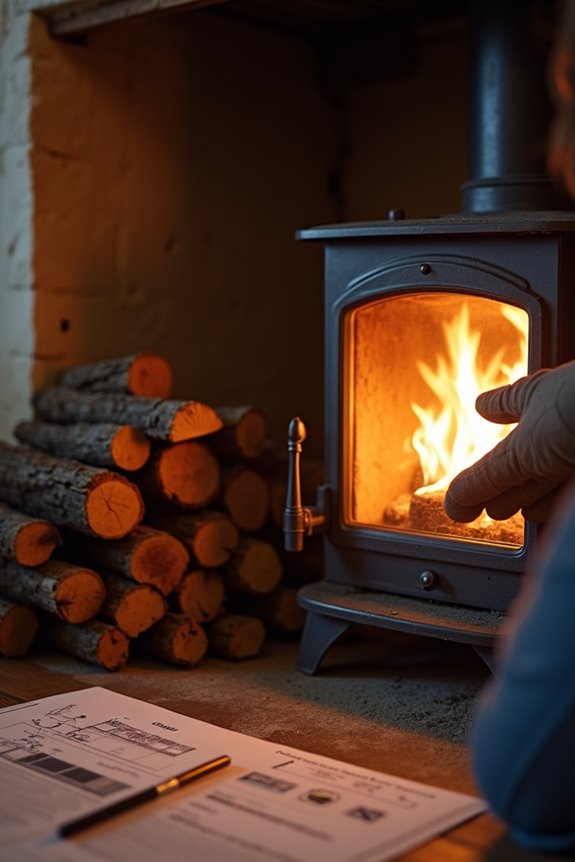
Now that I understand what logs can and can’t do, the real question becomes: how do I actually use them wisely?
Think of chimney sweeping logs as your between-visit helpers, not your main defense. Here’s how I combine them with professional care:
- Burn logs monthly between annual inspections to reduce minor creosote buildup before it hardens
- Schedule yearly professional cleaning with a CSIA-certified technician who uses brushes, rods, and HEPA vacuums to remove what logs can’t
- Use logs only for maintenance, never as a replacement for thorough chimney sweeping
- Get annual inspections to catch deterioration, leaks, and blockages early
This balanced approach keeps your fireplace safer. Logs handle light deposits while professionals handle the heavy-duty work. Together, they protect your home and provide reliable security.
How Do You Use Logs Safely?
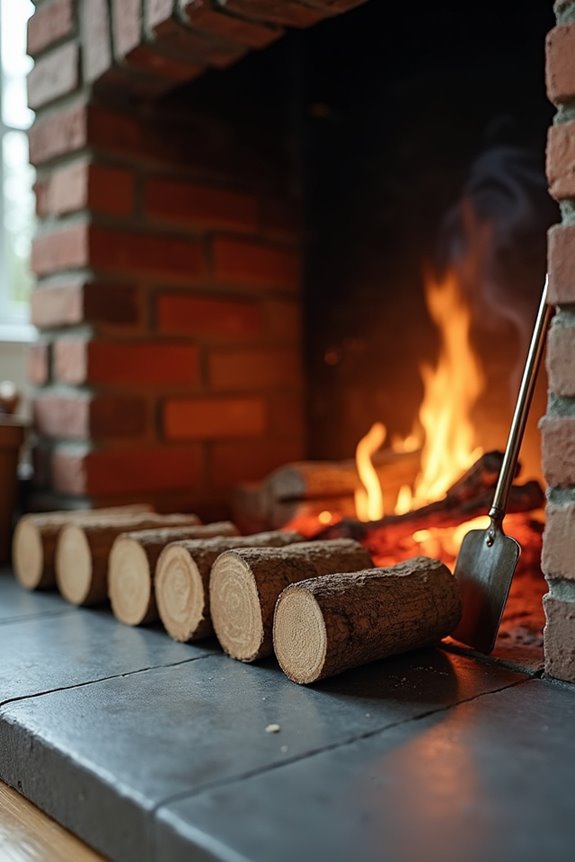
Ready to burn one of these logs without turning your fireplace into a smoke machine? Here’s what works best.
First, build a regular wood fire for 30–60 minutes before placing the chimney cleaning log on the embers. Follow the manufacturer instructions carefully.
During the burn, keep your damper open and crack some windows for ventilation. You need airflow so smoke and fumes don’t enter your home. These logs work by heating additives that soften creosote buildup, allowing it to flake off naturally.
One important thing: don’t use them in gas or propane fireplaces. They’re made for wood-burning systems only.
Here’s the reality—these logs help, but they’re not a complete solution. Call a CSIA-certified technician annually because cleaning logs alone won’t remove all buildup.
How Often Should You Use Logs Between Professional Inspections?
I should use one or two cleaning logs per season—right after I’ve had a regular wood fire burning for 30 to 60 minutes—but the important thing: I can’t just rely on them to keep my chimney safe between my annual professional inspections. Tracking how much creosote builds up helps me know if I’m using logs enough, though they only work on flaky creosote and won’t tackle the hard, glazed stuff that really needs a certified technician’s attention. Honestly, the logs work best when I view them as a helper between my yearly professional sweeps, not as a replacement for that important annual inspection.
Creosote Buildup Monitoring Guide
How do you know when your chimney actually needs cleaning logs versus a professional sweep? I’ll walk you through my monitoring guide so you’re not guessing.
Check your creosote buildup regularly during the heating season. Here’s what I look for:
- Flaky, stage-one creosote (about 1/8 inch thick) responds well to chimney cleaning logs
- Tar-like stage-two creosote requires professional attention—logs won’t cut it
- Glazed stage-three creosote demands a CSIA-certified sweep immediately
- Soot and minor debris between annual inspections benefit from logs during regular wood-burning fireplace use
I use logs as my supplementary tool between professional sweeps, not replacements. Schedule yearly inspections with a CSIA-certified professional for thorough assessment and complete soot removal. This combination keeps my wood-burning fireplace safe without overdoing maintenance.
Recommended Usage Frequency Schedule
Once you’ve got a handle on what creosote stage you’re dealing with, the real question becomes: how often should you actually use these logs? Here’s the catch: cleaning logs work best as supplementary measures between your annual inspection and professional sweep, not as standalone solutions. If you’re burning wood regularly and creosote buildup stays around 1/8 inch thick, you can use a log every few months to manage light, flaky deposits. But here’s the catch—don’t rely on them for heavy buildup. The CSIA recommends pairing logs with yearly professional cleanings because soot and creosote need expert attention. Think of logs as your seasonal tool, not your primary solution. They’ll help reduce minor soot between visits, but they can’t handle structural issues or serious obstructions. That’s where professionals come in.
Professional Inspection Timing Coordination
The coordination of cleaning logs with professional visits is more effective than using them independently. Here’s how to coordinate them:
- Use logs between visits when creosote buildup reaches 1/8 inch thickness as your supplementary measure
- Schedule your annual sweep with a CSIA-certified professional as your required anchor point
- Time log usage roughly every 4-6 weeks, but always before your yearly professional inspection
- Plan your professional inspection after using logs, so specialists can assess what remained and address combustion safety concerns
This coordination strategy means logs manage minor buildup while your annual sweep handles the heavy-duty work. You’re not relying on logs alone—they’re your teammate supporting a CSIA-certified inspection. That partnership keeps your chimney safe and functional year-round.