Wood smoke from fireplaces contains PM2.5 particles that penetrate deep into your lungs and cross into your bloodstream, triggering inflammation throughout your body. Benzene and formaldehyde in the smoke cause bronchitis and heart problems, while carbon monoxide reduces oxygen in your blood. Even closed fireplaces leak toxins indoors, and kids’ developing lungs plus older adults’ weakened airways face serious risks—asthma attacks and respiratory issues spike with exposure. I’ll show you exactly how to protect your family or consider safer alternatives.
The Hidden Dangers in Fireplace Smoke
Ever wondered what’s actually floating into your lungs when you settle in front of that fireplace?
Here’s the thing: that warm glow comes with some serious air pollutants we can’t see. Fireplace smoke contains tiny particles called PM2.5—so small they slip past your body’s defenses and embed deep in your lungs. You’re also breathing benzene and formaldehyde, chemicals linked to bronchitis and heart problems.
The sneaky part? Wood-burning emissions don’t just affect your indoor air quality. They linger in your home long after the fire dies down. Kids and older adults face bigger risks from these pollutants, dealing with increased asthma attacks and respiratory issues.
Even worse, your neighbor’s fireplace can drift into your space, compounding the problem. That picture-perfect ambiance carries hidden costs to the air you’re breathing.
What Wood Smoke Actually Does to Your Lungs and Heart
When you breathe in wood smoke, those tiny particles—so small you can’t see them—slip right past your body’s usual defenses and lodge deep in your lungs where they can’t be coughed out. Once they settle in, they irritate your airways and trigger inflammation that makes your heart work harder, which is why people with heart or asthma conditions often feel the effects first. Think of it this way: your lungs are trying to process something they were never designed to handle, and that struggle can lead to everything from wheezing fits to serious problems like heart attacks down the road.
Particulate Matter Deep Penetration
How small does a particle need to be before it becomes dangerous? PM2.5 particles—those invisible specks from wood smoke—are so tiny they slip past your body’s natural defenses. When you breathe them in, they don’t stop at your lungs. Instead, they travel deeper, crossing into your bloodstream where they trigger inflammation throughout your body. These particles can reach your heart, brain, and organs. Unlike larger dust, PM2.5 particulate matter doesn’t get filtered by your nose or throat. It penetrates straight into the deepest air sacs in your lungs. This is why wood smoke poses a serious threat—especially for kids and older relatives who spend time near your fireplace.
Cardiovascular And Respiratory Damage
What’s actually happening inside your body when you breathe in wood smoke? The tiny PM2.5 particles slip straight into your lungs and bloodstream, triggering real damage. You might notice coughing or wheezing first—your body’s distress signal. But here’s where it gets serious: wood-burning emissions don’t just irritate your airways. They actively inflame your heart and cardiovascular system. Kids and older adults face the highest risks. Long-term exposure increases hospitalizations for asthma attacks, bronchitis, and even heart attacks. Your heart works harder when pollutants circulate through your blood. That fireplace creating unhealthy air quality? It’s silently stressing your most essential organs. The damage accumulates over time, making winter wood smoke exposure a genuine health concern for your family.
Children and Older Adults: Why They’re at Greatest Risk?
Your lungs aren’t all created equal—and that’s especially true for the youngest and oldest members of your household. Kids and seniors face higher risks from wood smoke because their bodies are simply more vulnerable to PM2.5 particles and other hazardous pollutants that fireplaces release.
Here’s why: children’s lungs are still developing, while older adults’ lungs have weakened over time. Both groups struggle more when indoor air quality dips during fireplace use. That smoke can trigger asthma attacks, relentless coughing, and serious heart problems.
Fireplaces feel warm and family-friendly. But for vulnerable populations, that warmth comes with real health costs. Bronchitis, heart attacks, and strokes become genuine risks. That’s why protecting your kids and parents means reducing their smoke exposure and keeping them indoors when pollution peaks.
Indoor Air Pollution: Even Closed Fireplaces Leak Toxins
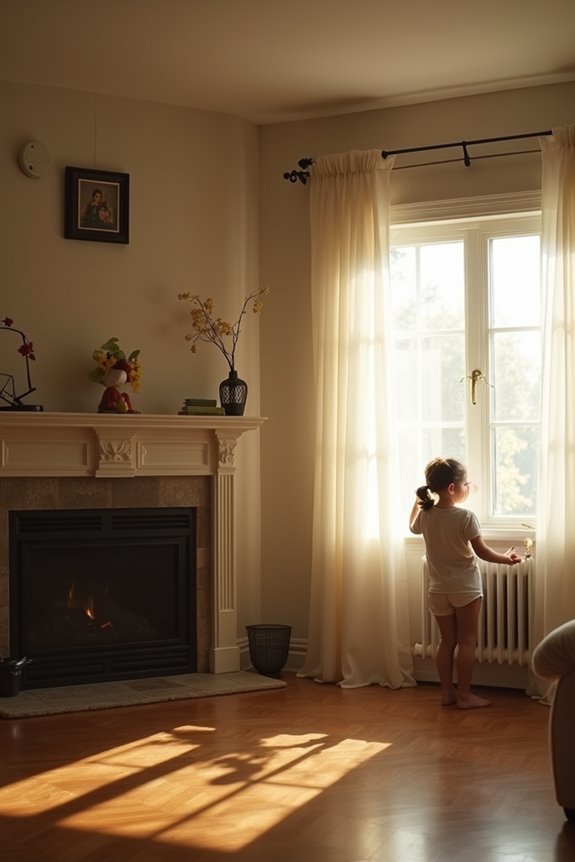
Even when your fireplace sits dark and cold, it’s still quietly contaminating your home’s air. You might think closed fireplaces are harmless, but they’re leaking toxins into your family’s breathing space.
Here’s what’s escaping:
- Soot and fine particulate matter that settles in your lungs
- Carbon monoxide, a colorless gas that reduces oxygen in your blood
- Volatile organic compounds like benzene and formaldehyde
Outdoor wood smoke from neighbors also infiltrates your home, degrading indoor air quality despite closed windows. The solution involves monitoring your air quality and using purifiers to catch these pollutants. The American Academy of Pediatrics recommends cracking a window during fires to clear harmful buildup. These practical steps protect your family’s health.
How to Protect Kids and Seniors From Fireplace Smoke
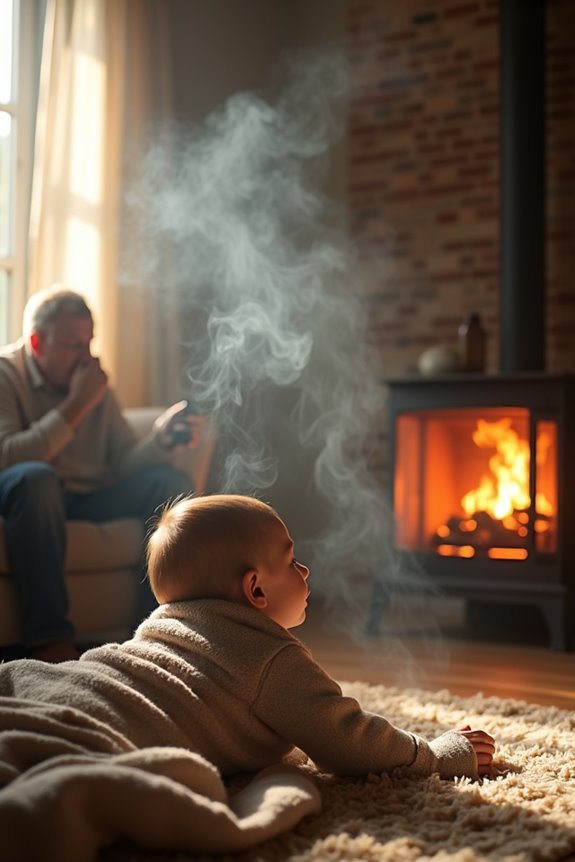
How can we keep the people we love most safe when the fireplace is burning? Kids and seniors face real risks from fireplace smoke, so I’ve learned some practical steps that work.
First, I use screens and barriers to prevent burns from hot surfaces. I supervise children closely and keep them at a safe distance. For indoor air quality, I crack open a window during use—it’s a simple step that helps.
I’ve also invested in a portable air cleaner, which reduces harmful PM2.5 by about 50%. What matters most: I schedule annual chimney inspections and use EPA-certified heating options when possible. These aren’t just safety boxes to check—they’re how I protect my vulnerable groups from serious health problems like asthma attacks and heart issues.
Wood Smoke vs. Gas Inserts: Which Is Safer?
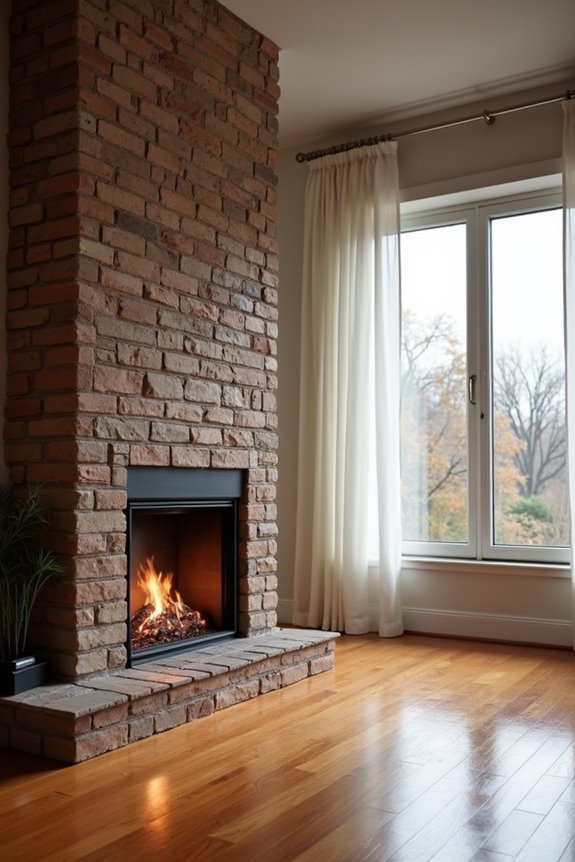
Now that we’ve covered ways to shield our families from fireplace smoke, let’s tackle a bigger question: what if we replaced the source itself?
Here’s the reality: wood-burning fireplaces release dangerous PM2.5 particles and toxins like carbon monoxide and benzene. Gas inserts? They’re noticeably cleaner.
Consider these differences:
- Emissions: Wood smoke floods your home with pollutants; gas inserts burn with far fewer indoor emissions when properly vented.
- Health impact: Wood-burning contributes significantly to wintertime air pollution, while gas options minimize respiratory triggers.
- Safety: Gas inserts require proper venting and maintenance, but they eliminate unvented combustion risks.
The trade-off is clear. Upgrading to gas inserts reduces your family’s PM2.5 exposure substantially. If you’re serious about protecting everyone breathing that air, switching heating sources likely matters more than any air filter available.
Health Symptoms That Signal Fireplace Exposure
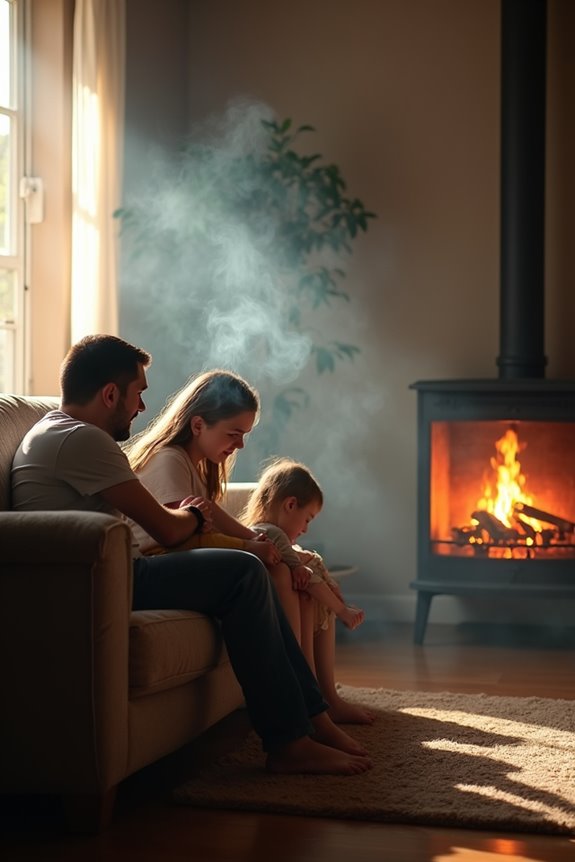
When’s the last time you noticed your child wheezing after an evening by the fire? That cough might be more than just a cold. Wood smoke contains PM2.5 particles that slip deep into lungs, triggering asthma attacks and bronchitis. You might notice your kids coughing repeatedly or complaining they can’t breathe well. Older family members could experience chest tightness or shortness of breath. Even when you’re not sitting directly by the fireplace, poor indoor air quality affects everyone in your home. Pay attention if symptoms worsen on fireplace nights—headaches, throat irritation, and wheezing are your body’s warning signs. These signals tell you that wood smoke is affecting your family’s health, sometimes without you realizing it’s happening.
How Much Smoke Does Your Fireplace Really Emit?
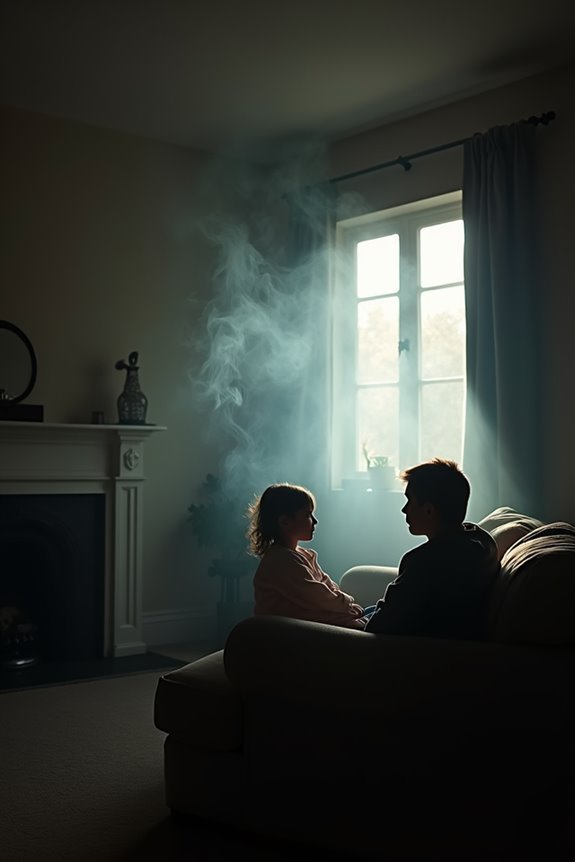
You’ve noticed the symptoms, and your instinct’s telling you something’s off. So how much smoke’s actually pouring from your fireplace? Here’s what’s really happening:
- One old stove emits as much PM2.5 as eight diesel school buses—that’s massive pollution in your home
- Residential wood burning’s the second-largest wintertime PM2.5 source nationally, meaning your fireplace contributes to serious outdoor air problems
- Indoor air quality drops significantly with nitrogen oxides and other hazardous pollutants released directly into your breathing space
That cozy fire you’re enjoying? It’s silently filling your home with fine particles that penetrate deep into your lungs. These aren’t visible clouds—they’re microscopic invaders traveling through your air. Your family’s breathing them in continuously during operation, both indoors and outdoors.
How to Burn Safely: EPA Standards, Dry Wood, and Ventilation
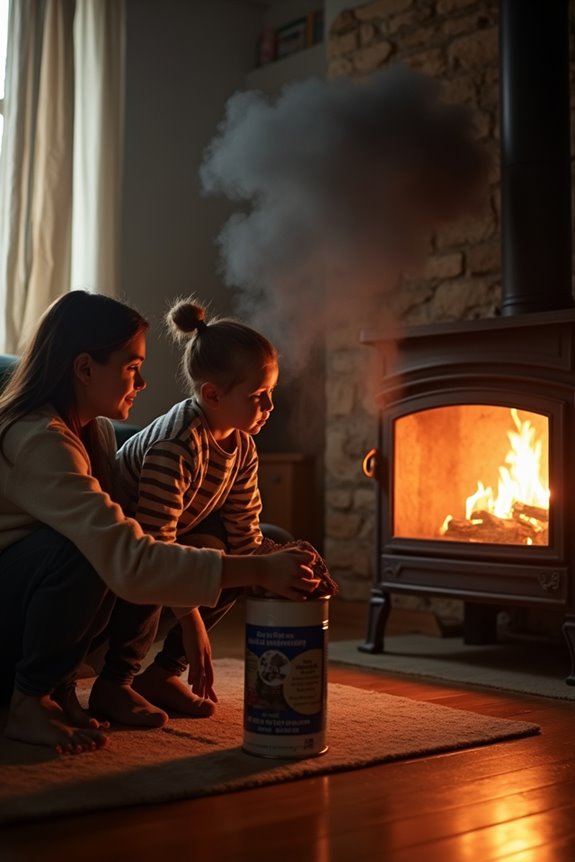
What if I told you that the difference between a dangerous fireplace and a safer one comes down to a few concrete steps?
I’ve learned that using EPA-approved stoves matters. They’re designed to burn cleaner, protecting your indoor air quality. To be honest: I only burn seasoned wood—the dry kind split months ahead. Wet wood creates creosote buildup and nasty smoke.
I use the top-down lighting method, adding fuel slowly. It sounds simple, but stable combustion means fewer emissions entering your home.
Ventilation is necessary. I crack a window nearby, letting fresh air circulate without overdoing it. That balance prevents smoke from backing into living spaces.
Finally, I schedule annual chimney cleanings. Regular maintenance catches problems before they worsen, keeping my family safer and my indoor air cleaner.
Replace Your Fireplace: Cleaner Heating Alternatives
If you’re ready to ditch the wood-burning habit, here are some solid alternatives that’ll keep your home warm without choking your family with smoke and creosote. You can switch to natural gas fireplaces, which burn cleaner and cut indoor pollution dramatically, or go electric with heat pumps that don’t produce any combustion emissions at all. For the eco-conscious folks willing to think bigger, solar panels and geothermal systems offer long-term heating solutions that’ll reduce your fireplace health risks while saving you money on energy bills.
Switching To Natural Gas
Natural gas fireplaces offer a cleaner option if you’re serious about protecting your family’s air quality. Here’s why you should consider making the switch:
- Lower emissions: Gas burns cleaner than wood, producing considerably fewer harmful particles that settle in your lungs
- Minimal maintenance: You’ll skip the creosote buildup and constant cleaning that wood fireplaces demand
- Safety features: Modern units include oxygen-depletion sensors that protect against carbon monoxide risks
Switching requires some planning and investment. Check your local building codes first—many areas permit gas inserts or direct-vent options. If a full replacement isn’t feasible, upgrading to a gas insert provides most of these benefits at a lower cost.
Electric Heat Pump Benefits
Why settle for a fireplace that fills your home with smoke and pollutants when you could heat your space without burning anything at all? A heat pump offers a practical alternative. Instead of combusting wood, it draws warmth from electricity, meaning zero indoor air quality problems from PM2.5, benzene, or formaldehyde. You’ll breathe easier—literally.
Heat pumps work year-round for both heating and cooling. They give you precise temperature control, so your home stays comfortable without the guesswork. Plus, since they don’t burn fuel on-site, your neighborhood benefits through reduced outdoor air pollution.
Sure, installation requires upfront investment and time. But long-term energy savings and the shift toward renewable electricity make heat pumps worth it. Your family’s health matters.
Solar And Geothermal Options
Heat pumps are excellent, but they’re just the beginning of what’s possible for your home. I’ve found two other worthwhile options worth exploring:
- Solar heating captures the sun’s energy to heat water and your home, giving you free energy after installation
- Geothermal systems tap into earth’s natural warmth, offering renewable heating that keeps working year-round
- Indoor air quality improvements happen immediately when you ditch your fireplace’s smoke and particles
Both options reduce your family’s exposure to harmful pollutants that fireplaces pump into your space. Sure, geothermal requires upfront investment and solar depends on your location’s sunshine. But here’s the thing—you’re investing in cleaner air your kids actually breathe, lower emissions, and joining neighbors who’ve already made the switch. That matters.
Red Flags: When Your Fireplace and Chimney Need Repair
When’s the last time you actually thought about what’s happening inside your chimney? I didn’t either—until I learned it could be harming my family’s indoor air quality.
| Warning Sign | What It Means | Action Needed |
|---|---|---|
| Black, sticky buildup (creosote) | Incomplete burning | Schedule cleaning immediately |
| Smoke backing into rooms | Blockage or damage | Call professional inspector |
| Musty odors | Moisture or debris | Get chimney inspection done |
| Visible cracks or damage | Structural problems | Repair before next use |
Here’s the thing: creosote is flammable and dangerous. Dirty chimneys cause roughly 3 in 10 home heating fires. I understand now—annual or bi-annual inspections aren’t optional. They’re how we protect what matters most. Don’t wait for problems to find you.