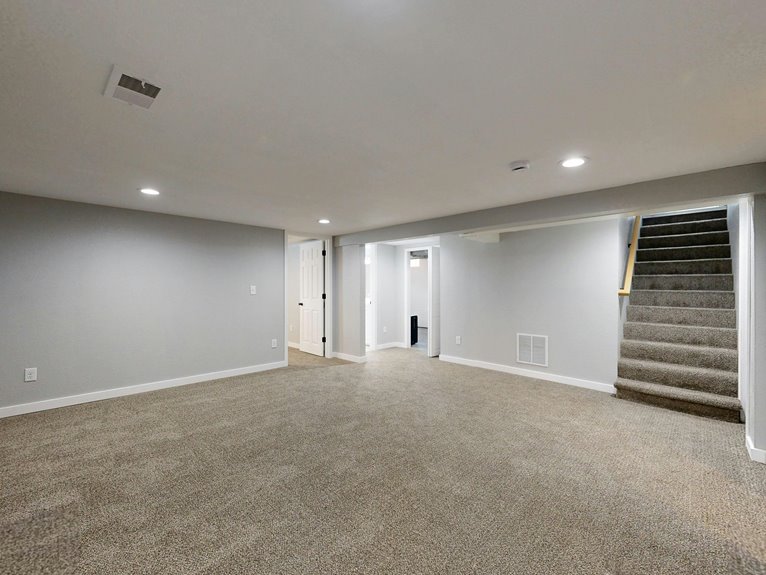
Most Florida homes skip basements entirely, and I’ll tell you why: the state’s water table sits dangerously close to the surface, especially in South Florida. Digging down invites groundwater intrusion, flooding, and expensive waterproofing problems. Hurricanes and heavy rains worsen the issue—basements flood fast.
Instead, builders favor slab-on-grade or raised foundations that work with Florida’s climate rather than against it. You’re probably wondering where folks store their stuff without that underground space, though.
Do Florida Homes Have Basements?
Why don’t Florida homes have basements like houses up north? Well, here’s the thing—Florida’s got a high water table that makes digging down pretty impractical. When you excavate below ground in Florida, you’re basically inviting groundwater to flood your new space. Not ideal, right?
Instead, Florida homes rely on slab-on-grade foundations or elevated foundations. These designs keep your house safe from flooding risk and tropical storms. You’ll notice most Florida homes sit on concrete slabs or get lifted up on stilts. Garages and attics become your storage options instead.
Some North Florida homes have daylight basements with serious waterproofing systems, but they’re rare and expensive. The practical approach? Build up or build flat. That’s how Floridians stay dry.
Why Florida’s High Water Table Makes Basements Impractical
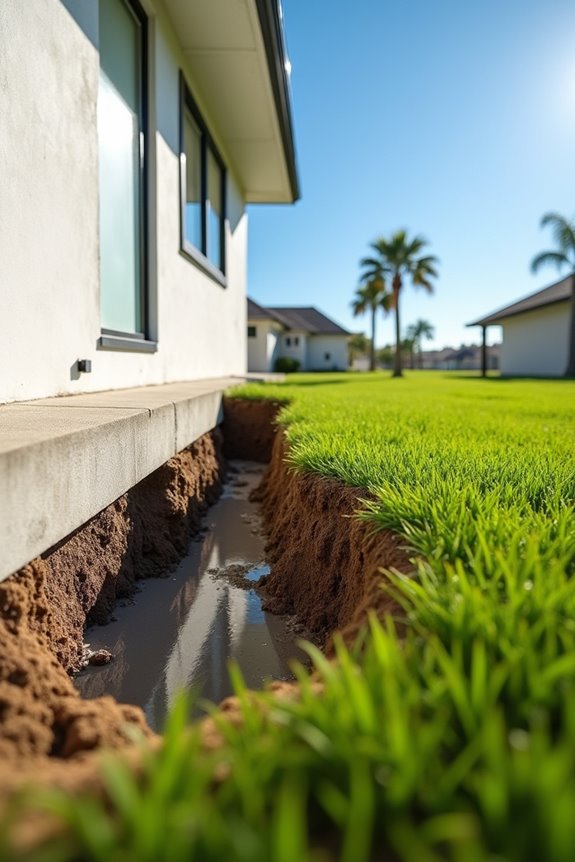
How deep can you actually dig in Florida before you hit water? Not very far. Florida’s high water table sits just a few feet below ground in many areas, especially South Florida. This makes basements impractical for most homeowners.
Here’s why: groundwater constantly seeps upward, threatening any underground space. During rainy seasons and hurricanes, that pressure intensifies dramatically. Builders face expensive waterproofing, sump pumps, and moisture control systems just to keep water out.
Given the flood-prone climate, most construction favors slab-on-grade or elevated designs instead. These approaches work with nature rather than against it. They’re more practical and cost-effective than battling constant groundwater intrusion year-round.
How Floods and Hurricanes Eliminate Basement Viability
When I think about putting a basement in Florida, I have to picture what happens when a hurricane dumps two feet of rain in six hours—that water’s got nowhere to go but down, right into your foundation. Storm surge makes this even worse, especially in coastal areas where ocean water can flood basements within hours, causing mold, rust, and structural cracks that’ll cost you thousands to fix. Between the constant heavy rains, seasonal hurricanes, and storm surge that can reach inland, a basement becomes less of a storage space and more of a liability that’ll destroy your home from the inside out.
Storm Surge Water Intrusion
Scenario this: a major hurricane barrels toward Florida’s coast, and you’re sitting in your basement feeling pretty confident because you’ve got pumps, waterproofing, and all the flood-fighting gadgets money can buy. Here’s the tough truth: storm surge doesn’t care about your setup.
When hurricanes hit, surge-driven flooding pushes water with tremendous force. Your waterproofing gets overwhelmed. Your pumps can’t keep pace. I’m talking water rising faster than any system can handle—that’s the real problem with basements in Florida coastal areas.
The issue? Basements sit below ground level, making them magnets for storm surge water intrusion. Even with protection systems, surge water breaches defenses. This flooding risk isn’t theoretical. It’s why builders and homeowners increasingly reject basements entirely, choosing elevated designs instead that actually stand a fighting chance.
Basement Flooding During Hurricanes
Storm surge isn’t the only water problem basements face in Florida—rainfall flooding during hurricanes poses its own serious threat. When hurricanes dump massive amounts of rain, basements become saturated quickly. Florida’s high water table means groundwater already sits close to the surface, so heavy downpours push water right through basement walls and floors. Even with waterproofing and pumps running constantly, the battle against water intrusion remains difficult to win. That’s why builders prefer elevated foundations and slab-on-grade designs—they keep living spaces safely above the flood risk. A basement in hurricane season creates a liability. The combination of rainfall flooding and storm surge makes basement viability nearly impossible in Florida, turning any underground space into a costly, high-maintenance vulnerability that most homeowners simply can’t afford.
Foundation Damage From Storms
Why do Florida’s basements become liability nightmares when hurricanes hit? When storms pound our state, basement waterproofing systems get overwhelmed fast. Heavy rains force groundwater upward through foundation cracks, while flood risk spikes dramatically in low-lying areas. I’ve seen homeowners struggle with moisture control after just one hurricane season—their basements turn into soggy, moldy disasters within weeks.
The problem? Florida’s shallow water table means groundwater sits dangerously close to your foundation already. Add storm surge and rainfall, and that basement floods before you can pump water out. Traditional waterproofing can’t handle the relentless pressure storms create. The foundation itself sustains damage from prolonged moisture exposure, weakening the structure over time.
Honestly, basements aren’t worth the headache here. We’re fighting nature’s forces constantly, and nature usually wins.
Can You Build a Basement in Florida?

I’ll be honest—most builders skip basements entirely. Instead, they choose slab-on-grade or elevated foundations that actually work with Florida’s climate rather than against it. These methods dodge the water and soil challenges that plague traditional basements.
That said, some luxury homes in North Florida do have basements. They’re possible but require serious waterproofing and drainage systems—think reinforced walls and constant maintenance. You’re paying premium prices for something that still carries flooding risk. When it comes to basements in Florida, the smartest move? Stick with what works.
Where to Store Everything Without a Basement

So you’re building in Florida, and you’ve wisely decided to skip the basement altogether—smart move. Now comes the real challenge: where does everything go?
Florida homes benefit from creative storage solutions:
Florida homes thrive with creative storage solutions that maximize space without requiring a traditional basement.
- Raised foundations create valuable under-house space perfect for seasonal items, tools, or equipment
- Climate-controlled storage within garages or flex rooms keeps important belongings safe from humidity and heat
- Built-in cabinets and shelving throughout your slab-on-grade home maximize every inch without taking up floor space
You’ll also want to consider expanded garage space and finished attics for overflow storage. The key is planning ahead. Think vertically, use wall space strategically, and make use of multipurpose rooms. With thoughtful design, you won’t miss that basement.
Why Florida Builders Choose Raised Foundations Over Basements
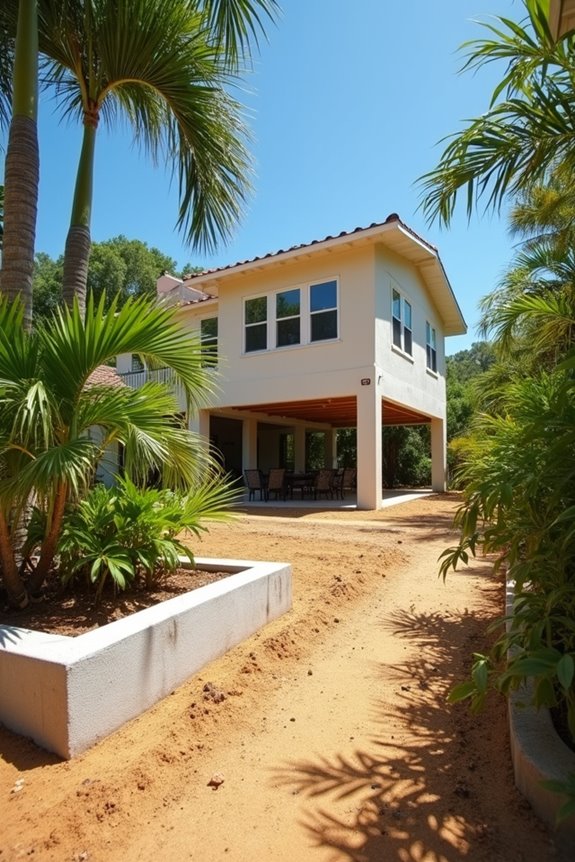
When I look at Florida’s building landscape, I notice raised foundations dominate because builders recognize they’re solving two major problems at once: keeping homes safe from flooding during hurricanes and storms while cutting construction costs compared to battling the state’s soggy ground. You’ll see this strategy everywhere—homes sitting on concrete pillars or pilings rather than buried in basements—because digging deep into Florida’s limestone and water-logged soil means fighting constant seepage and sinkhole risks that make basements expensive and problematic. Smart builders figured out that raising a house saves money upfront, protects property during storms, and actually aligns perfectly with what Florida’s building codes now require.
Flood Risk Mitigation Strategies
Why do Florida builders almost never dig down when they could build up instead? It’s about staying dry in a state that’s constantly fighting water.
What matters about flood risk mitigation:
- Elevated foundations lift your home above storm surge and heavy rainfall, keeping living spaces safe from water intrusion during hurricanes
- Flood prevention becomes simpler when you’re building upward rather than excavating into Florida’s high water table and tricky karst geology
- Moisture control improves when you avoid underground dampness entirely
Your hurricane-prone climate demands practical choices. Raised homes with pilings or concrete slabs work well for this reason—they’re not just fashionable. That space underneath? It serves as parking or storage without basement problems. Florida builders recognize this: going up beats digging down every single time.
Cost-Effective Construction Methods
How much money can you save by not digging a giant hole under your house? Quite a bit. Florida builders skip basements and embrace basement alternatives like slab-on-grade and concrete pilings instead. Here’s why: excavating deep foundations costs serious money, especially when you’re battling our high water table and tricky karst geology.
Raised foundations eliminate expensive waterproofing systems and sump pumps that basements demand. You’re not fighting moisture intrusion or installing elaborate drainage setups. Instead, you’re building smart. A raised foundation sits above potential flood risk while keeping construction simpler and faster.
Concrete pilings anchor homes securely without the headache of basement work. You’re joining thousands of Floridians who’ve discovered that what you don’t build often saves you the most.
Should You Be Concerned About Buying a Home Without a Basement?
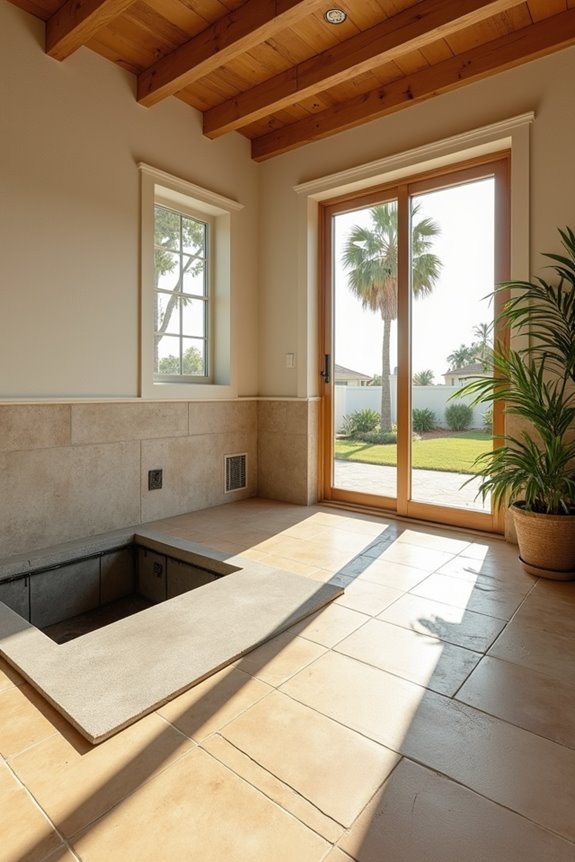
Most Florida homes don’t have basements, and that’s probably not a dealbreaker for your purchase. Here’s why you shouldn’t stress about it:
- Storage solutions exist everywhere: Attics, garages, and extra closets handle what basements traditionally store. You’re not losing functionality, just reshaping it.
- Flood risk disappears: Without a subterranean space, you dodge water damage from Florida’s notorious high water table and hurricane season. That’s actually a win.
- Maintenance gets easier: No pumps, waterproofing systems, or mold battles to manage. Elevated foundations and slabs keep moisture problems at bay naturally.
The reality is most Florida buyers don’t miss basements because the climate makes them impractical anyway. You’re buying into a design that works *with* your environment, not against it. That’s smart thinking.