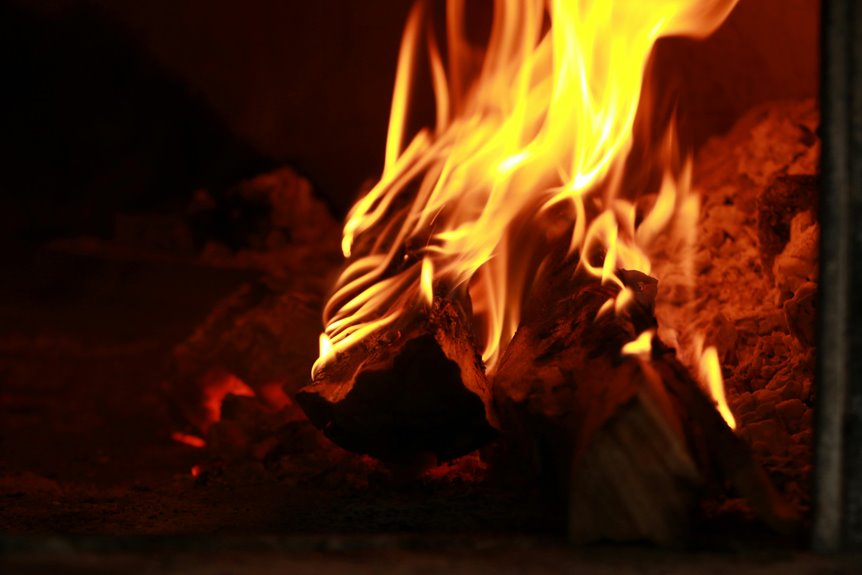
Your fireplace works through a simple push-and-pull system: fuel burns in the firebox, creating heat and light that radiate outward into your room. Meanwhile, hot air rises up your chimney, pulling fresh air in from the room to feed the flames—which sounds functional until you realize that strong draft can actually suck warm air right out of your home.
The type of fireplace you have—wood, gas, or electric—changes how much of that heat stays put rather than escaping.
The Basic Science: How Heat and Draft Work Together
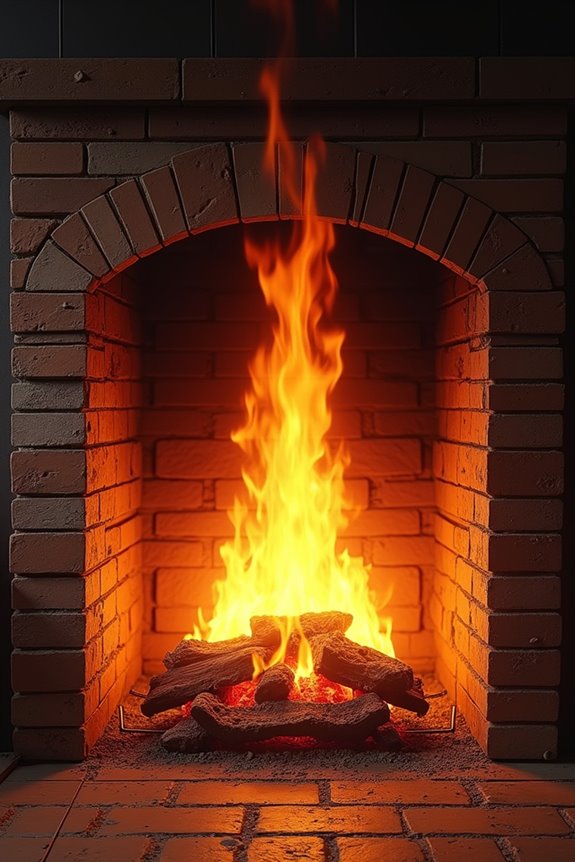
Ever wonder why a fireplace needs a chimney at all? Well, I’ll tell you—it’s all about draft and heat transfer working together. When you light a fire, hot air rises up the chimney naturally. This upward airflow creates draft, which pulls fresh room air toward the burning fuel. That incoming airflow supplies the oxygen your fire needs for combustion to keep going.
Here’s the catch though: stronger draft doesn’t always mean better performance. When it’s cold outside, draft can actually pull too much air up the chimney, cooling your room. Meanwhile, radiant heat from flames warms you directly, but convection carries hot gases away. Understanding this balance between airflow and heat transfer helps explain why your fireplace might heat your space better than you’d expect—or worse.
How Wood-Burning Fireplaces Work: Combustion, Radiation, and Chimney Function
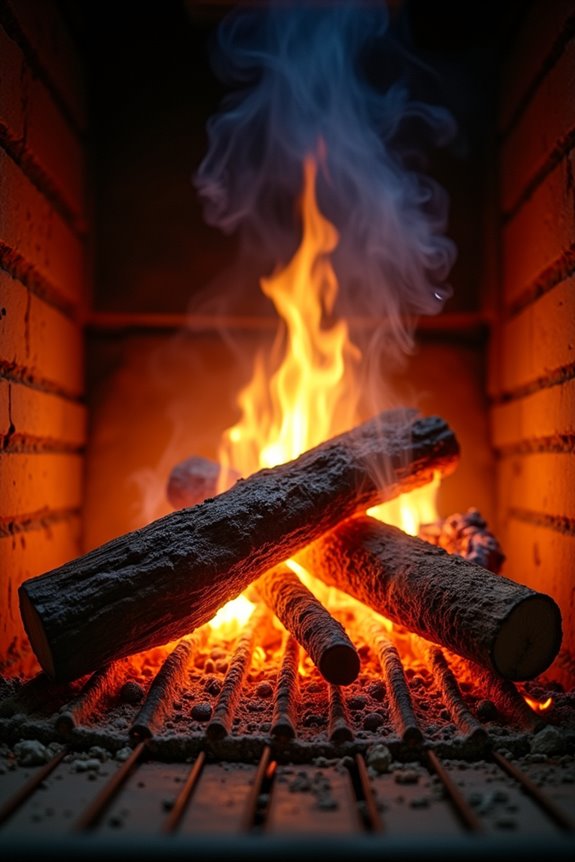
When you light a fire in your fireplace, you’re starting a chain reaction where burning logs release heat in two main ways: radiation shoots warmth directly at you like an invisible blanket, while the hot gases rise up the chimney. Your fireplace needs fresh air to keep that fire burning, so the chimney’s draft—that rising column of hot smoke—actually pulls room air into the firebox to feed the flames with oxygen. Here’s the tricky part: while this draft keeps your fire going, it also whisks away a lot of that heat up the chimney instead of keeping it in your room, which is why fireplaces aren’t always the most efficient way to warm your house.
Combustion and Heat Generation
How does wood actually become warmth and light? It’s combustion—a chemical reaction where wood combines with oxygen in your firebox, releasing energy as heat and light. I find it fascinating how the flames you see are actually burning gases, not the wood itself.
Here’s what makes it work:
- Oxygen supply keeps the fire alive, drawn from your room’s air
- Radiant heat radiates directly from hot flames and embers to warm you
- Chimney draft pulls smoke upward, creating space for fresh oxygen
- Byproducts like creosote settle in your chimney, reminding us fires need maintenance
The heat generation happens instantly when wood reaches its ignition point. Your firebox becomes a controlled burn zone, converting those logs into the warmth that draws us together on cold nights.
Draft and Smoke Evacuation
Why does smoke go up instead of into your living room? The chimney draft does the heavy lifting. When I heat air in the firebox, it naturally rises through the flue gases, creating a powerful pull that evacuates smoke upward. My damper controls this venting process, regulating how much combustion air feeds the flames and how quickly hot gases escape.
| Factor | Effect | Result |
|---|---|---|
| Heated Air | Rises through chimney | Smoke goes up |
| Cold Outside | Intensifies draft | More air exchange |
| Convection | Pulls fresh air in | Sustains combustion |
Here’s where it gets tricky: that same convection causing heat loss up the chimney can actually cool my room on brutally cold days. The stronger the chimney draft, the more heat escapes. It’s a balancing act I’ve learned to manage with my damper.
How Gas Fireplaces Work: Burners, Ignition, and Venting Systems
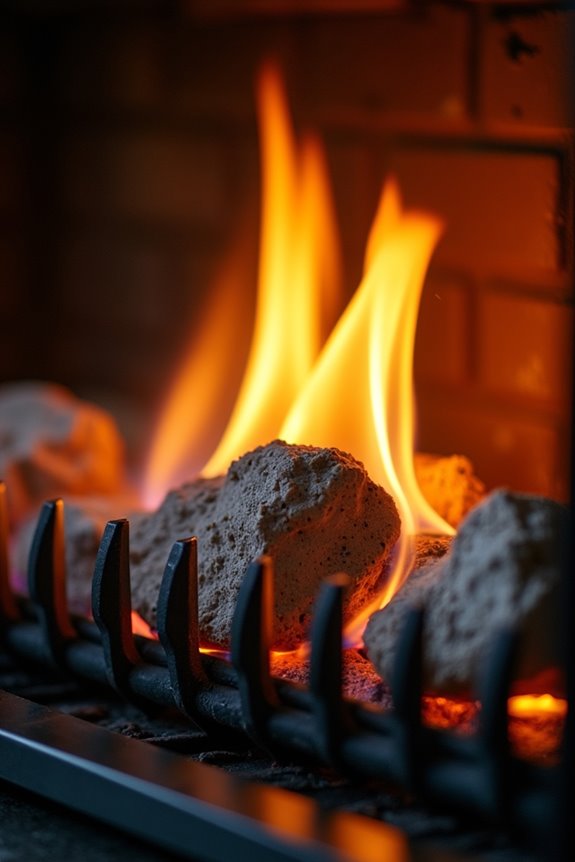
Ever wonder what’s actually happening inside that gas fireplace while you’re sitting in front of it?
Gas fireplaces rely on three key components working together: burners that produce flames, ignition systems that start the fire, and venting that handles exhaust. The burners mix natural gas or propane with intake air for combustion. Electronic ignition systems auto-light your flame at the push of a button, while standing pilot lights let you operate during power outages—though they cost more to run.
Here’s what makes each venting type special:
- Direct vent keeps roughly 70% of heat inside your home
- Vented gas fireplaces create bigger, more dramatic flames
- Ventless gas fireplaces need no chimney but raise indoor air quality concerns
- Exhaust vents safely remove combustion byproducts outside
Understanding how these systems work helps you choose what fits your home best.
Why Your Fireplace Might Be Making Your Home Colder
Your fireplace might actually be making your home colder instead of warmer. Here’s the problem: a strong chimney draft pulls more room air up the flue than your fire needs for combustion. This means cold outdoor air gets sucked inside to replace what’s leaving. Even though your fireplace radiates heat, the convective losses outweigh the benefits. Hot gases rush up the chimney faster than warmth can spread through your space. Colder outdoor temperatures make this worse, intensifying the ventilation effect. The result? Your heat efficiency drops significantly. You’ve got flames dancing, yet you’re shivering. The issue isn’t the fire itself. It’s how aggressively your chimney draft pulls heat and room air outside, overwhelming the actual heating benefits you’re counting on.
Vented, Direct-Vent, or Ventless: Which Should You Choose?
I’ve got to admit—choosing between vented, direct-vent, and ventless fireplaces had me scratching my head until I realized each one handles air and heat differently. Vented models pull outside air for burning and send exhaust up your chimney, direct-vent systems seal everything with two ducts so heat stays put, and ventless fireplaces skip the duct work entirely but come with some serious restrictions in many places. Understanding how each one manages the air flowing in and out—plus what heat actually makes it into your living room versus up the flue—is what’ll help you pick the right fit for your home.
Venting System Differences
When you’re choosing a fireplace, the venting system matters more than you might think—it shapes where you can install it, how much heat actually stays in your home, and whether your indoor air stays fresh.
I’ll break down three main options so you can find what fits your space:
- Vented fireplaces pull outdoor air for combustion and push exhaust through a chimney—perfect if you’ve got one, but heat escapes with the smoke
- Direct-vent units seal both intake and exhaust pipes, keeping warmth inside and offering 70%+ heat retention without needing existing chimneys
- Ventless fireplaces release no gases outside, though they’re restricted in some areas and aren’t meant to heat whole homes
- Natural B-vents use room air and existing flues, trading efficiency for that authentic ambiance we all crave
Each choice affects installation flexibility and indoor air quality differently. Pick what matches your home’s needs.
Efficiency And Installation Trade-offs
How much heat do you actually want to keep in your home? That’s the real question when choosing between vented fireplaces, direct vent, B-vent, and ventless options.
Direct vent fireplaces are my top pick for heat retention—they’ll keep about 70% of warmth inside using a sealed dual-flue system. No existing chimney needed, which makes installation easier. B-vent fireplaces use indoor air and work with traditional chimneys, but you’ll lose more heat through venting.
Ventless fireplaces offer the highest efficiency ratings since nothing escapes outside. However, many areas restrict them due to indoor air quality concerns, and they’re not suitable for primary heating.
Your choice depends on what matters most: maximum heat retention favors direct vent, existing chimney structures suggest B-vent, and avoiding venting altogether points toward ventless—if local codes allow it.
How to Start Your Fireplace: Pilot Lights and Electronic Ignition
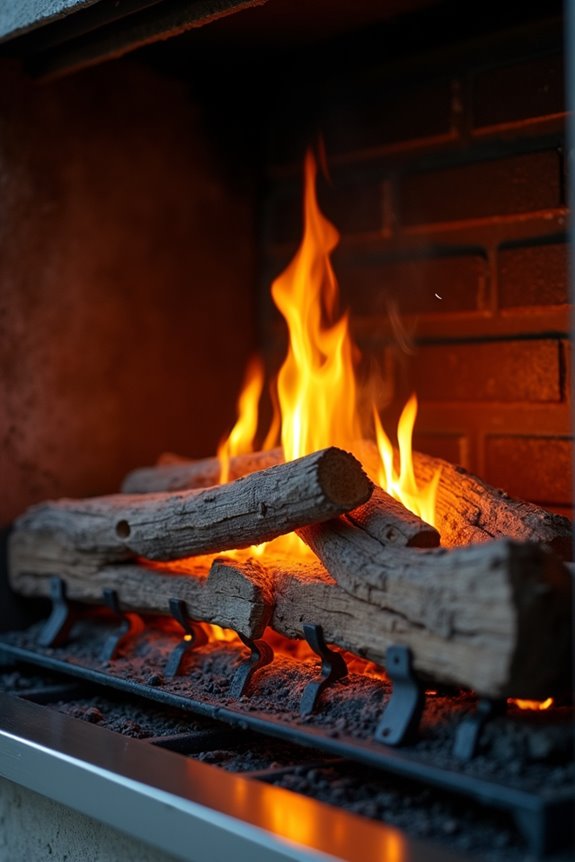
Once you’ve got your fireplace all set up, actually getting it to work requires knowing which ignition system you’re dealing with—and honestly, it’s simpler than you might think.
If you’ve got a standing pilot, you’re doing manual lighting. You’ll hold the control knob for 30–60 seconds while the thermocouple warms up. This generates electricity that keeps your gas valve open. It’s hands-on, but many of us appreciate that tactile connection to our fireplace.
Electronic ignition? That’s the modern convenience route. Your fireplace lights automatically when you flip a switch or adjust your thermostat. No pilot flame burning constantly.
Why this matters to you:
- Save money on gas with electronic ignition
- Enjoy instant warmth without waiting
- Experience reliable, consistent heat
- Consider upgrading your system like many homeowners have
Both systems work beautifully. Pick what fits your lifestyle.
Fireplace Types Ranked by Heating Efficiency
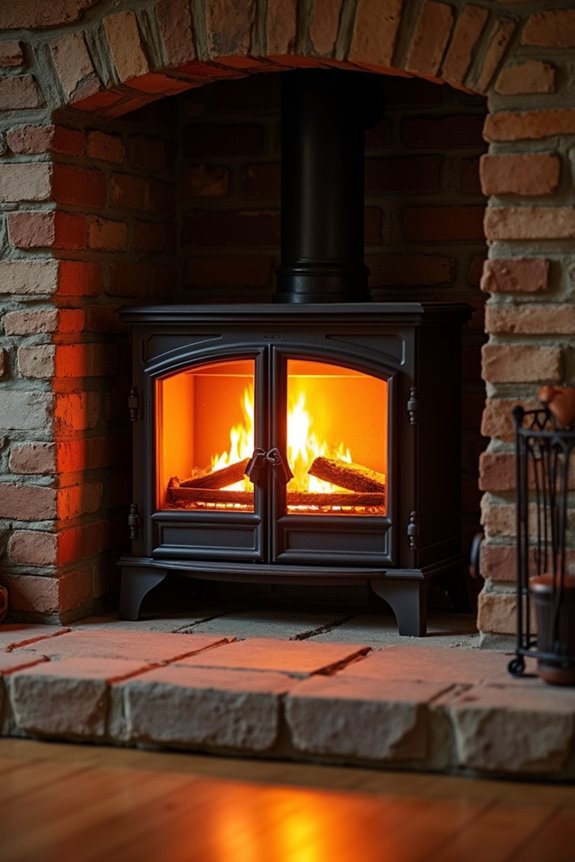
Why does your fireplace feel so cozy if it’s barely heating your home? That’s because open fireplaces deliver only 10–20% efficiency—they’re honestly better for ambiance than warmth. If you’re serious about heating, you’ll want to upgrade.
Wood-burning stoves and inserts jump to 65–85% efficiency, heating 1,500–3,000+ square feet. They provide significantly better heat output than open fireplaces.
Gas direct-vent fireplaces keep about 70% of heat inside your home thanks to sealed combustion and dual pipes, eliminating venting loss. Vent-free options seem more efficient since there’s no venting loss, but they raise air quality concerns and aren’t always legal for home heating.
Electric fireplaces deliver nearly 100% of their heat to your room, though they work differently than combustion systems.
Choose based on your heating needs and local codes.
Annual Inspections and Cleaning Tasks That Prevent Fires
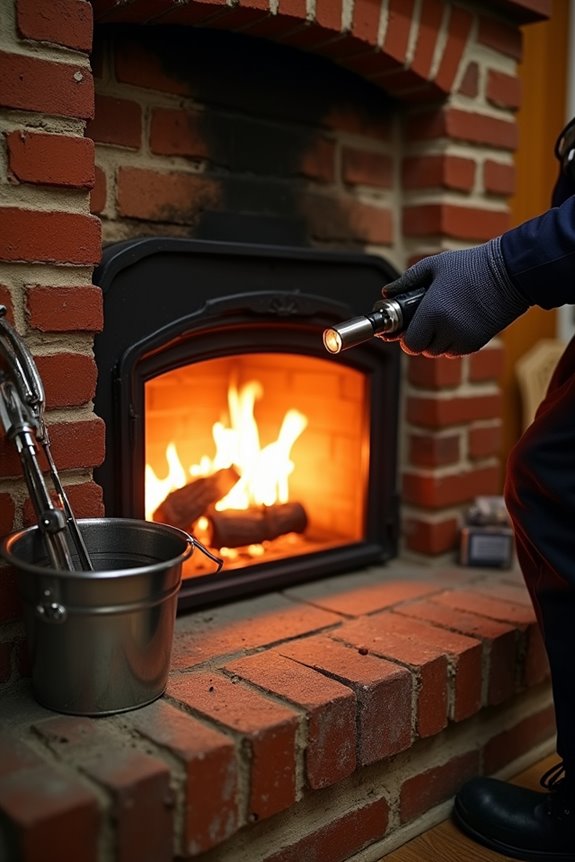
Since you’ve invested in heating your home with a fireplace, protecting that investment means scheduling an annual professional chimney inspection and cleaning. I’ve learned that creosote buildup—that sticky, flammable residue from incomplete combustion—accumulates quietly until it becomes dangerous. Here’s what I prioritize during annual maintenance:
Protecting your fireplace investment requires annual professional chimney inspection and cleaning to prevent dangerous creosote buildup.
- Removing creosote buildup before it becomes a fire risk
- Testing safety devices like carbon monoxide detectors and smoke alarms that protect your family
- Inspecting your damper to check proper vent clearance and draft performance
- Checking for cracks and blockages that compromise heating efficiency and safety
A professional chimney cleaning takes a few hours but gives you peace of mind. Documented service records also help you stay compliant with local codes. Think of it as your fireplace’s annual health checkup—necessary, straightforward, and worth the investment.
Electric Fireplaces: A Different Approach to Flame and Heat
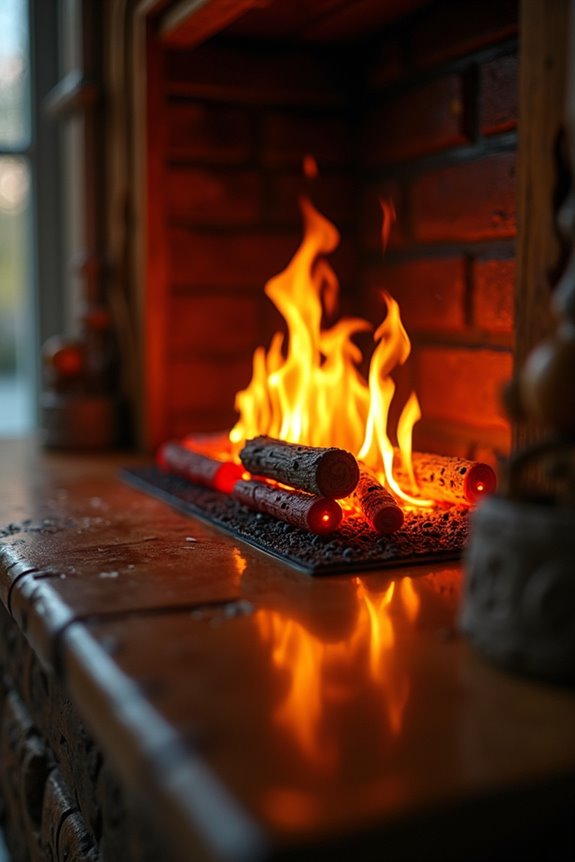
If you’re drawn to fireplace ambiance but dreading chimney inspections and creosote cleanup, electric fireplaces offer a different path. Here’s how they work: a heating coil powered by electricity warms air that a fan-assisted system pushes into your room. Meanwhile, LED flames dance across a rotating mirror, creating realistic flame effects without any actual fire. What’s the appeal? You’ll plug into any electrical outlet—no chimney needed. You can enjoy heat output during winter or switch to flame-only mode for summer ambiance. Installation’s straightforward, maintenance is virtually nonexistent, and you’ll convert nearly 100% of your electrical energy into warmth. Plus, there’s zero combustion risk and no carbon monoxide worry. That’s comfort without the hassle.