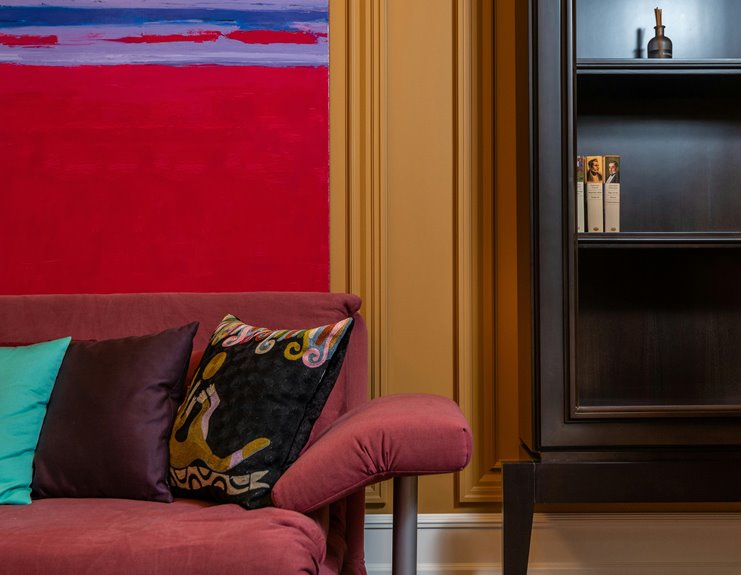
Your best accent wall? The one that catches your eye first when you enter. Pick the wall behind your bed, sofa, or fireplace—these natural focal points anchor your room without competing for attention. Skip walls cluttered with doors and windows; they’ll break up your color and create visual chaos. Test your paint samples under different lighting throughout the day, then align your choice with existing trim for a polished look. The right wall will enhance your whole space strategically.
Identify the Natural Focal Point in Your Room
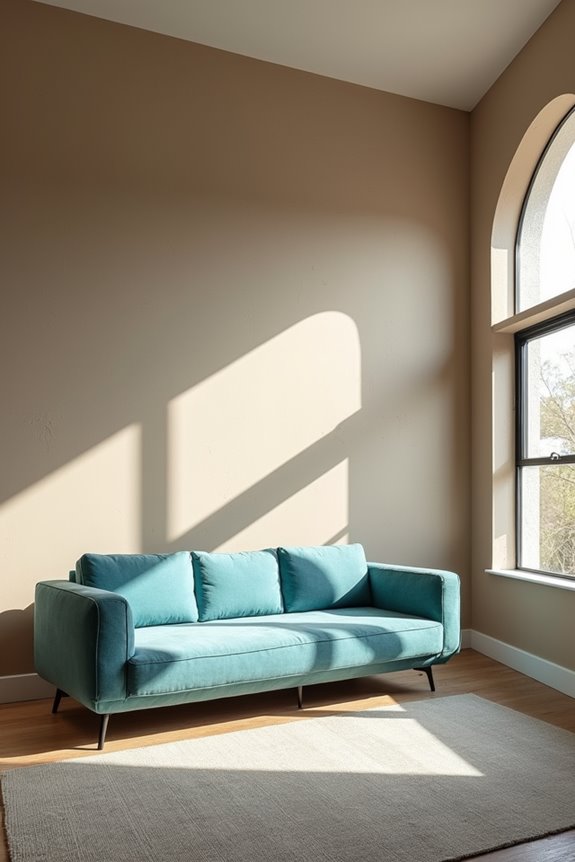
Where does your eye instinctively land when you walk through your bedroom door? That’s your natural focal point—and it’s probably where your accent wall belongs.
Your eye knows where to look when you enter—that’s exactly where your accent wall should go.
Finding the right wall starts with understanding your room layout. Look for built-in visual emphasis: a fireplace, bed, or sofa naturally draws attention. These spots work well for wall selection because they already command the room.
Your focal point creates belonging by anchoring the entire space. When guests enter, their eyes follow the same path yours does. That’s powerful.
Avoid walls cluttered with doors or windows, though. They break up the cohesive effect you’re after. Instead, choose walls that feel substantial and unified. Your accent wall should celebrate what makes your room special, not compete with architectural chaos. Trust what naturally pulls you in.
Walls Behind Furniture Anchor the Space
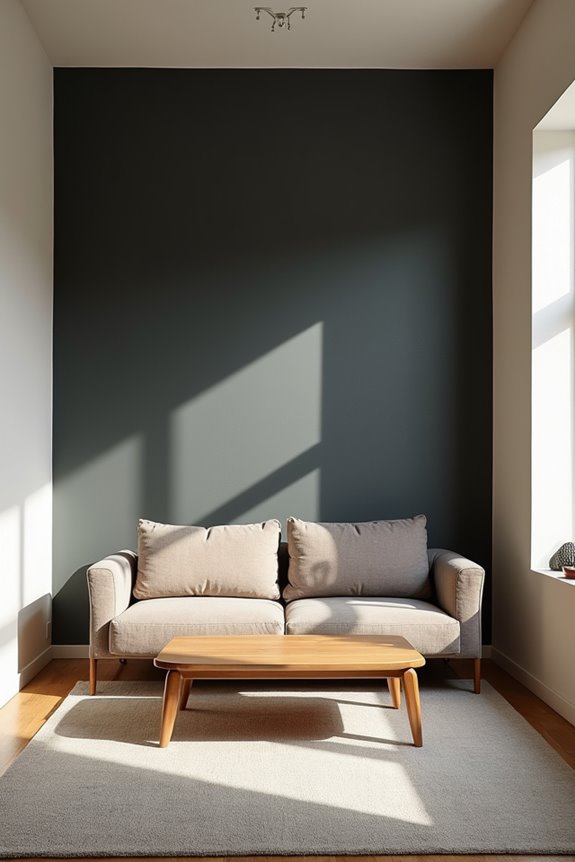
the best ones don’t exist in a vacuum. I’ve learned that positioning your accent wall behind key furniture—think your sofa, bed, or fireplace—creates an anchored presence. Why? Because it ties everything together. When you paint the wall directly behind your sofa, you’re creating a visual connection that makes the whole room feel deliberate and organized.
The trick is choosing a wall that’s clean and uncluttered. Skip walls loaded with doors, windows, or built-ins. They compete for attention and dilute your focal point. Instead, pick a surface that lets your accent wall function as the room’s organizing element.
Consider adding subtle painted shelving or texture to extend that connection between wall, furniture, and décor. That’s when a room truly comes together.
Avoid Walls Broken by Doors and Windows
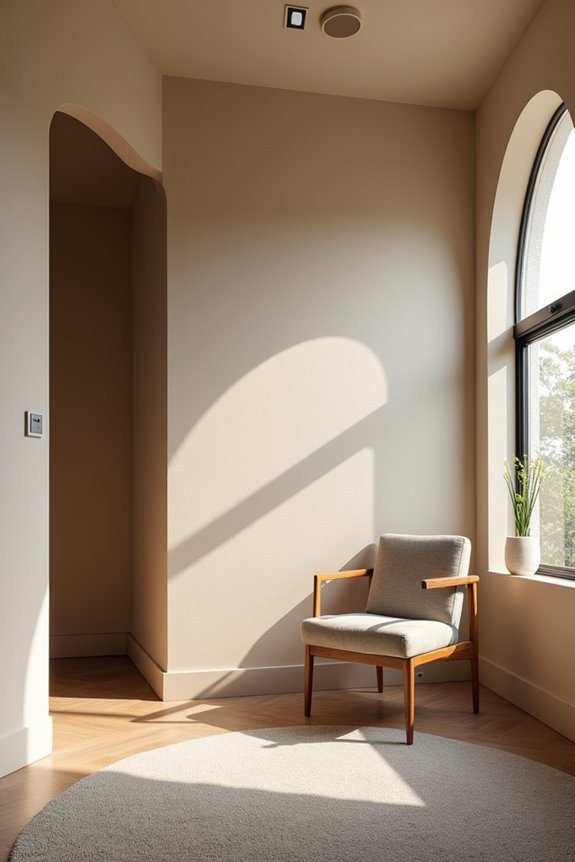
When you paint a wall scattered with doorways and windows, you’re basically fighting against your own design—the interruptions chop up the color and create visual chaos instead of the polished look you’re going for. I’ve learned this the hard way: that beautiful deep blue accent wall loses its impact when a door frame splits it in half and three windows break up the color. Stick with walls that give you uninterrupted space, and you’ll actually see the accent color shine rather than disappear behind all that architectural clutter.
Visual Continuity and Flow
How many times have you painted an accent wall only to have a door swing right through the middle of it?
That’s why I’m telling you to skip those interrupted walls entirely. When you choose a wall without breaks, you create visual continuity that makes your room look intentional and polished. A solid accent wall behind your sofa or bed works well as a visual anchor in the space.
In open floor plans, this matters even more. Your accent wall should separate the living room from the dining area while keeping everything flowing together. Pick a color from your existing palette—not something wildly different. This approach lets your accent wall work as a true focal point rather than a distraction. Your eyes will notice the difference.
Architectural Interruptions to Avoid
Why do so many accent walls feel like afterthoughts? Often, we’ve chosen a wall cluttered with architectural interruptions. I’ve learned that doors and windows compete for attention, weakening your accent’s impact. When you paint a wall covered in openings, you’re basically fighting for the spotlight against every doorway and window frame. That’s a losing battle.
Instead, pick a wall with minimal interruptions. Your accent color deserves uninterrupted space to work effectively. If your main wall has multiple doors or windows, consider an adjacent surface instead. Small rooms especially suffer when you add an accent wall with openings—it actually makes the space feel cramped.
Think strategically. Skip the busy walls. Choose surfaces where your color choice becomes the obvious centerpiece, not background noise competing with architectural features.
Maintaining Wall Cohesion
The secret to a polished accent wall? Choosing one that doesn’t look like Swiss cheese. I learned this the hard way when I picked a wall covered in doorways and windows—my beautiful color got completely lost. Here’s what I’ve discovered: uninterrupted walls create stronger accent wall cohesion and let your color choice shine. When you pick a solid wall, the color harmony stays intact and doesn’t compete with all those openings. This matters especially in open floor plans, where smart wall selection helps define different spaces while keeping everything connected. By focusing on walls that support surrounding integration, you’ll create a room that feels well-designed and complete. Your accent wall deserves better than being interrupted every two feet.
Entry Walls Create Immediate Visual Impact
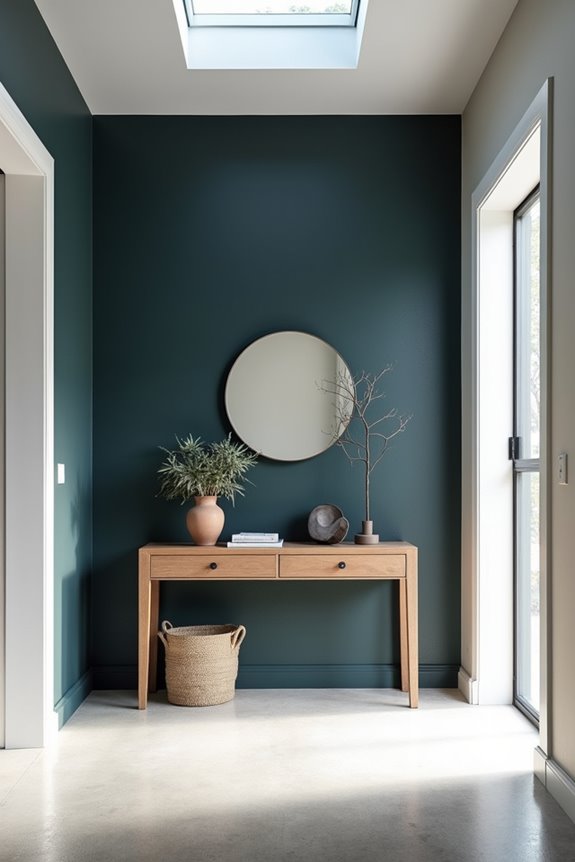
I’ve learned that your entry wall sets the stage before anyone even steps fully into your home—it’s your chance to make a strong first impression that lingers. When you choose a bold color like deep navy or rich emerald for this wall, you’re telling visitors, “Welcome, there’s personality here,” which then influences how they experience the rest of your space. The trick is pairing that accent wall with lighter colors around it so your choice shines without making the foyer feel cramped or dark.
First Impressions Matter Most
When guests walk through your door, their eyes need somewhere to land—and that’s where your entry wall comes in. I’ve learned that your entry wall sets the tone for everything else. It’s your chance to make a statement before anyone even steps further inside.
Think about it: you’ve got seconds to grab attention. A bold color or pattern on that entry wall creates an instant point of interest. Your guests’ eyes settle naturally, and you’ve already impressed them. That’s powerful.
| Accent Wall Choice | First Impression |
|---|---|
| Bold jewel tone | Sophisticated welcome |
| Soft pastels | Calm, inviting feeling |
| Geometric pattern | Creative, modern vibe |
| Warm neutrals | Approachable comfort |
| Deep charcoal | Confident elegance |
Keep other décor subtle nearby. Let your accent wall do the talking. This smart accent wall placement makes your entry memorable—no fancy tricks needed.
Foyer Color Strategy Essentials
How do you stop someone in their tracks the moment they walk through your door? You create a foyer color strategy that hits hard and hits right.
Your entry color sets the tone for your entire home. I’ve found that bold colors work best when you’re intentional about placement:
- Choose one accent wall in deep blues like Deep Royal or Starry Night Blue for maximum impact
- Pair it with a lighter front door color such as soft Conch Shell pink for balance
- Keep surrounding walls neutral to prevent overwhelming your guests
This visual anchor guides people through your home while making them feel welcomed. The key? Let plentiful light hit that bold color so it pops without feeling cramped. You’re not trying to intimidate anyone—you’re creating a memorable first impression that shows your home has personality.
Entryway Focal Point Selection
Why does your eye automatically land on one wall the moment you step into a room? That’s your entry wall at work. I’ve learned that this wall deserves special attention because it’s your home’s first impression.
Here’s what creates an impactful entry wall: bold color contrast. Pair a rich, deep blue against lighter surrounding walls, and you’ve created depth and intrigue. Adding a mirror or artwork strengthens this effect. Strategic lighting? That’s how you draw eyes exactly where you want them.
I think of it this way: your entry wall sets the mood for everything beyond it. When you intentionally design this space with color, texture, and lighting, you’re welcoming visitors and yourself alike.
Let Light Direction Guide Your Selection
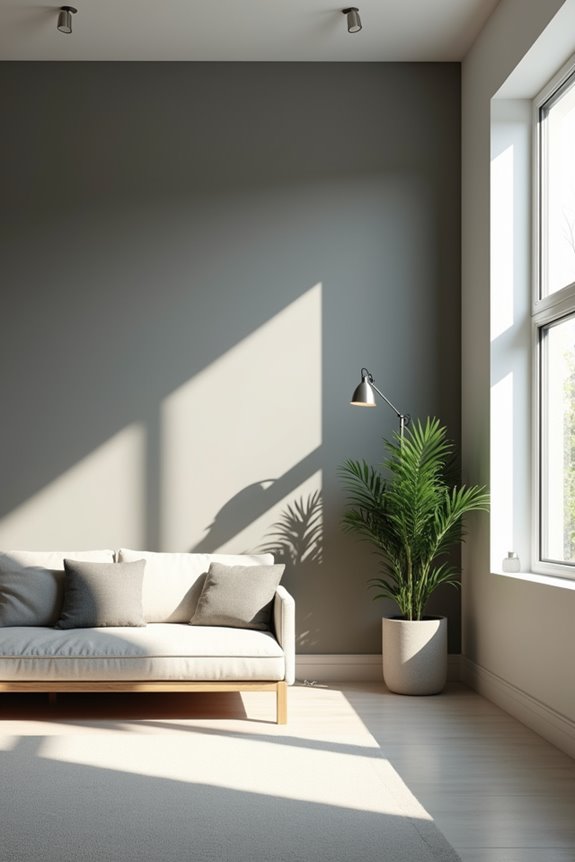
Natural light is your hidden asset when picking an accent wall, and I’m not exaggerating. The direction your room faces completely changes how colors look throughout the day. I’ve learned this the hard way—what looked perfect at noon looked totally different at sunset.
Here’s what I’d focus on:
- Notice where light enters – North-facing rooms need warmer, bolder accents since they’re naturally cooler; south-facing spaces can handle deeper tones well.
- Track light changes – Spend a day observing how shadows shift across walls at different times.
- Test your wall orientation – Pick the wall that catches the most visibility and natural glow when you enter.
Your accent wall should stand out, not fade away. Let daylight be your guide, and you’ll achieve the right balance every time.
Account for Room Height and Proportions
Ever walk into a room and feel like something’s off, even though the color looks right?
Ever walk into a room and feel like something’s off, even though the color looks right? Room proportions matter more than you’d think.
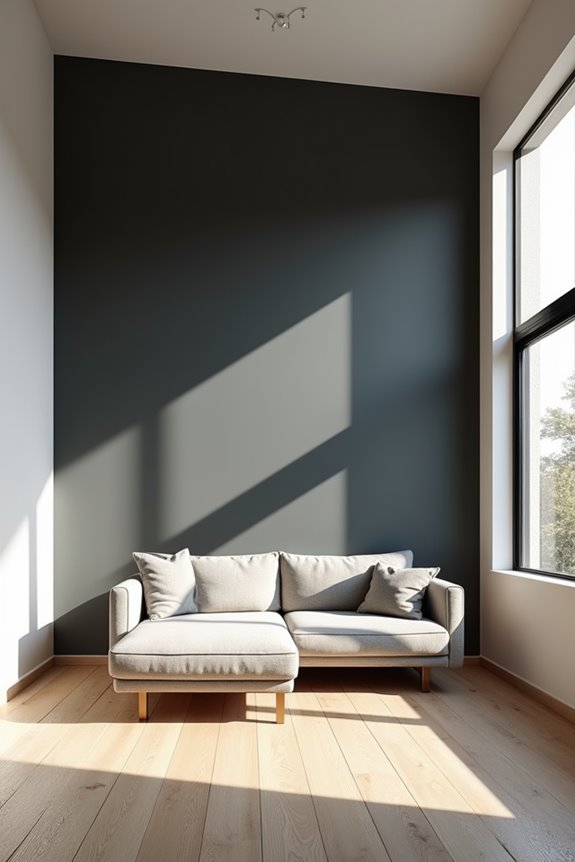
Room proportions matter more than you’d think. In spaces with high ceilings, I’d paint a focal wall to ground the room and create visual balance. Shorter ceilings? A darker accent wall can feel cozy without overwhelming the space.
Your wall height affects how color reads. Taller walls absorb more pigment, so that bold shade might look different than expected. I’ve learned this the hard way.
Consider your room’s actual dimensions before choosing. A narrow bedroom needs a strategic accent wall—usually behind the bed—to anchor the space. Wider rooms benefit from accent walls that don’t compete with other features.
When you match wall height with the right accent color, everything clicks into place.
Accent Walls in Open Floor Plans: Define the Space
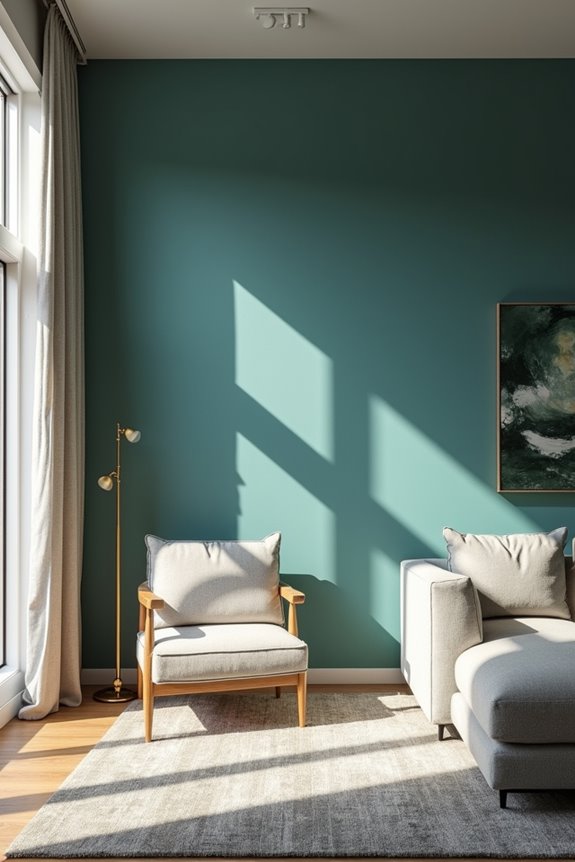
Open floor plans can feel like one giant room unless you’re intentional about breaking up the space, and that’s exactly where accent walls work well. By choosing a wall that naturally separates your living area from your dining zone—say, the wall behind your couch or the one facing your kitchen—you create visual boundaries that actually make people feel like they’re in different rooms. The trick is keeping your accent color within the same palette as your other walls so everything flows together instead of looking like your living room and dining room clash.
Creating Visual Room Separation
How do you tell your living room where to end and your dining area where to begin when there’s no wall between them? An accent wall creates that visual separation you’re craving in your open floor plan.
Here’s how I’d approach it:
- Pick a wall with purpose — Choose one that faces your entry or sits where you naturally look first. This immediately signals a new zone.
- Match your focal point — Place your accent wall behind existing furniture like a sofa or dining table. It anchors that space without fighting for attention.
- Balance color with lighting — If your room gets strong natural light, go bolder. A richer color maintains distinct zones while the light keeps everything feeling connected.
Your accent wall shouldn’t scream for attention. Instead, it whispers: “This space belongs together.”
Maintaining Cohesive Flow Design
Position matters too. Choose a wall that aligns with your sightlines when you enter. This creates a design flow that works well together. Balance bold color with neutral surroundings, and let lighting enhance the wall’s depth. Your focal point should feel like a natural part of the story, not an afterthought trying too hard to belong.
Use Your Bedroom Headboard as an Accent Wall
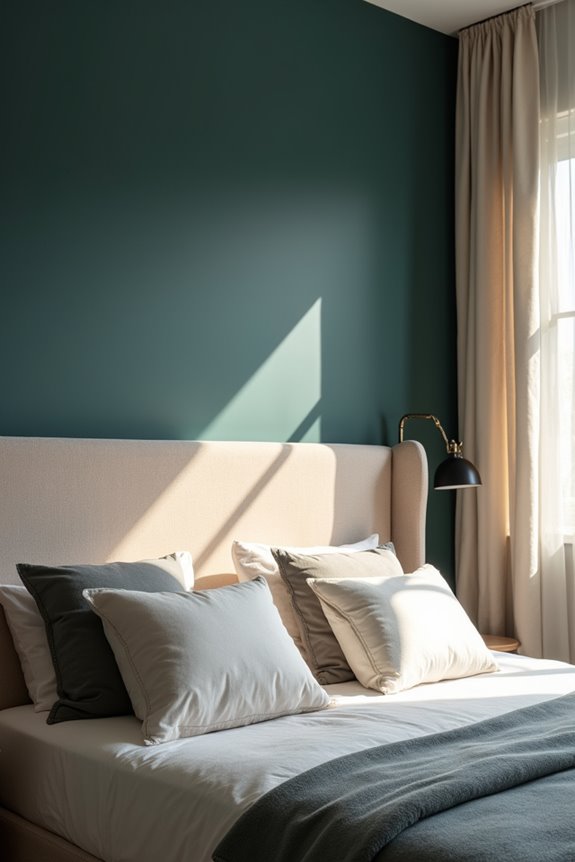
Why settle for painting your entire bedroom when one bold wall can do all the work?
Your headboard wall deserves attention. Treating this space as your accent wall creates an immediate visual anchor without overwhelming your bedroom decor. Here’s why this approach works:
- The bed naturally frames your accent wall, drawing eyes exactly where you want them
- Hotels use this method because it’s effective—bold color or wallpaper looks intentional and polished
- Neutral surrounding walls keep your headboard wall as the primary focus, preventing visual chaos
Bathrooms and Powder Rooms: Accent Opportunities
When you’re decorating a bathroom, your accent wall choices are a bit different than they are in your bedroom or living room. I’ve found that durable tile or stone works beautifully here, creating a visual anchor that actually improves with moisture. A bold, single-wall accent behind your vanity or shower defines the space well.
Here’s what I recommend: pair a lighter background with your contrasting accent to keep things feeling fresh. Think about using a dramatic tile band or patterned tile wall—it adds visual depth without overwhelming the room.
Before you commit, consider maintenance carefully. I always choose finishes that resist water spots and mildew because cleaning struggles aren’t enjoyable. Smart lighting highlighting your accent wall makes your bathroom feel well-designed and coordinated.
Small Spaces Require Strategic Wall Choices
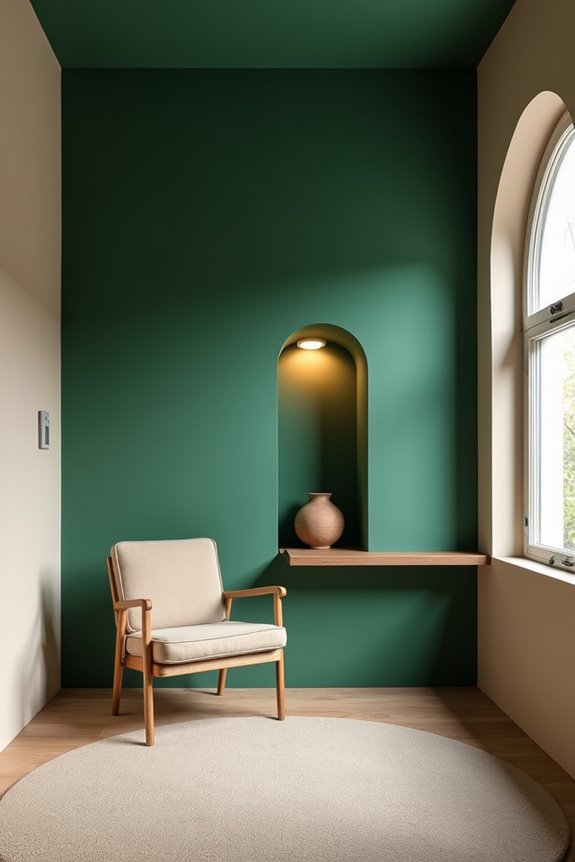
Moving from a spacious bathroom to a tiny bedroom or studio apartment? Your accent wall strategy needs to shift. I learned this the hard way when I painted an entire wall dark blue in my small living room—it felt like the walls were closing in on me.
I learned the hard way—a dark blue accent wall in my small living room made the space feel claustrophobic.
Here’s what works better:
- Pick one focal wall away from doors and windows so it doesn’t compete for attention
- Choose lighter accent colors if natural light is limited, keeping the room airy and open
- Use your accent wall to separate zones in open plans without breaking the overall flow
The key? Test your color choice under different lighting first. A strategic wall creates balance in small spaces. It draws your eye exactly where you want it, making the room feel deliberate rather than cramped.
Test Your Color Before Painting

How many times have I stared at a paint swatch in the store, convinced it was perfect, only to slap it on my wall and immediately regret it?
I’ve learned my lesson. Before committing to your accent wall, grab color samples and test them directly on your wall. I paint a small test area with at least two coats to see true coverage and how the shade actually looks against your furniture and existing colors.
Here’s the thing: lighting changes everything. I observe my color samples throughout the day—morning sunlight hits differently than evening bulbs. Natural light affects how hues appear, so I evaluate them at sunrise, midday, and sunset.
This small step saves me from expensive mistakes and helps my accent wall look exactly right.
Align Your Accent Wall With Existing Trim and Details
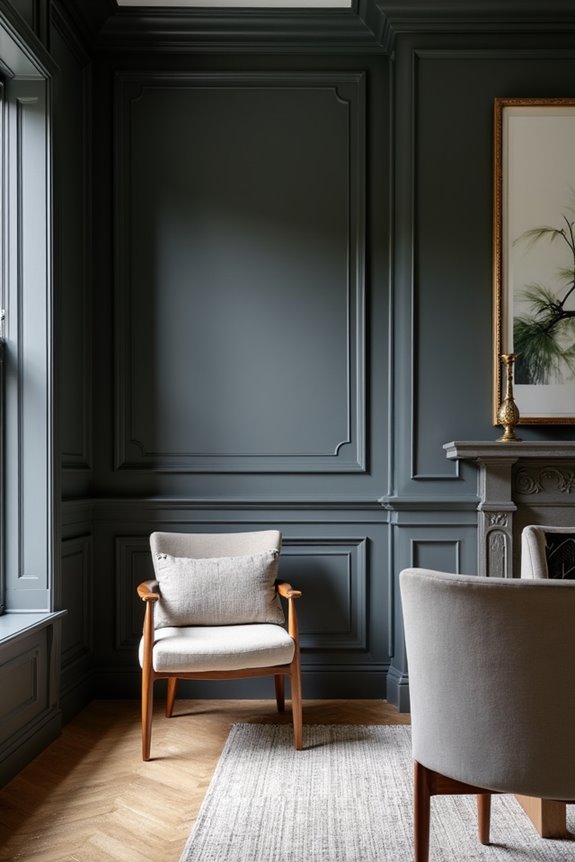
- Match your trim coordination – Pick walls where the existing baseboards, crown molding, or window frames complement your chosen color rather than clash with it.
- Leverage architectural details – Built-in shelves, fireplaces, or wainscoting naturally frame focal walls well.
- Consider wood tones – Your accent wall’s color should work with any wood furniture or flooring nearby.
This approach creates visual continuity throughout the room. Your accent wall alignment shouldn’t fight your room’s existing structure. Instead, it should highlight what’s already working, tying everything together into one unified, welcoming space.