Yes, curtains help keep heat inside your home. When you close them, they create a trapped air pocket between the fabric and your cold window glass, which stops warm room air from flowing toward that chilly surface. Heavy thermal curtains with proper side sealing can cut heat loss by about 40%. They’re not as effective as upgrading to double-glazed windows, but they’re an affordable option that works—especially when you layer them with cellular shades or window film for maximum warmth retention.
Do Curtains Actually Reduce Heat Loss Through Windows?

Have you ever noticed how cold a window feels when you stand near it on a winter day? That chill tells you something important: heat’s escaping through your glass. Insulating curtains actually do reduce this heat loss, and here’s why.
When you close heavy window coverings, they trap an air pocket between the fabric and glass. This barrier stops warm room air from flowing toward that cold surface—a process called convection. Without curtains, your inside window gets colder than the room itself, pulling precious heat away.
The process works when you seal the sides too. Thick thermal-lined curtains block drafts and gaps, keeping that insulating air layer intact. Even with double-glazed windows, these coverings help maintain room temperature better. It’s not complicated—just basic physics working in your favor.
How Curtains Trap Warm Air (The Physics in Plain English)
So we know curtains stop heat from escaping, but what’s actually happening behind the scenes?
When you close curtains, you’re creating a pocket of still air between the fabric and your window. That trapped air is highly effective at insulation—far better than you’d expect. Without curtains, warm room air naturally flows toward the cold window glass through convection currents. Your heat moves toward that chilly surface and exits outside.
Curtains interrupt this air flow. Dense, multi-layer curtains with thermal lining work harder, thickening that protective air pocket and blocking edge leaks. The result: less heat transfer means your room stays warmer longer. You’re not just hanging fabric—you’re creating an insulation system that actually works.
Types of Thermal Curtains: Which One Should You Buy?
Now that you understand how curtains trap warm air, you’re probably wondering which type actually works best for your home—and honestly, the answer depends on your specific situation. If you’ve got small windows, cellular shades create tiny air pockets that insulate effectively, while zebra shades (those dual-layer roller shades) let you control sun exposure without sacrificing privacy. For bedrooms where you want maximum warmth and darkness, layered solutions—think a thermal curtain paired with a blackout shade underneath—create an insulation system that’ll noticeably reduce your heating bills.
Cellular Shades For Small Windows
Why do small windows deserve special attention when it comes to keeping heat inside? Small windows leak heat significantly, but cellular shades address this problem effectively. These shades trap air in honeycomb pockets, creating an insulation barrier that works.
Here’s what you’re looking at with cellular shades on small windows:
| Feature | Winter Performance | Summer Performance |
|---|---|---|
| Heat Loss Reduction | 40% less | N/A |
| Heating Energy Use | ~10% cut | N/A |
| Solar Gain Reduction | N/A | Up to 60% |
| Aluminum Foil Lining | Lowers temp 3–4°C | Enhanced efficiency |
Choose shades with strong adhesive bonds and proper fit. This maximizes those air pockets and minimizes edge leaks. EaseEase Cellular Shades offer double-layer fabric in 20 colors, providing durability and style. When you pair them with side tracks, you improve your energy efficiency.
Zebra Shades For Sun Exposure
While cellular shades excel at trapping heat during winter, you might find yourself wrestling with the opposite problem come summer—especially if your kitchen or bathroom gets blasted with direct sunlight all day. That’s where zebra shades work well. Here’s how they function: alternating sheer and opaque bands let you control exactly how much light enters your space. When you align those opaque strips, they block heat gain and reduce glare without completely darkening your room. You get privacy when you want it, visibility when you need it. They’re built tough too—humidity and intense sun exposure won’t break them down. Think of zebra shades as your middle ground: they manage sun exposure flexibly, keeping your space comfortable while maintaining that lived-in feel.
Layered Solutions For Bedrooms
When it comes to keeping your bedroom cozy and warm through winter, one curtain alone often doesn’t cut it—but layer them together, and you’ve got something powerful. I’ve found that combining heavy face fabric with thermal lining creates an enclosed air pocket that stops heat from escaping and blocks drafts right at your windows. Think of it like wearing a jacket over a sweater—each layer adds protection. What makes layered solutions so effective? That trapped air becomes an important defense against winter cold. You’re building an insulation barrier that works while you sleep. Pair this approach with cellular shades underneath, and you’ll reduce heating energy loss by about 10%. It’s the kind of thermal curtains setup that makes your bedroom a warm retreat without feeling cramped or dark.
What Makes Thermal Curtains Effective: Key Factors
I’ve learned that thermal curtains work best when you focus on two main things: what they’re made of and how you hang them. Thick, dense fabrics like velvet or heavy cotton trap air better than thin materials, kind of like how a puffy jacket keeps you warmer than a t-shirt, and adding a thermal backing layer makes them more effective at blocking heat loss. Getting the installation right matters just as much though—your curtains need to cover the full window length, seal the sides to block drafts, and hang from a sturdy rod, because gaps around the edges let all that warm air escape no matter how good the fabric is.
Material Thickness and Density
How much does your curtain fabric actually weigh? That’s your first clue to thermal insulation success. Thicker, denser fabrics—think velvet or heavy cotton—create a more effective barrier against heat loss. I’ve learned that curtain density matters because it traps air near your window, slowing heat’s escape.
Multilayer curtains work even better. When you combine a face fabric with a thermal backing, you’re building an insulating sandwich. That air pocket between layers? It works effectively. Heavy materials like suede perform better compared to flimsy options.
The denser your curtain, the more it reduces both convection and conduction. You’re not just hanging fabric; you’re installing a barrier. This is why investing in quality, substantial curtains actually pays off through lower heating bills.
Proper Installation and Coverage
Even the finest thermal curtains won’t do much good if they’re hanging like curtains at a concert venue—all gaps and no seal. That’s where proper installation matters most.
I’ve learned that curtains coverage is important. Your rod needs to extend well beyond window edges, creating a tight seal that stops drafts from sneaking around. Full-length curtains that reach the floor trap warm air between fabric and glass, maximizing insulation.
Here’s what works: mount hardware high and use sturdy brackets that won’t sag under weight. Heavy fabrics need solid support. Position curtains to overlap at the center, eliminating that middle gap where heat escapes. When you’ve got complete coverage with no air leaks, you’re actually keeping warmth inside where it belongs.
Heavy-Weight Fabrics and Thermal Linings That Actually Work
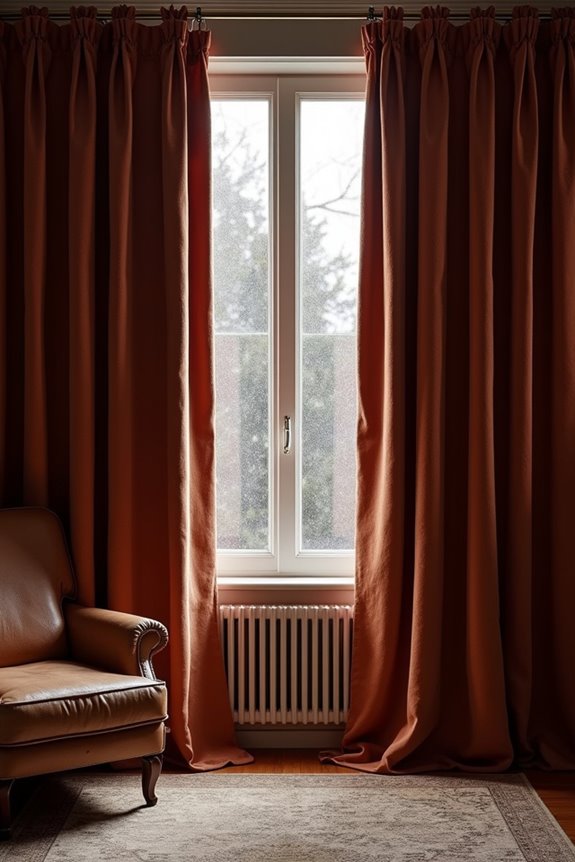
When your windows feel ice-cold to the touch and you can practically feel winter seeping through the glass, that’s when a good thermal curtain becomes useful. I’ve found that heavy fabrics paired with thermal linings create sealed air pockets that trap heat inside. Think of it like wrapping your windows in a cozy blanket—the dense outer layer stops cold air, while the backing prevents it from sneaking back out.
Layering truly works. A thick fabric alone helps, but add a blackout or thermal liner underneath, and you’re looking at reducing heat loss by up to 40%. You don’t even need new curtains; simply adding a thermal lining to what you’ve got improves your insulation. It’s the combination that wins.
When to Open and Close Curtains for Maximum Heat Retention
Now that you’ve got the right fabric working for you, the point—even the best thermal curtain won’t help much if you’re opening and closing it at the wrong times. Here’s the strategy: I open mine during sunny winter days to let natural light and heat warm my rooms passively. But I close them at dusk without fail, sealing that warmth inside when temperatures drop. In west-facing rooms, I’m careful. Yes, afternoon sun feels great, but I close curtains after peak hours to prevent heat loss later. Think of your curtains as insulation gatekeepers. They’re your temperature management partners when you use them strategically. Getting the timing right makes your curtains function as genuine heat-saving tools.
Proper Installation Techniques to Maximize Heat Retention
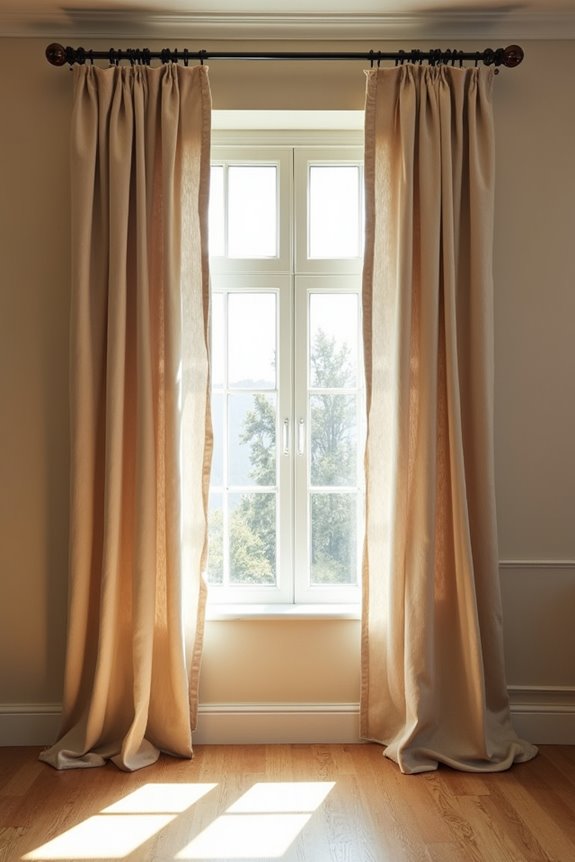
All that thoughtful fabric choice and smart timing won’t matter if your curtains aren’t installed properly—and I’ve learned this the hard way. Your curtains installation needs to cover the entire window frame without gaps. I discovered that even tiny spaces let precious heat escape. Here’s what works: choose heavy fabrics with thermal lining that create an air pocket. This enclosed space effectively blocks cold air. Next, seal those edges carefully. When curtains align perfectly with your window’s edges, drafts can’t sneak through. Mount everything on sturdy hardware—flimsy rods sag and ruin your seal. Finally, extend your curtains beyond the frame’s width and height. This prevents warm air from circulating near the glass. These techniques will make your ordinary curtains into effective heat-retaining options.
Thermal Honeycomb Shades: A Better Insulation Option?
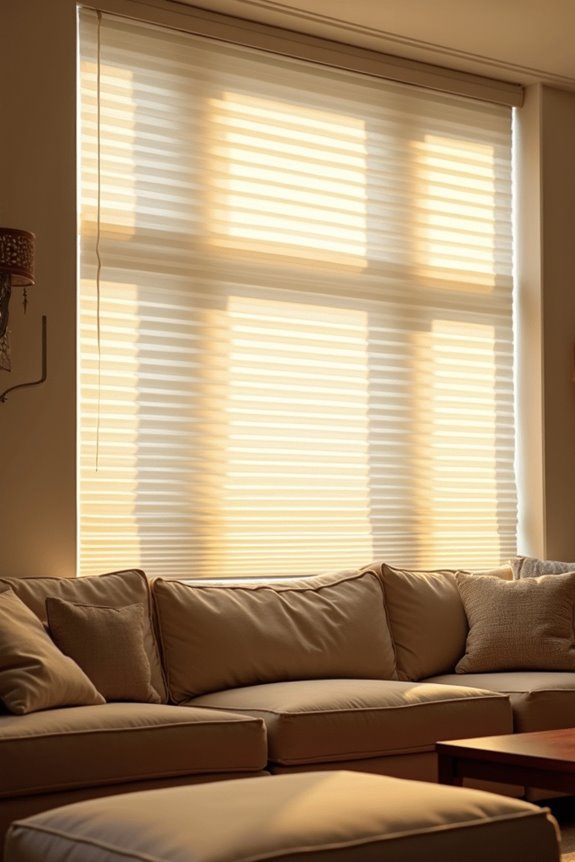
Have you ever wondered why some window treatments work so much better than curtains alone? Honeycomb shades are an effective option. These clever window coverings trap air in multiple pockets—think of them like tiny insulation bubbles right on your windows. That air barrier creates impressive R-values that actually keep heat from escaping during winter and can block about 60% of summer heat gain.
When you pair honeycomb shades with side tracks and dual operation, you’re getting serious energy savings without sacrificing light control. Add a thermal backing, and you’re reflecting heat back into your room. For anyone worried about budget or small windows, double-layer options deliver solid insulation with durability. Properly installed, these shades seal edges and deliver measurable results.
Pairing Curtains With Window Film, Radiator Reflectors, and Draught Sealing
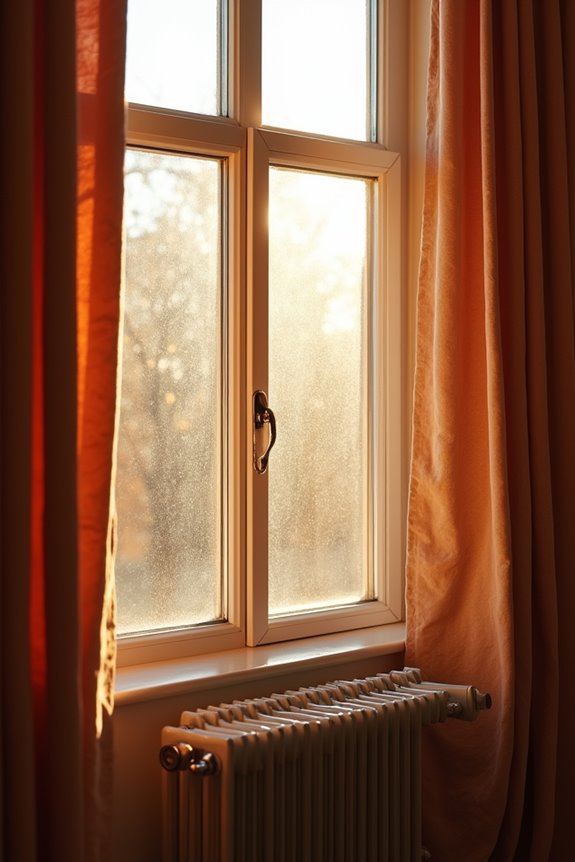
While honeycomb shades pack serious insulation power, curtains can be highly effective—especially when you pair them with a few smart additions.
| Strategy | What It Does | Why It Matters |
|---|---|---|
| Window film | Reflects heat in/out | Reduces solar gain |
| Thermal curtains | Traps air pockets | Prevents heat loss |
| Draught sealing | Blocks edge leaks | Stops cold air sneaking in |
| Radiator reflectors | Bounces warmth inward | Directs heat where you need it |
| Full coverage installation | Eliminates gaps | Maximizes all combined benefits |
Combining thermal curtains with reflective window film delivers real results. The film handles outside temperature swings while your curtains trap warmth indoors. Add draught sealing around edges, and you’ve created a genuine barrier. It’s an affordable upgrade—no renovation required.
The Role of Curtain Weight, Length, and Side Sealing
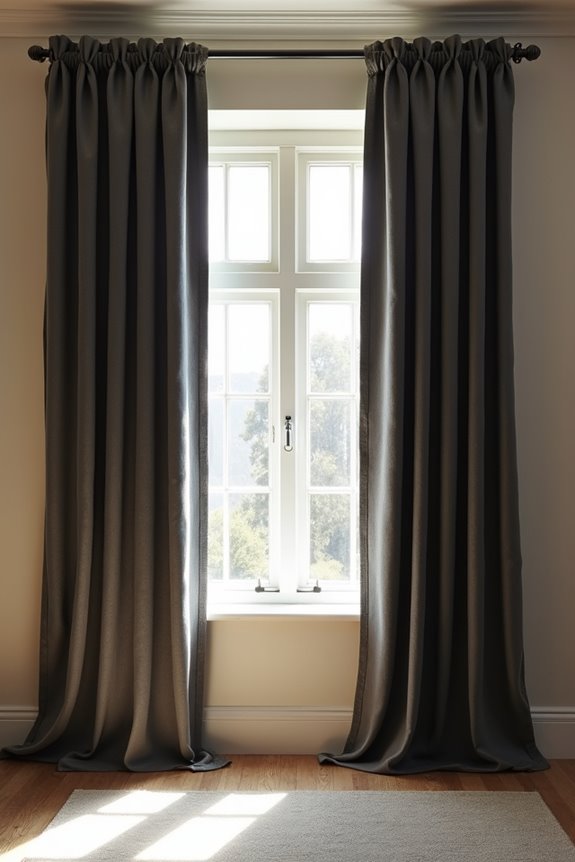
Why does a flimsy curtain panel feel almost pointless when you’re trying to keep heat in? Because it probably is. Here’s what actually works:
- Curtain weight matters: Dense fabrics like velvet or thick cotton trap warm air better than lightweight materials
- Side sealing prevents sneaky drafts: Extending curtains beyond window edges stops cold air from creeping around the sides
- Thermal lining creates insulation: A separate backing layer adds protection, making your setup genuinely effective
- Full length maximizes savings: Floor-to-sill coverage blocks heat escape and keeps cold from entering
I’ve learned that combining these elements isn’t complicated—it’s just intentional. Heavy curtains with thermal lining and proper side sealing work together like a team. You’re not just hanging fabric anymore; you’re building an actual barrier against heat loss. That’s the difference between feeling frustrated and feeling genuinely warm.
Blackout Linings: Why They Work in Winter and Summer
So you’ve got your heavy curtains hanging properly with side seals. Now let’s talk about blackout linings, which effectively keep heat inside your home.
Blackout linings work by trapping an air gap between your window and the fabric. This trapped air acts as insulation, slowing down heat transfer in both directions. During winter, they prevent warm air from escaping. In summer, they block external heat from sneaking in.
Here’s what makes them effective: these heavyweight linings are densely packed, creating multiple fabric layers that your regular curtains can’t match. When properly installed with sealed edges, they form an enclosed pocket that minimizes drafts and convection losses.
Want the best results? Combine blackout linings with window films for enhanced energy performance year-round.
Combining Shades, Films, and Curtains: What Actually Works
When I realized my windows were working in isolation, I discovered that layering treatments—cellular shades, window films, and thermal curtains functioning together—creates a highly effective heat-trapping system that outperforms any single option. Each layer serves a specific purpose: the shade traps air in honeycomb pockets, the film reflects heat back outside, and the curtain seals the edges to prevent warm air from escaping around the frame. The benefit isn’t simply adding insulation; you’re building what amounts to a dedicated climate control system around your window.
Layered Window Treatment Strategies
they’re basically the weak link in your home’s insulation system. I’ve learned that layering different treatments actually works better than relying on one alone.
Think of it like building armor for your windows. When I combine cellular shades with reflective film and thermal curtains, I’m attacking heat loss from multiple angles. The film reflects external heat while curtains block interior warmth from escaping. Shades trap air between layers, boosting everything else.
Here’s what I’ve found creates real results:
- Full-length curtains with side sealing create enclosed air pockets that stop heat transfer
- Reflective films reduce solar gain by redirecting sunlight before it enters
- Cellular shades cut winter heat loss by roughly 10% when properly installed
- Combined exterior shutters block up to 77% of west-facing solar heat
This layered approach makes ordinary windows into functional insulation helpers.
Maximizing Combined Insulation Performance
What if I told you that one window treatment alone is basically leaving money on the table?
I’ve learned that combining window treatments creates serious insulation benefits. Pairing cellular shades with side tracks cuts winter heat loss by about 10% and summer heat gain by up to 60%. Adding window films to heavy curtains? That’s when the performance improves noticeably. The films reflect heat while curtains block it—they work together effectively.
Here’s the thing: layering actually matters. I discovered that exterior shutters combined with interior curtains deliver the biggest thermal performance gains, especially on south- and west-facing windows. The key is full-length, side-sealed coverage so heat can’t sneak around edges. When you operate these window treatments strategically—closing them at night, opening during day—you’re not just improving insulation. You’re using an approach that delivers measurable results for home comfort.
How Much Heat Do Curtains Actually Save vs. Double Glazing?
curtains and double glazing work like teammates playing different positions. I’ll level with you—double glazing reduces heat loss more across your entire window assembly. Curtains? They’re the solid supporting player. They block convection near the glass and create an insulating air pocket, but they can’t match what double glazing does structurally.
That said, here’s where curtains work well:
- They’re affordable upgrades that work right now without replacing windows
- Multi-layer thermal curtains noticeably lower inside-window surface temperatures
- They tackle the drafty air currents double glazing alone might miss
- Your savings depend heavily on thickness, fit, and how well you seal the sides
Think of it this way: double glazing’s your foundation. Curtains insulation is your bonus round. Together? You’ve got real heat loss protection.
Are Thermal Curtains Worth the Cost?
When I started looking at thermal curtains, I wondered if spending $200-400 on quality ones would actually shrink my heating bills enough to matter. The answer depends on three things: how much energy you’ll actually save each month, whether you’re tired of feeling drafts near your windows, and if you can recoup that upfront cost over a few winters. Let me walk you through what makes thermal curtains worth it—or not—for your specific situation.
Energy Savings and ROI
How much would you actually save by hanging thermal curtains on your windows? I’ve found that the upfront cost typically pays for itself within a few years through lower heating bills. Your heater doesn’t work as hard when thermal curtains create an air pocket that blocks heat loss.
What makes the ROI worthwhile:
- Dense, multi-layer curtains with thermal lining minimize edge leaks and air convection near glass
- Proper installation (full coverage, sealed sides, heavy weight rods) maximizes insulation performance
- Combining curtains with window films offers greater energy savings on large windows
- Energy savings compound annually, making your initial investment valuable
You’re not just buying curtains—you’re reducing your heater’s workload all winter long. That translates to real money staying in your pocket.
Comfort and Draft Prevention
Why do windows feel like cold air factories in winter? You’re not imagining it. Drafts sneak through and steal your warmth while you’re trying to relax. That’s where thermal curtains come in.
I’ve found that thick insulated curtains act like a seal against cool air, stopping drafts before they reach you. They create an air pocket between the fabric and glass, which cuts down heat transfer. Dense fabrics with reflective linings work even better.
| Feature | Standard Curtains | Thermal Curtains |
|---|---|---|
| Draft blocking | Minimal | Excellent |
| Insulation quality | Low | High |
| Installation needs | Simple | Full coverage required |
| Cost | $30-80 | $100-300 |
| Energy savings | 5-10% | 15-25% |
Proper installation matters too. You’ll need full window coverage and side sealing to maximize results. Combined with window films, you’ll see real comfort improvements.
Long-Term Cost Effectiveness
Sure, dropping $100 to $300 on thermal curtains costs more than grabbing standard ones for $30 to $80. But here’s the thing—you’re not just buying fabric. You’re investing in your comfort and wallet.
Thermal curtains cut winter heat loss by about 40%, which means your heating system works less hard. That translates to real energy savings on your monthly bills. Your payback period typically ranges from one to three years, depending on your climate and window size.
Think of it this way:
- Lower heating bills month after month
- Reduced strain on your HVAC system
- Better home comfort without cranking the thermostat
- Money back in your pocket long-term
When you seal edges properly and use heavy fabric with thermal lining, you’re maximizing every dollar spent. That’s practical thinking.
5 Installation Mistakes That Waste Curtain Performance
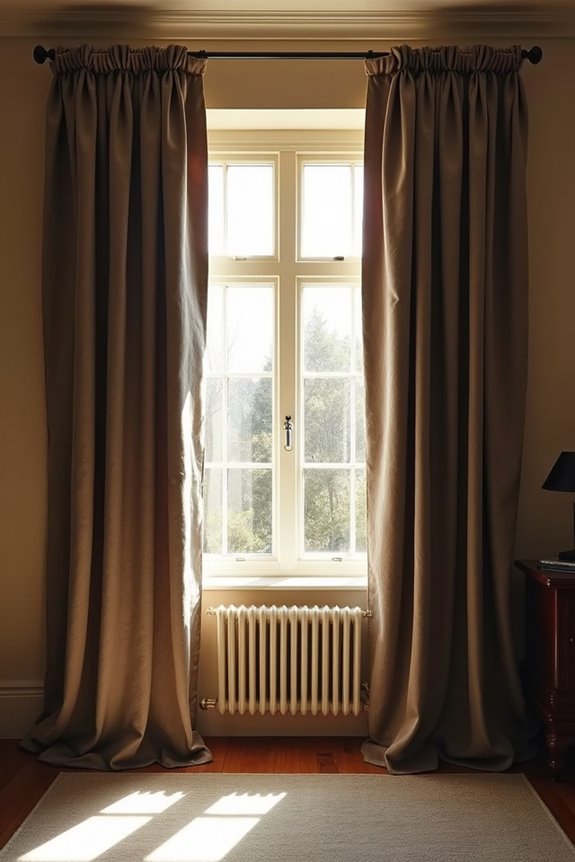
Even the best thermal curtains won’t save you money if you install them wrong. I’ve learned this the hard way. Curtains sagging from weak rods create gaps where cold air sneaks through—defeating your whole purpose. If you don’t cover the entire window frame, side gaps destroy your edge sealing and let drafts slip past. Using thin fabrics without thermal backing means you’re missing that important insulating layer that traps warm air. Hanging curtains too far from windows or leaving them partially open reduces the air space they protect. Finally, mixing old worn linings with new curtains creates uneven layers that leak heat. Getting these details right makes curtains work as real energy savers. Small installation choices have real impact.