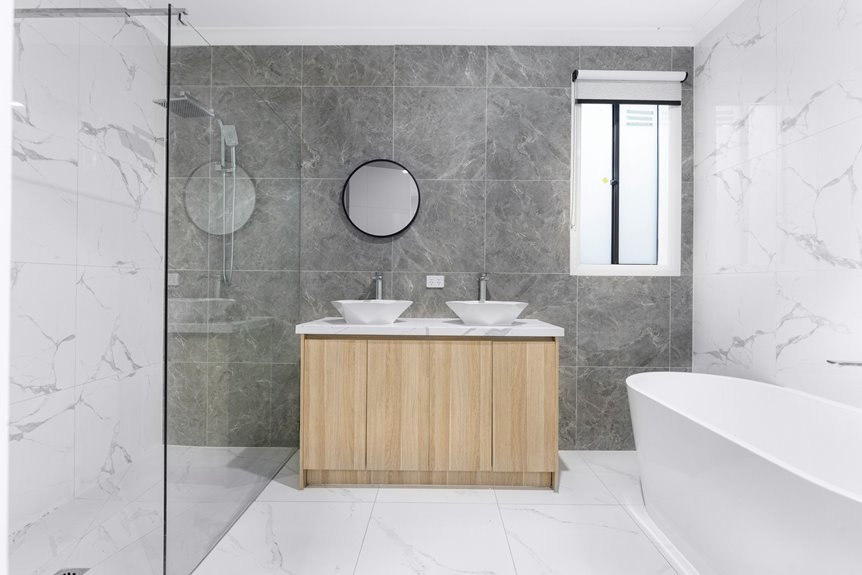
A bathroom redo typically runs $5,000 to $45,000 depending on size and finishes you choose. Small bathrooms start around $5,000–$7,000, while primary bathrooms jump to $15,000–$30,000.
Here’s the kicker: labor costs roughly half your budget. Plumbing, tiling, and electrical work are your biggest expenses.
But here’s what really matters—your finish choices drive the final price. Want ceramic tiles or marble? Stock vanity or custom?
These decisions reshape your budget significantly. Stick around to discover how to plan strategically.
What You’ll Spend Based on Bathroom Size and Scope
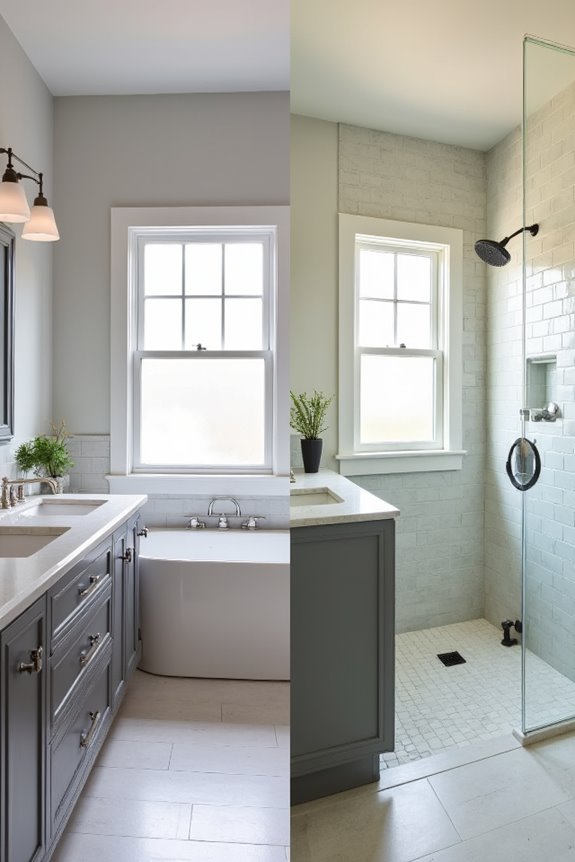
Ever wonder why bathroom renovations can cost anywhere from $5,000 to $30,000—or even more? Bathroom size and scope of renovation significantly impact the final price. A small bathroom might run you $5,000–$7,000, while a primary bathroom easily hits $15,000–$30,000. Here’s what matters: you’re paying roughly $110–$275 per square foot, depending on what you’re doing.
Your bathroom size determines how many fixtures and materials you’ll need. Half baths have 1–2 fixtures, full baths need 3–4, and primary bathrooms often exceed 5. Major cost drivers like plumbing rough-ins ($2,000–$5,000) and professional tiling ($3,000–$7,000) add up quickly. In Los Angeles, a standard full bathroom runs $22,000 (budget) to $45,000 (high-end). Labor typically accounts for about 50% of your total bathroom remodel cost.
What Actually Costs the Most: The Five Budget Killers
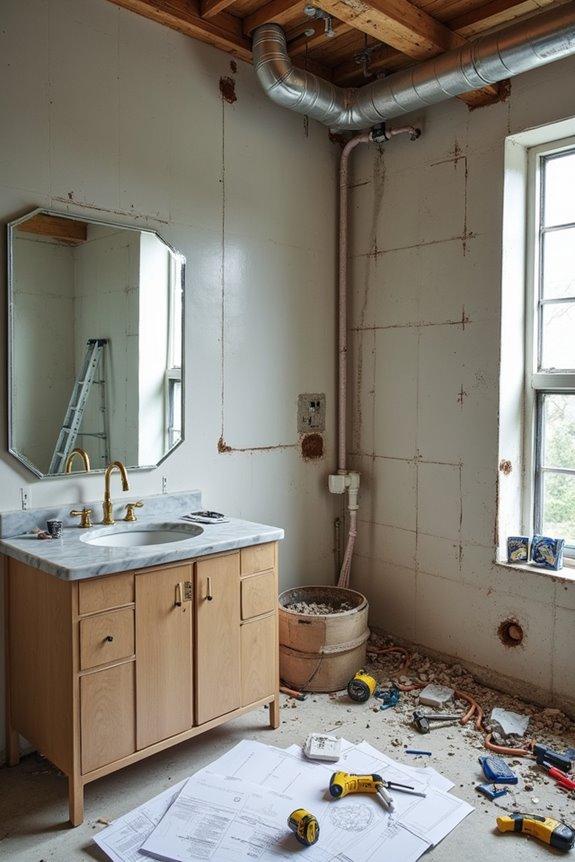
So where does all that bathroom renovation money actually go? I’ll be honest—labor eats about half your budget, which stings until you realize skilled workers prevent costly mistakes. But here’s where things get real expensive:
| Budget Killer | Cost Range |
|---|---|
| Labor | ~50% of total |
| Plumbing rough-ins | $2,000–$5,000 |
| Professional tiling & waterproofing | $3,000–$7,000 |
| Electrical upgrades | $1,200–$2,500 |
| Demolition | $1,000–$2,500 |
Moving fixtures or changing your layout adds serious money fast. Choosing high-end finishes accelerates costs dramatically. Then there’s the reality—unexpected issues hiding behind walls trigger change orders. Budget 10–20% contingency for gut renovations because surprises happen. You’re not alone facing these realities.
Finish Levels: How They Shape Your Renovation Cost
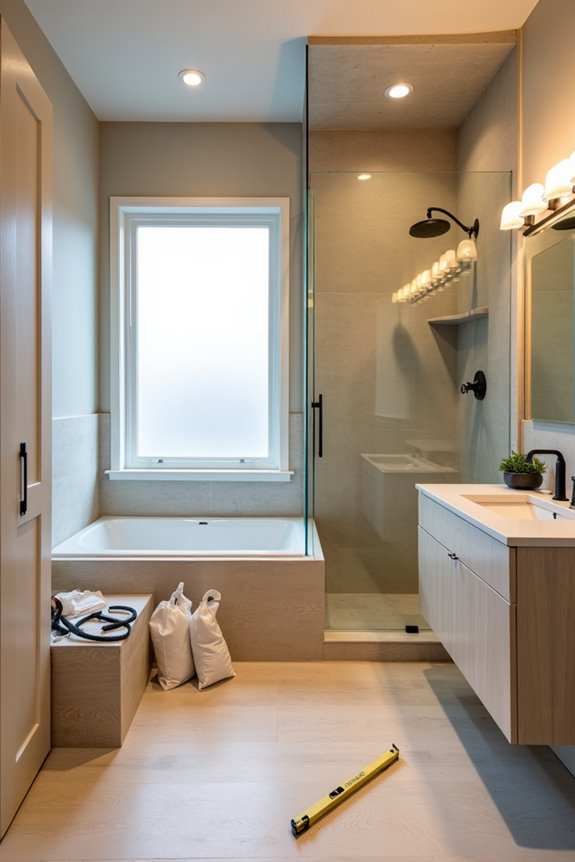
Why does picking out a vanity feel like choosing between a Honda and a Mercedes? Because your finish level directly shapes your in-unit costs. I’ve learned that low-end fixtures run $1,500–$3,000, while mid-range fixtures land between $3,000–$6,000. High-end finishes? They’ll hit $6,000–$15,000+. The reality is: finish level touches everything—not just vanity options, but your walls, flooring, and countertops too. When I chose premium materials and designer tile patterns, my total renovation budget jumped faster than expected. What I’ve discovered is this: higher-end finishes accelerate costs quickly, especially in visible spaces. Your finish decision isn’t just about one element; it’s the domino that tips your entire budget direction.
Build Your Budget: Account for Contingencies and Hidden Costs
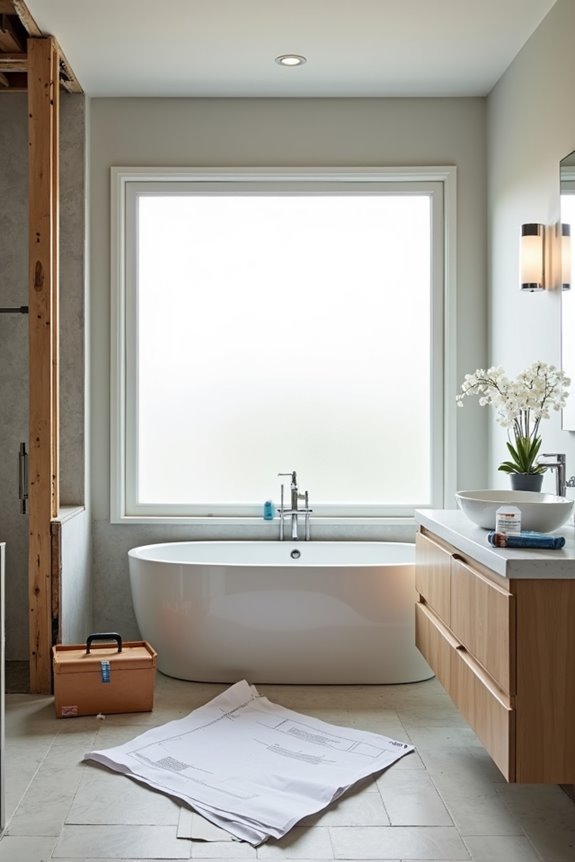
When you’re mapping out your bathroom renovation budget, I’d recommend setting aside extra money upfront—think of it as insurance against the wall you open and discover rotting pipes or outdated wiring that needs replacing. You’ll want to protect yourself with a contingency fund of at least 5–10% for smaller updates, or bump it up to 15–20% if you’re gutting the whole space, since hidden problems tend to surprise even the most prepared homeowners. Building flexibility into your plan means you can swap out a faucet or upgrade tile without watching your timeline fall apart, so compare estimates from different contractors and use budgeting tools to see how each choice ripples through your total cost.
The 5-10% Rule
How often do contractors knock on your door with news that your bathroom renovation just got $3,000 more expensive?
I’ve learned the hard way: always reserve 5–10% of your total bathroom renovation budget for contingencies. This cushion protects you when hidden problems emerge—like discovering rotted subflooring or outdated plumbing behind walls.
Here’s why this matters. Material fluctuations happen constantly. A tile you liked last month costs more today. Plus, scope creep sneaks in. You decide those heated floors sound nice. Suddenly, your budget’s tight.
| Budget Scenario | Total Cost | 5% Contingency | 10% Contingency |
|---|---|---|---|
| $10,000 | $10,000 | $500 | $1,000 |
| $20,000 | $20,000 | $1,000 | $2,000 |
| $30,000 | $30,000 | $1,500 | $3,000 |
| $50,000 | $50,000 | $2,500 | $5,000 |
That buffer keeps essential elements—your vanity, toilet, shower—protected from budget overruns.
Planning For Surprises
Ever opened a bathroom wall only to find plumbing that looks like it belongs in a museum?
I’ve learned that surprises happen. That’s why I build contingency into every project budget. For standard remodels, I reserve 10–15% extra. For gut renovations? I bump it to 15–20%. Here’s what I protect myself against:
- Hidden electrical or plumbing issues discovered mid-project
- Permit fees that vary by location
- Change orders requested during construction
- Budget overruns on materials or labor
- Unexpected structural damage in small bathroom spaces
I also prioritize my scope of work. In smaller bathrooms especially, I fund essentials first—vanity, toilet, shower—then buffer non-critical areas against overruns. I keep detailed written quotes, timelines, and change-order documentation throughout. This protects my budget alignment when reality diverges from the original plan.
Flexible Budget Strategies
What if I told you that the difference between a renovation that stresses you out and one that runs smoothly often comes down to how you structure your budget?
I’ve learned that building a flexible budget isn’t about guessing wildly—it’s about staying smart. Here’s what works: set aside 10–15% of your project cost as a dedicated contingency line item for surprises like hidden plumbing issues. Then, prioritize your essentials first: vanity, toilet, shower. This approach lets you manage your finances with confidence.
I also recommend building in room for material substitutions without derailing timelines. Use a budget visualization tool to see how fixture choices impact your unforeseen overruns before they happen. When you plan strategically, your bathroom renovation stays on track—and your wallet stays healthier.
Materials and Fixtures That Fit Your Budget
When you’re staring at fixture prices online, you’ll notice they range from affordable to expensive. Your finish level—budget, mid-range, or luxury—shapes everything: fixtures, vanity style, and even tile choices.
Here’s what works:
- Ceramic tiles cost less than marble and deliver a polished appearance
- Stock vanities from big-box stores offer clean lines without premium pricing
- Mass-market fixtures perform well and keep costs down
- Simple tile patterns create modern appeal without specialty labor costs
- Budget-friendly materials work when thoughtfully combined
Your vanity and sink heavily influence total cost, so prioritize those choices. Choosing ceramic over natural stone and keeping patterns straightforward lets you spend more on other elements. You don’t need luxury materials to achieve a well-executed renovation.
Timeline, Permits, and Contractor Selection in Los Angeles
Once you’ve picked your materials and nailed down your budget, the real planning starts—and in Los Angeles, that means dealing with permits, timelines, and finding the right contractor to actually do the work. You’ll need bathroom remodel permits if you’re moving plumbing, electrical work, or touching load-bearing walls. Demolition costs start around $39 per square foot, so factor that into your early expenses. Labor typically eats up 25–35% of your total project cost, making contractor selection important. The whole project usually takes several weeks, depending on complexity. Want to simplify things? Services like Sweeten match you with vetted local contractors, letting you compare quotes and streamline the entire selection process.