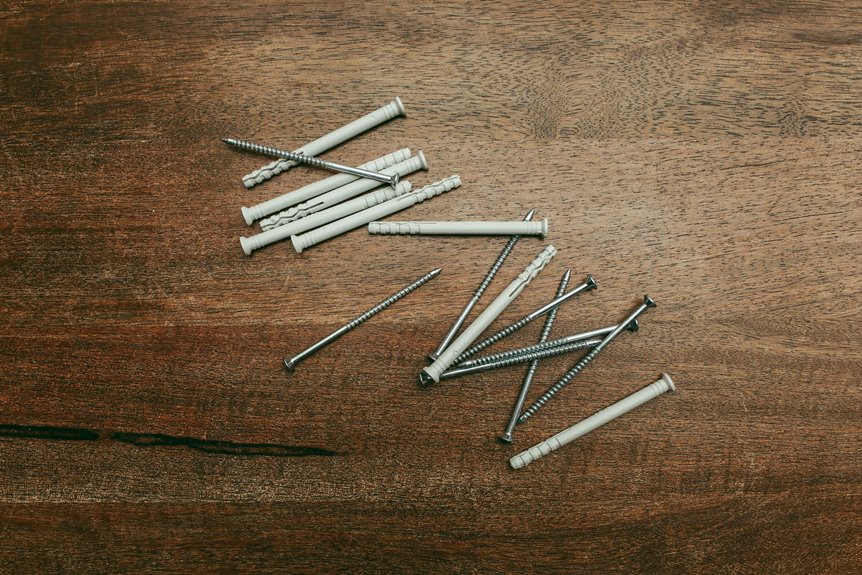
Wall anchors grip the back of your drywall by expanding or threading when you tighten the screw, distributing weight across a wider area instead of just one point. Think of it like this: a plain screw creates a tiny hole, but an anchor spreads that force out like an umbrella behind the wall. Different anchor types—toggles, plastic wings, metal spirals—handle different weights, so matching your anchor to your wall material and item weight is important.
Studs are always stronger, but anchors work well when studs aren’t positioned where you need them. Want to know which anchor tackles what weight? There’s more to discover.
How Anchors Grip Drywall: Expansion, Toggle, and Screw Mechanics
Ever wonder why a tiny plastic anchor can hold a heavy picture frame on your wall without the whole thing crashing down?
Ever wonder why a tiny plastic anchor can hold a heavy picture frame on your wall without crashing down?
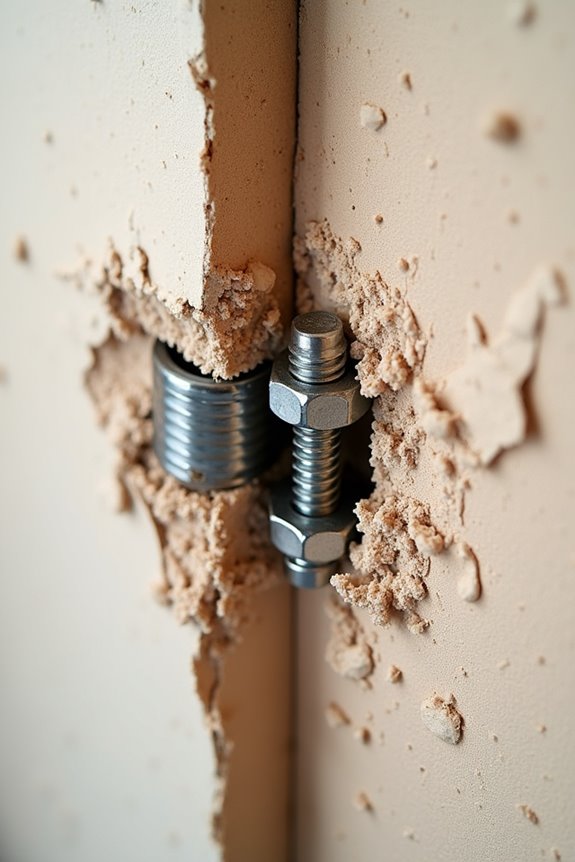
It’s actually quite logical. Drywall anchors work by gripping your wall from behind. With expansion anchors, a plastic piece splits outward as you tighten the screw, pressing against the drywall and creating tension that stops pull-out. Think of it like a small parasol opening inside your wall.
Toggle bolts take things further. They use a metal toggle that springs open behind the drywall, spreading weight across a larger area. This design lets you hang heavier items—like your TV or a substantial mirror. The wider contact means better support.
Each type tackles the same problem differently. They all share one goal: grip your wall securely so your belongings stay in place.
When to Use Anchors (and When Studs Are Your Only Option)
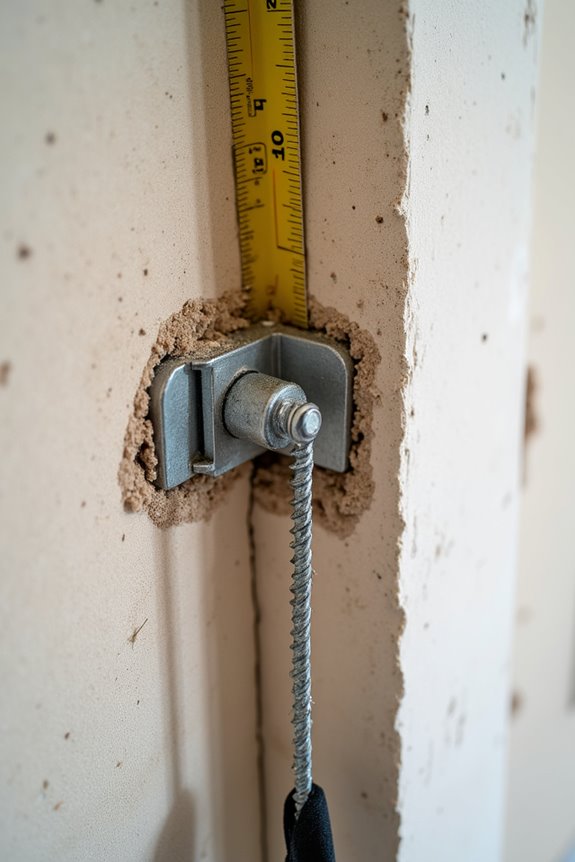
The choice between anchors and studs isn’t really a choice at all—it’s more like a hierarchy of strength. When you can access a stud, you’ve got the best option. Studs are wood framing that runs through your walls, typically spaced 16 inches apart, and they’ll hold whatever you attach to them. Use a stud finder to locate them, then aim for the center when anchoring.
But here’s the thing: studs aren’t always conveniently placed where you need them. That’s where wall anchors step in. These devices grip drywall and handle most everyday items. For anything heavier than 5 pounds—think large mirrors or shelves—you’ll need anchors with appropriate weight ratings. Light frames under 5 pounds? Nails or command strips work fine. Know your item’s weight, find your studs, and you’re set.
Anchor Types Ranked by Weight Capacity: Which Holds What

Now that you know when anchors actually matter, let’s talk about which ones pack the most punch—because there’s a significant difference between a flimsy anchor and one that won’t let you down. I’ll walk you through how different anchor types rank when it comes to real-world weight capacity, showing you which models hold what and why some anchors (like the SNAPTOGGLE hitting 180 lbs despite a modest 80-lb rating) perform way better than their labels suggest. You’ll see that not all anchors are created equal, and picking the right one depends on understanding both what manufacturers claim and what actually happens when you load them up.
Anchor Weight Rating Comparison
How much weight can you actually trust your wall anchors to hold? I’ve discovered that many anchors outperform their labels, which is worth noting. Here’s what testing results revealed:
- Toggler SNAPTOGGLE claimed 80 lbs but held 180 lbs—that’s more than double
- Pop Toggle promised 60 lbs and delivered 130 lbs in real tests
- Cobra DrillerToggle rated at 90 lbs achieved 140 lbs safely
- WallClaw Anchors held exactly their 90 lb rating before failing
Weight rating comparisons matter because manufacturers tend to be conservative. Most anchors exceeded expectations, providing confidence in their performance. However, WallClaw hit its ceiling hard—it popped right out beyond 90 lbs. This teaches us something important: don’t max out your wall anchors just because testing shows they can handle more. Stick with the label’s rating.
Load Capacity By Anchor Type
Why do some anchors hold twice their promised weight while others fail right on schedule? It comes down to anchor type and wall material. Toggle-type anchors and heavy-duty options like Cobra TripleGrip consistently outperform their ratings, sometimes holding 180 pounds when claiming 80. Plastic winged drywall anchors? They’re honest about their limits—usually around 20 pounds max. Here’s what matters: match your anchor type to your wall. Plaster walls need self-drilling metal anchors since plaster crumbles easily. Brick demands masonry bits and steel screws. Your load capacity depends entirely on these choices. Jumping straight to anchors without considering wall material wastes time and money. Know your wall first, then pick your anchor type accordingly.
How Studs Outperform Drywall Anchors
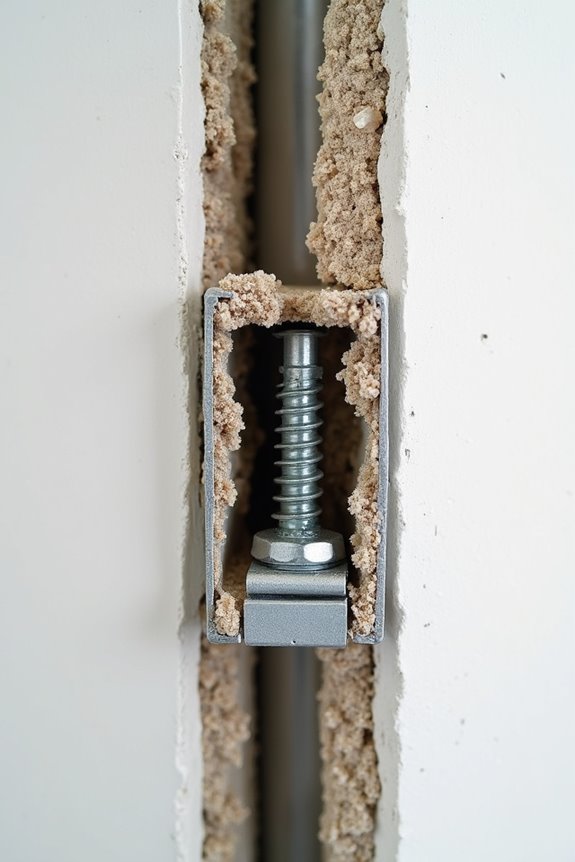
Ever wonder why some wall-mounted shelves hold up for years while others come crashing down? I’ll tell you why: studs outperform drywall anchors consistently.
Why some wall-mounted shelves hold up for years while others crash down? Studs outperform drywall anchors consistently.
Here’s why studs work better:
- They carry the load directly – Weight transfers through solid wood framing, not just drywall
- They handle heavier items – Your load rating increases significantly compared to anchor-only mounting
- They’re spaced predictably – Most studs sit 16 inches apart, making them findable with a stud finder
- They support dynamic loads – Shelves that get bumped or adjusted stay secure longer
When I mount something heavy, I hunt for studs first. Drywall anchors work for lighter items, but studs are the difference between a shelf that lasts decades and one that fails. Find that stud, and your mounting is solid.
Choose the Right Anchor for Your Item’s Weight
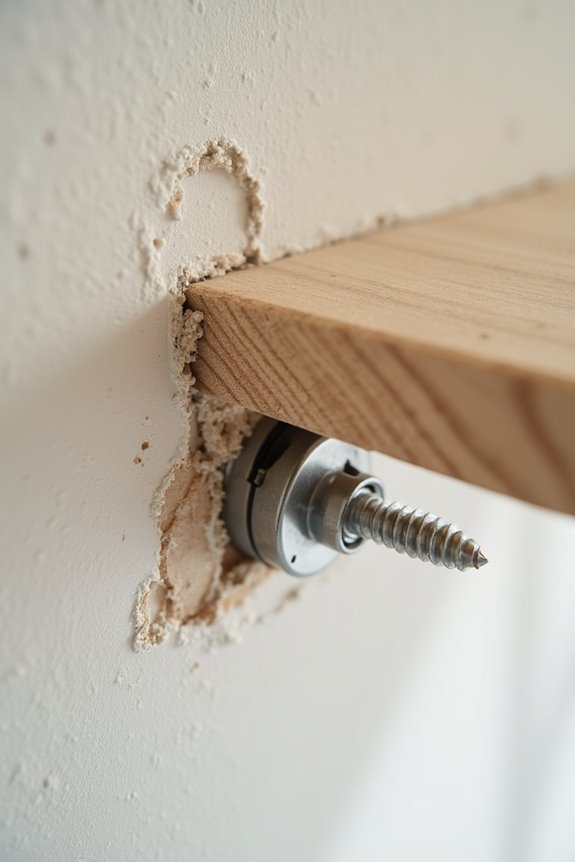
Now here’s where things get real—you can’t just grab any anchor and hope your 65-inch TV doesn’t become a floor decoration. Different anchors have different weight limits depending on their type and the wall material you’re working with, so I’ll walk you through what actually holds what. Let’s figure out which anchor matches your item’s weight so you can install with confidence instead of anxiety.
Anchor Types and Load Ratings
they’re not all created equal, and picking the wrong one is basically asking your favorite picture frame to take a nosedive at 2 a.m.
I’ve learned that load ratings depend on three key factors:
- Anchor type – toggles handle heavier loads than plastic wings
- Wall thickness – thicker drywall (beyond the standard 3/8″) holds more weight
- Load direction – downward pressure differs from outward pulling force
Here’s what caught my attention: drywall anchors actually perform better than manufacturers claim. The Cobra TripleGrip rated for 45 pounds? It held 90. That SNAPTOGGLE claiming 80 pounds? It handled 180.
But don’t get cocky. I always verify there’s no stud behind my wall first, then I distribute weight across multiple anchors and add a safety buffer. That’s how you keep things hanging where they belong.
Weight Capacity by Material
How do you know which anchor can actually handle your stuff? Your wall material matters significantly. Standard 3/8″ drywall handles different loads than thicker 1/2″ or 5/8″ drywall. Heavier items need toggles or snap toggles for real security.
Many anchors outperform their claimed ratings. Cobra TripleGrip claimed 45 lbs but tested at 90 lbs. SNAPTOGGLE devices claimed 80 lbs yet handled 180 lbs. That’s significant headroom.
However, WallClaw Anchors hit their 90 lb limit and failed beyond that. Your weight capacity depends on both the drywall anchors you pick and your wall material’s thickness. Match them correctly, and you’ll get reliable performance.
Install Your Anchor Right: Steps That Actually Hold
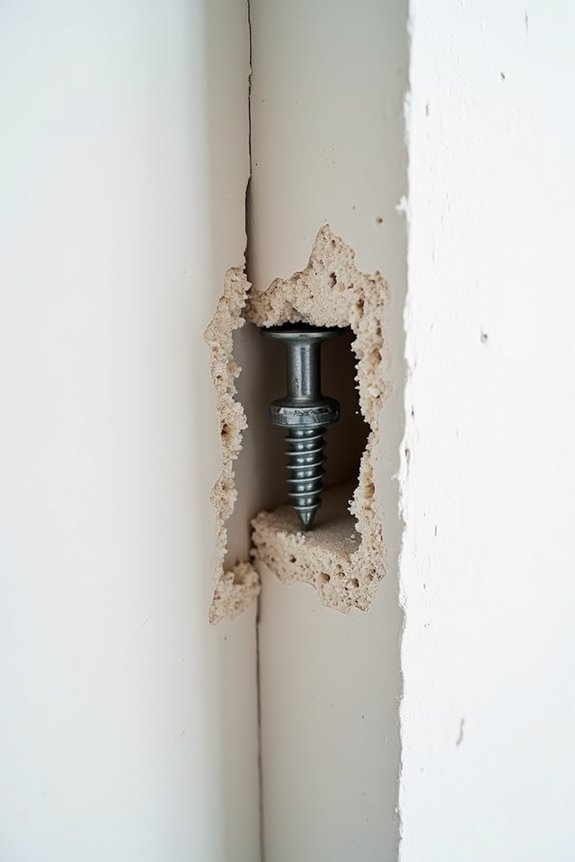
Ever installed an anchor only to watch your picture frame crash down two weeks later?
I’ve been there. The key isn’t just buying anchors—it’s installing them correctly. Here’s what actually works:
- Use a stud finder first. Verify there’s no stud behind your wall. If there is, skip the anchor and screw directly into the wood.
- Drill a pilot hole. Match the hole size to your anchor size. This prevents the anchor from slipping or crumbling drywall.
- Insert flush. Push the plastic anchor until it sits even with the wall surface.
- Tighten gradually. Turn the screw until the anchor splits and grips the back. Don’t overtighten.
Check your anchor’s weight rating and add extra safety margin for heavier items. Installation takes five minutes. Watching something fall takes seconds. Do this right.
Mistakes That Cause Anchor Failure and How to Avoid Them
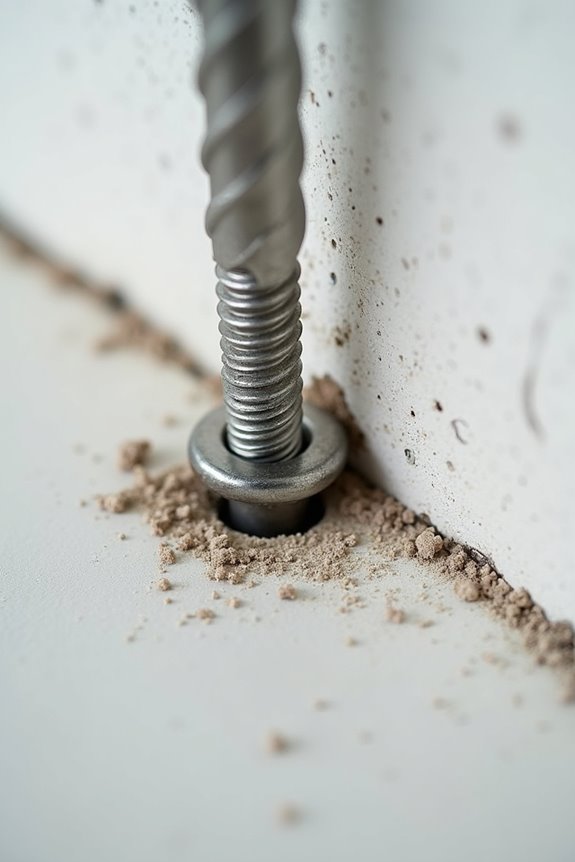
What separates a wall mount that lasts years from one that crashes down in weeks? Installation mistakes. I’ve learned that choosing the wrong drywall anchors for your wall type—say, using plastic anchors in plaster—guarantees failure. The anchor spins uselessly in the hole, unable to grip anything. That’s frustrating.
Here’s what actually matters: matching your anchor to your wall and respecting its weight rating. Loading a 60-pound anchor with 100 pounds? It’ll fail. I’ve also discovered that installation mistakes happen when I skip checking for studs behind hollow spaces. That reduces holding power dramatically.
If you encounter drilling resistance or crumbling plaster, switch tactics. Use self-drilling metal anchors instead. These adjustments make your mount from risky to reliable.