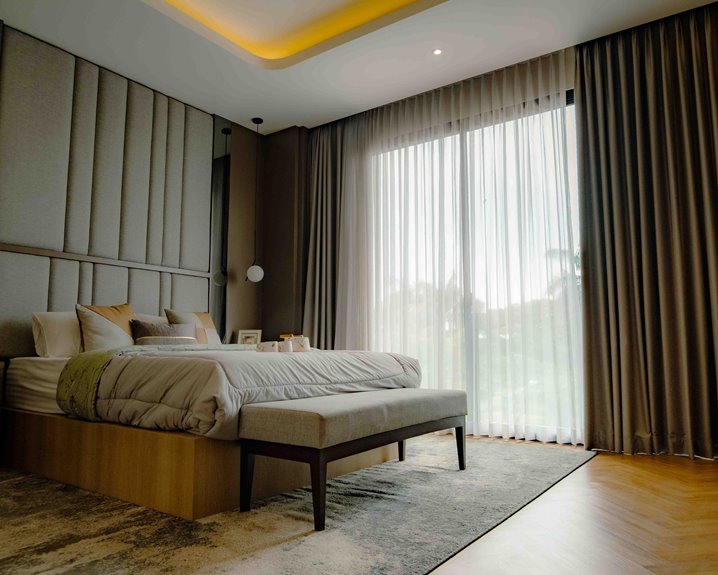
Whether your curtains should touch the floor depends on your room’s purpose and your cleaning tolerance. Floor-length curtains create height illusions and add elegance, working well in living rooms and bedrooms. However, they collect dust faster and need professional cleaning. If you prefer low-maintenance style, floating curtains (hovering just above the floor) work better in kitchens and bathrooms. Puddled curtains add drama but require significant upkeep. Your choice affects how your space actually functions, not just how it looks.
Why Curtain Length Matters More Than You Think

Ever notice how some rooms feel polished and put-together while others look a bit… unfinished?
That’s often about curtain length. I’ve learned that floor-length curtains do serious work beyond just looking nice. They create a ceiling height illusion by drawing your eye upward with long vertical lines. Meanwhile, shorter curtains can make a space feel incomplete, like something’s missing.
The right choice depends on understanding your fabric weight and room needs. Heavy long drapes block drafts and improve privacy and light control by eliminating those awkward gaps at the bottom. Light fabrics work better for a subtle touch-the-floor look than puddle length, which pools extra fabric on the ground.
Your room’s purpose matters too. Floor-length curtains work beautifully in living rooms, but they’re tricky in kitchens and bathrooms where moisture happens.
Should Curtains Touch the Floor?
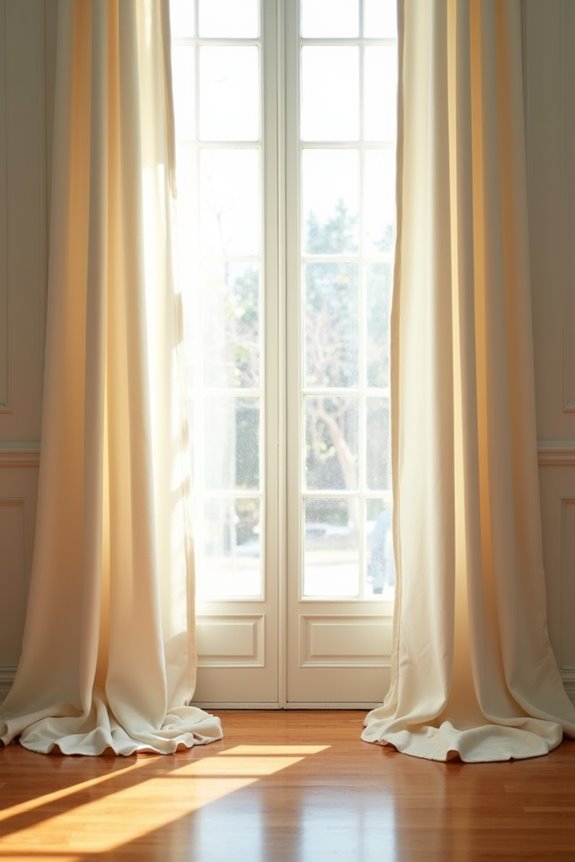
How close should your curtains actually get to the floor? The answer depends on your lifestyle and style preferences. Floor-length curtains create a polished look, making rooms feel taller and more sophisticated. They typically measure 84–96 inches from your curtain rod height to the floor.
If you’ve got kids or pets running around, float length works better—it hovers just ½ to 1 inch above the floor, reducing dust and cleaning hassle. For a formal, luxurious vibe, puddle-length curtains pool 2–6 inches onto the floor, though they’re trickier to maintain.
Position your rod 8–10 inches above your window frame to enhance that ceiling height effect. Your window coverage choices affect how spacious your room feels.
Floor-Length Curtains: Classic Elegance and Visual Impact
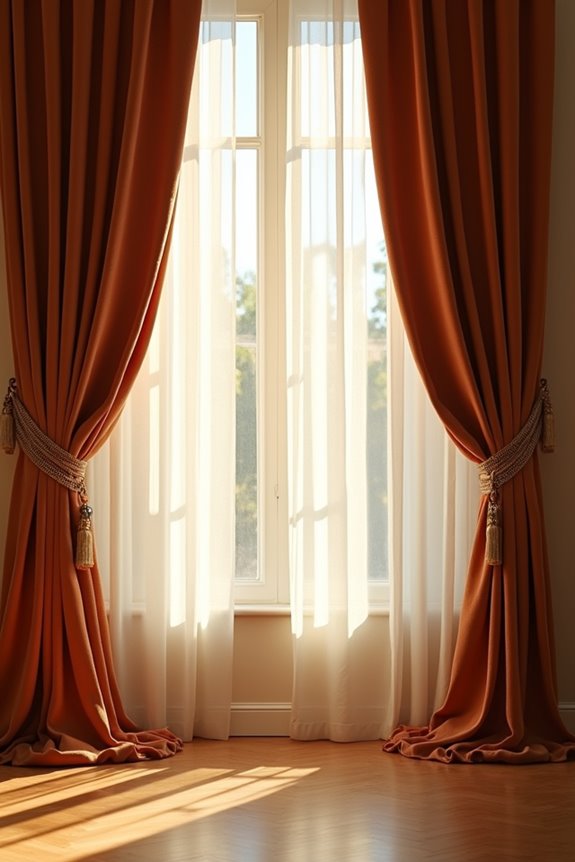
Floor-length curtains are the quiet achievers of interior design—they do the strenuous work while making your space look intentionally designed. When your drapery touches the floor, you’re creating an illusion of height that makes ceilings seem taller and rooms feel more sophisticated. Long curtains work well in any space, whether it’s your living room or bedroom.
The key? Your fabric should either touch the floor or hover just ½ to 1 inch above it. This prevents that awkward floating look that screams amateur decorator. If you want to amplify the effect, extend your rod 6 to 8 inches above the window frame. This simple approach makes your room look larger and more deliberate. Floor-length options aren’t just beautiful—they’re practical too, blocking drafts and creating privacy.
Just Above the Floor: The Modern, Low-Maintenance Choice
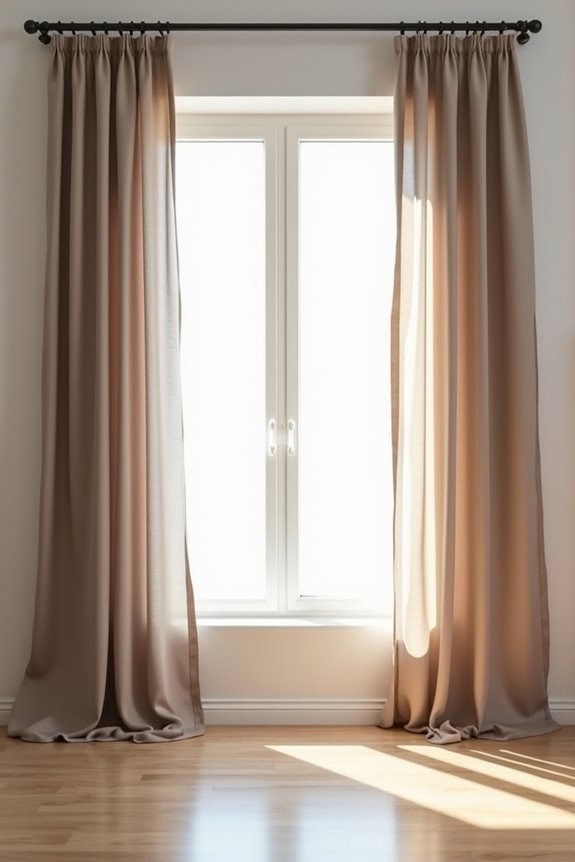
If you’re tired of vacuuming dust bunnies hiding under your curtains, float-length curtains hover just ½ to 1 inch above the floor, giving your space a sleek, modern appearance while making cleaning easier. This style works well in bedrooms, kitchens, and living rooms because it pairs well with lighter fabrics like cotton and sheer blends, plus it keeps your baseboards snag-free. Want a more contemporary look? Mount your rod 8–10 inches above the window frame, and you’ll visually stretch your ceilings while maintaining that clean, uncluttered aesthetic.
Modern Aesthetic Appeal
Why settle for curtains that puddle on your floor when you could have them floating gracefully just above it? Float length creates a sleek, contemporary look in any room. This modern aesthetic appeals to anyone wanting a clean silhouette without fussiness.
Here’s what makes floating curtains so visually appealing:
- They create an airy, uncluttered appearance with clear design intent
- Rod placement at 4–6 inches above your window frame emphasizes height
- The hovering effect suggests sophistication and deliberate design choices
- Light fabrics enhance that minimalist quality
Unlike touching-the-floor styles, float length prevents visual heaviness. Your space feels open and deliberately styled rather than overdressed. Whether you’re redesigning your kitchen or bathroom, this curtain length delivers a polished, contemporary look—without the maintenance headaches that come with traditional lengths.
Practical Cleaning Advantages
When you keep your curtains hovering just a half-inch to an inch above the floor, you’re not just making a style choice—you’re making your life easier. Floating length curtains improve your cleaning routine. Dust won’t accumulate on fabric sitting idle against baseboards. Your vacuum glides underneath without snagging threads. In moisture-prone spaces like bathrooms, you’re preventing mildew and water damage that’d otherwise ruin fabric bottoms.
| Cleaning Task | Floor-Touching | Floating Length |
|---|---|---|
| Dust Buildup | Heavy accumulation | Minimal |
| Maintenance Time | 30+ minutes | 15 minutes |
| Mildew Risk | High in bathrooms | Significantly reduced |
This durability means fewer replacements. Hems stay safer from fraying and snagging. You’ll appreciate how maintenance becomes straightforward. That’s the practical benefit floating curtains deliver—they work *with* your lifestyle, not against it.
Versatile Room Compatibility
- Kitchens stay splash-free without fabric absorbing moisture
- Bathrooms maintain privacy without humidity damage
- High-traffic areas reduce dust collection significantly
- Any room gets that clean, modern aesthetic
Float-length works well because it sidesteps the hassles of floor-length curtains. When measuring curtain length for these spaces, I simply subtract one inch from my rod-to-floor distance. Lighter fabrics like cotton maintain their crisp edge perfectly here. The result? Privacy without the practical headaches.
Puddled Curtains: When Drama and Luxury Take Over
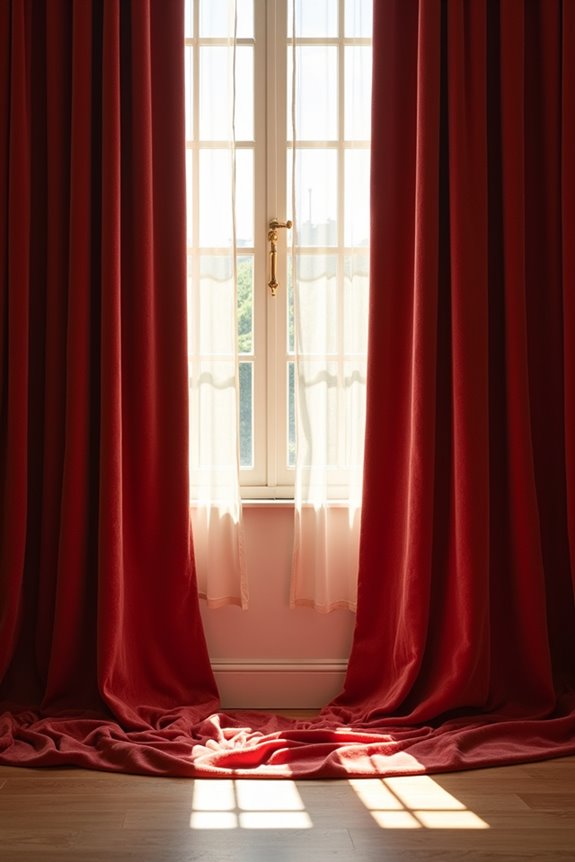
If you’re ready to create a space with puddled curtains—those luxurious drapes that pool dramatically on the floor—they might be worth considering. I’ll show you how to achieve that opulent effect by measuring correctly, which means adding 3 to 6 extra inches to your floor-to-rod measurement so the fabric gathers beautifully instead of hanging straight. Let’s discuss what makes this look work and how to get it right without tripping over your own curtains.
The Opulent Puddle Effect
Puddled curtains are basically the fashion statement of the window world—they pool luxuriously on your floor, creating that “I have a castle, or at least I’m pretending I do” vibe. Here’s why I’m drawn to the opulent effect:
- They add 3–6 inches of fabric pooling for that dramatic appearance
- High-drapery fabrics like velvet showcase puddling beautifully
- They conceal floor imperfections you’d rather hide
- They bring a sense of luxury to formal spaces
Puddle-length drapery demands commitment though. You’ll need to clean frequently since pooled fabric catches dust. I’d reserve this look for master bedrooms or dining rooms—not high-traffic areas or homes with pets. The maintenance burden is real, but when you glide past those cascading folds? Worth it.
Measuring For Maximum Drama
Getting that perfect puddle isn’t just about throwing extra fabric at your curtains and hoping for the best. I’ve learned the hard way that proper measurement matters.
Start from your rod to the floor, then add 3–6 inches extra for your desired puddle distance. That’s your baseline number. But here’s what I didn’t expect: fabric weight matters tremendously. Heavier materials like velvet hold that dramatic look beautifully, while lighter fabrics sometimes just compress and look messy.
Before you measure, check if your floor is level—uneven surfaces can throw off your entire puddle. Think of puddling as creating intentional elegance, not accidental length. Take time with this measurement. Your floor-length curtains will reward that attention with a luxurious appearance that enhances any formal space.
Sill-Length Curtains: Best Uses and Design Trade-Offs
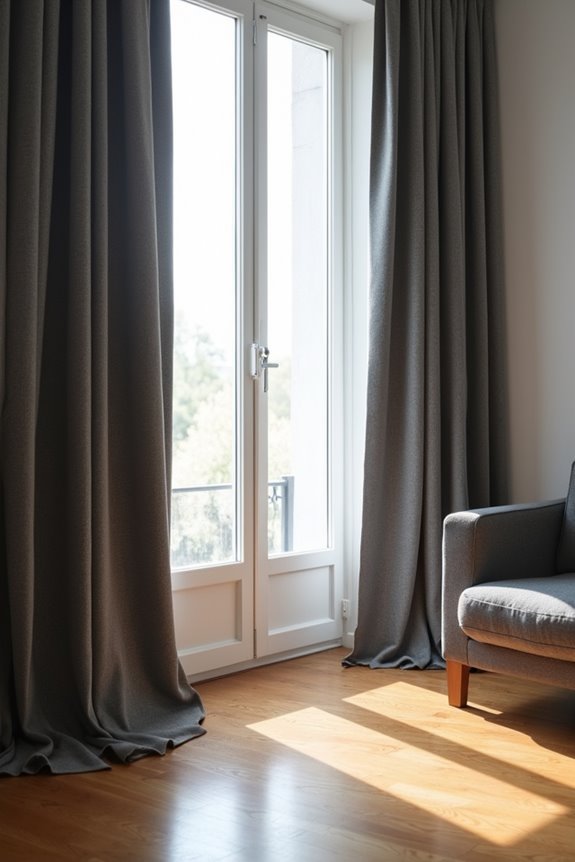
Where exactly should your curtains end? I’ve found that sill-length curtains—those stopping right at your windowsill—offer practical advantages that floor-length options simply don’t.
Here’s why I’m drawn to this choice:
- They work well in kitchens and bathrooms where moisture matters
- They prevent dust buildup since they avoid floor contact
- They sidestep radiator and uneven floor interference
- They’re easier to maintain in high-traffic spaces
Now, the design trade-offs exist. Sill-length curtains can visually shorten your room, making ceilings feel lower. That’s the height illusion problem I had to solve. I’ve learned pairing them with higher rod placement and cafes or valance combinations helps. Lighter fabrics work best too—heavy drapes just don’t cooperate with windowsills.
These window treatments won’t create dramatic visual impact, but they’re practical solutions for functional spaces.
How Does Room Type Change Your Ideal Curtain Length?
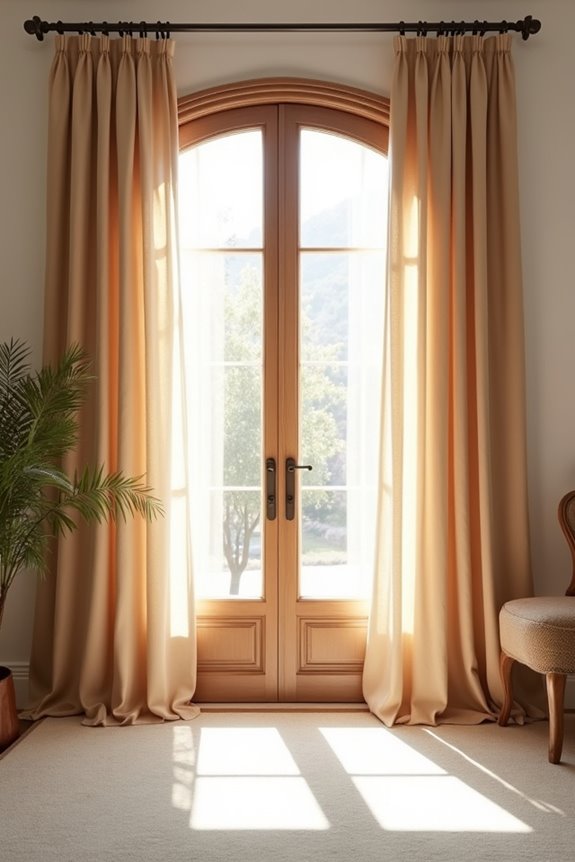
Your kitchen and bathroom benefit from sill-length curtains, but that doesn’t mean every room in your home should follow the same approach. Curtain length really depends on where you’re hanging them. Here’s what works best in different spaces:
| Room Type | Best Curtain Length | Why It Works |
|---|---|---|
| Kitchen/Bathroom | Floating-length or sill-length | Easy cleaning, resists moisture |
| Living Room | Floor-length or break-length | Creates visual interest and proportion |
| Master Bedroom | Puddled or break-length | Adds sophistication and comfort |
| Casual Bedroom | Floating-length | Practical yet polished |
Your living room works well with floor-length curtains that kiss the floor, making windows appear larger. Master bedrooms suit puddled curtains for added sophistication. Casual spaces work nicely with floating-length options. Choose what fits your lifestyle and room aesthetic.
Measuring for the Perfect Curtain Length
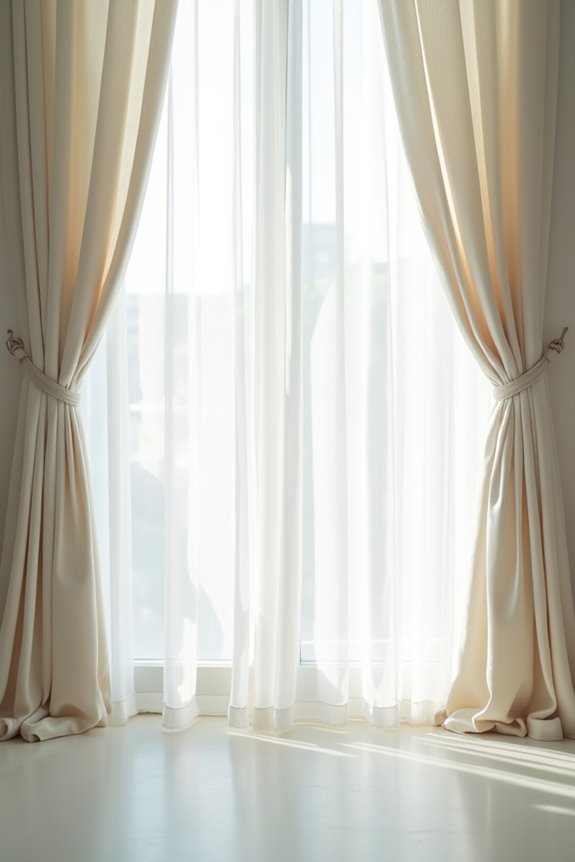
How do you know exactly how long your curtains should be? I’ll walk you through measuring so you nail that floor-length look.
Start with rod placement—I position mine 4–6 inches above the window frame. Then measure straight down to where you want your curtains to fall. Here’s what I consider:
- Float length (½–1 inch above floor) for a clean, modern feel
- Break length (1–2 inches grazing the floor) for that polished, classic vibe
- Floor-length (touching the floor) to enhance ceiling height
- Puddle length (3–6 inches pooling) for dramatic elegance
I subtract ¼–½ inch from my measurements for accuracy—it’s the difference between perfect and slightly awkward. Your curtain length affects your entire room’s feel, so measure twice and order once.
Choosing the Right Curtain Rod Height
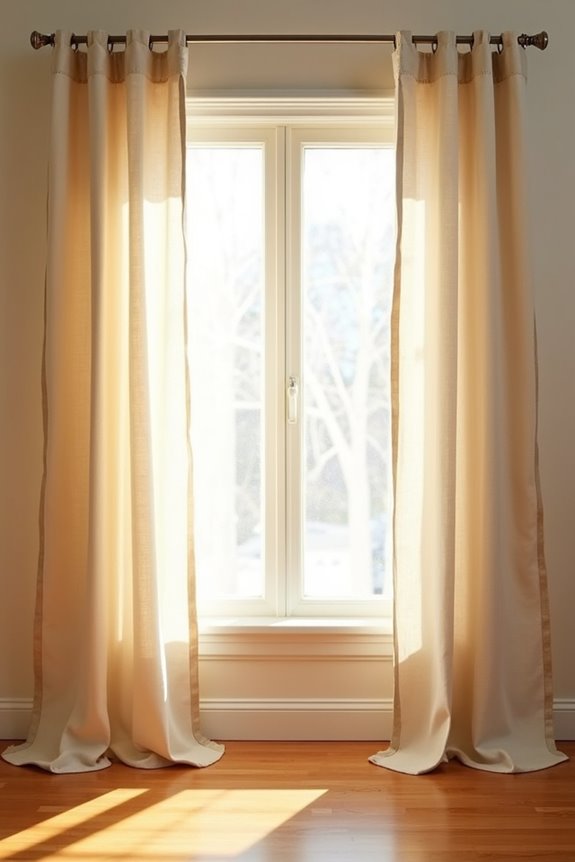
I’ve learned that hanging your curtain rod isn’t just about placing it wherever looks convenient—the height matters more than you’d think if you want those curtains actually touching the floor. The right position? Install your rod about 8–10 inches above the window frame for high ceilings, or roughly halfway to two-thirds up the space between your window and ceiling, because going too low makes the whole window feel cramped. Once you nail down that rod height, measuring from there down to the floor becomes your blueprint for ordering curtains that actually graze your flooring instead of awkwardly floating above it.
Rod Placement and Ceiling Height
Where you hang your curtain rod matters more than you’d think—it’s one of those design moves that can affect how a room actually *feels*. Rod placement directly impacts both ceiling height and your window treatment’s overall effectiveness.
Here’s what I consider when positioning my rods:
- Raise the rod 4–6 inches above the window frame for taller-looking ceilings
- Position it halfway to two-thirds up between the window and ceiling for maximum visual lift
- For tall ceilings, aim for 8–10 inches above the frame to emphasize vertical space
- Extend the rod 10–15 cm beyond each window edge to create an illusion of width
When your curtain length reaches the floor and your rod sits higher, you’re creating a practical effect: the room feels bigger, brighter, and honestly, more deliberate than it probably deserves.
Measuring From Rod to Floor
Once you’ve nailed down where your rod goes, the next step is figuring out the actual measurement—because hanging a curtain that’s too short or too long basically ruins the whole effect you just worked for. I measure from my rod straight down to the floor, then adjust based on my style preference. For float-length, I subtract about ½ inch so fabric hovers above the floor. With break-length, I add 1–2 inches, letting it kiss the floor gently. If I’m feeling fancy, puddle-length adds 3–6 inches for that pooling effect. The rod-to-floor measurement is your baseline for all three options. Once I nail this curtain length calculation, everything else falls into place—literally.
Length Tips for Different Fabrics
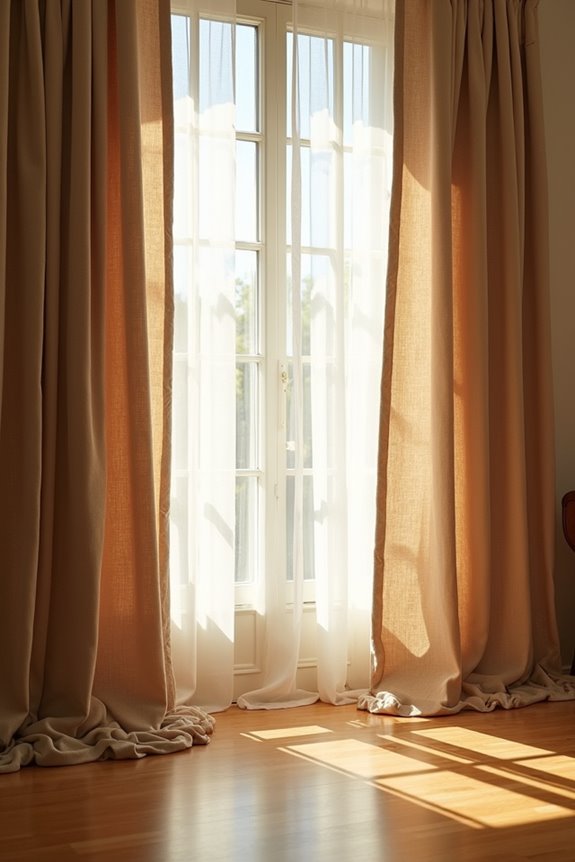
How much fabric should actually touch your floor? I’ve learned that different fabrics behave differently, and that changes your curtain length strategy.
Here’s what I consider when choosing the right measurement drop:
- Lightweight fabrics drape beautifully at break-length, sitting 1–2 inches above the floor
- Heavy fabrics work well with float length since they won’t billow around
- Sheer materials look elegant in puddle length because they pool nicely
- Medium-weight fabrics give you flexibility across all three options
Fabric weight matters. Heavier drapes need less length to look intentional. Lightweight ones forgive extra fabric. I’ve found that matching your fabric choice to your curtain length creates that balanced, considered feeling we’re all after. It’s not complicated—just pay attention to how your fabric actually hangs, and you’ll get it right.
Common Mistakes That Make Curtains Look Unfinished
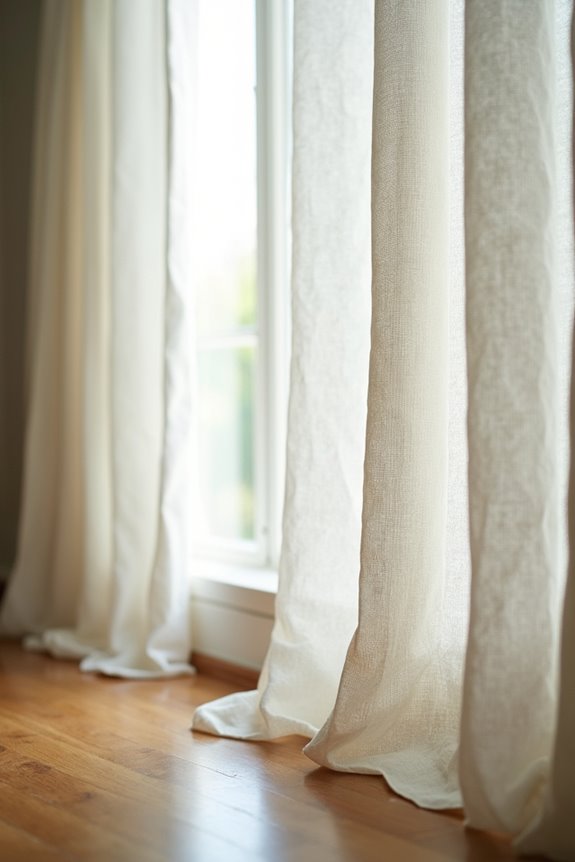
Why do so many curtains look a little off, even when they’re expensive and beautiful? I’ve noticed that curtain rod height matters more than we think. When you hang your rod too low, everything feels droopy and wrong. Another common mistake? Choosing curtain length that’s too short. Panels that barely graze the windowsill make your windows look smaller and cheaper than they actually are.
I learned that narrow panels skim past windows instead of framing them properly. You want fabric that actually covers your window. And here’s what I found: break-length curtains that gently kiss the floor look way more polished than puddle-length drapes that pool excessively. The touch-the-floor approach creates that finished, intentional look worth pursuing.
Making Your Ceilings Look Taller
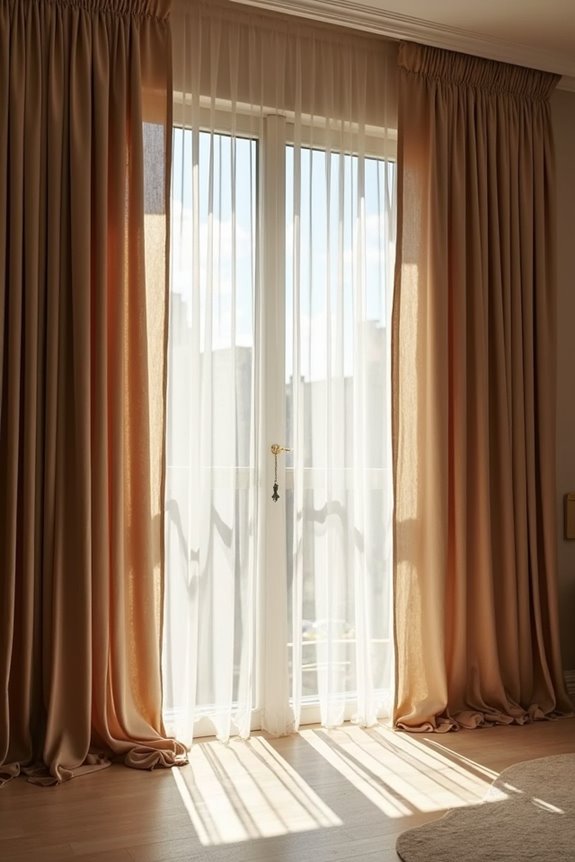
Ever feel like your rooms are a bit boxy? Floor-length curtains can help make ceilings look taller. Here’s how:
- Hang your curtain rod 4 to 6 inches above the window frame
- Choose 84–96 inch curtain lengths that touch the floor
- Let the fabric create long, unbroken vertical lines
- On tall ceilings, position rods 8–10 inches higher for stronger effects
When you hang curtains this way, those vertical lines draw your eye upward. Your room will feel less cramped. Floor-length curtains provide a polished look through smart curtain rod placement and proper curtain length selection.
Room-by-Room Length Guidelines
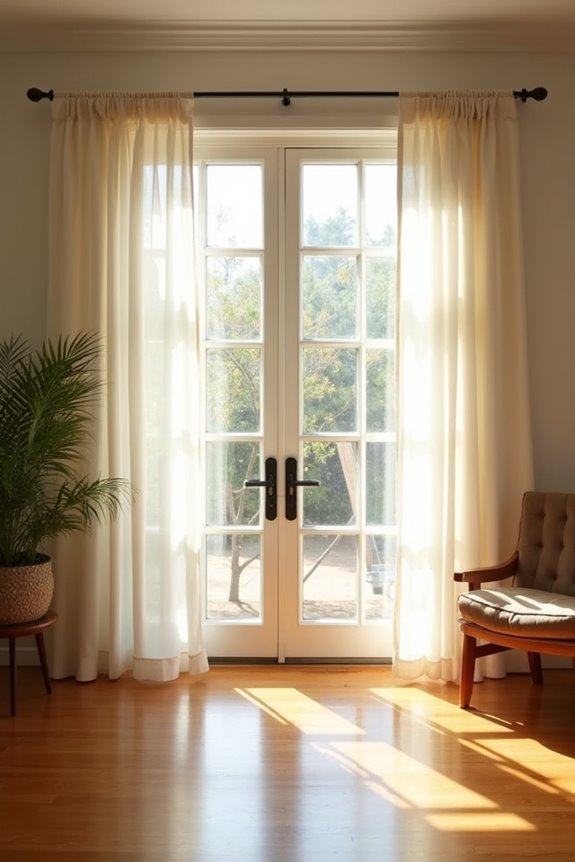
Different rooms in your home need different curtain lengths, and I’ve learned this the hard way (hello, kitchen curtains dragging through spilled coffee). Your living room and bedroom work well with floor-length or slightly pooling styles that add a formal quality, while kitchens and bathrooms need shorter curtains that stay safe from moisture and splashes. Here’s what works best in each space so you can avoid my mistakes.
Living Rooms and Bedrooms
How you dress your windows really depends on what room you’re in and what that room needs to do. I’ve learned that curtains length matters way more than I initially thought.
In my living room, I wanted that polished, pulled-together vibe. Floor-length curtains do exactly that—they visually stretch my ceilings higher and block pesky drafts. I keep puddling minimal, just 2–6 inches, since formal spaces call for restraint.
My bedroom’s different though. Here’s what works:
- Floor-length drapes enhance coziness
- A 2–3 inch puddle looks intentional and soft
- Privacy gets a real boost
- Warmth increases dramatically
The height above floor really shapes how a room feels. I’ve discovered that this small detail matters for your space. It’s less about rules and more about choosing what serves your room best.
Kitchens and Bathrooms
Moisture and heat are the enemies of floor-length curtains, and I learned this lesson the hard way. Kitchen curtains and bathroom curtains need serious protection from water exposure. That’s why I switched to sill-length options instead.
| Room | Best Length | Why It Works |
|---|---|---|
| Kitchen | Sill-length | Stops splashes from reaching fabric |
| Bathroom | Sill-length | Keeps water away from floors |
| Kitchen | Floating | Easy maintenance and airflow |
| Bathroom | Apron-length | Provides privacy without moisture traps |
Floor-length drapes trap moisture and grease, creating mold problems nobody wants. I now choose moisture-resistant fabrics like polyester for these spaces. Shorter lengths mean easier cleaning and better durability. Your kitchen and bathroom deserve curtains that actually work with the room instead of against it. Sill-length curtains are a practical choice for these challenging spaces.
Why Floor-Length Curtains Require Different Cleaning
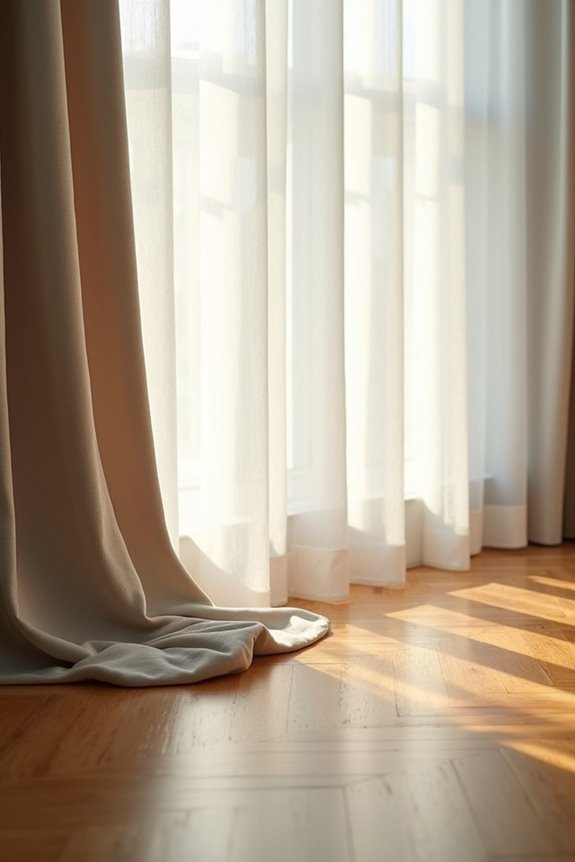
Floor-length curtains need special cleaning attention because caring for them differs from washing regular curtains. Here’s what sets them apart:
Floor-length curtains demand specialized cleaning methods that differ significantly from standard curtain care approaches.
- Heavy fabrics absorb dust and dirt along their entire length
- Blackout lining adds weight that standard washing can damage
- The hem drags on floors, collecting debris faster
- Professional washing preserves the fabric’s shape and fullness
Floor-length curtains with blackout lining or dense fabrics require spot cleaning or professional washing. Regular machine washing can strip their weight, leaving them drooping awkwardly. Vacuuming the hem regularly prevents buildup. When they need a deep clean, professionals understand fabric care and maintain that polished appearance. It’s an investment in keeping them looking their best.